Deciding Whether to Go to Urgent Care
救急診療を受けるべきか決める
After twisting his ankle, Leo talks with his friend Emma about the pain and whether he should get medical care. They decide urgent care is the right next step.
足首をひねったレオは、痛みや病院に行くべきかどうかについて友達のエマと話します。二人は、まずは救急診療を受けるのがよさそうだと判断します。
会話9
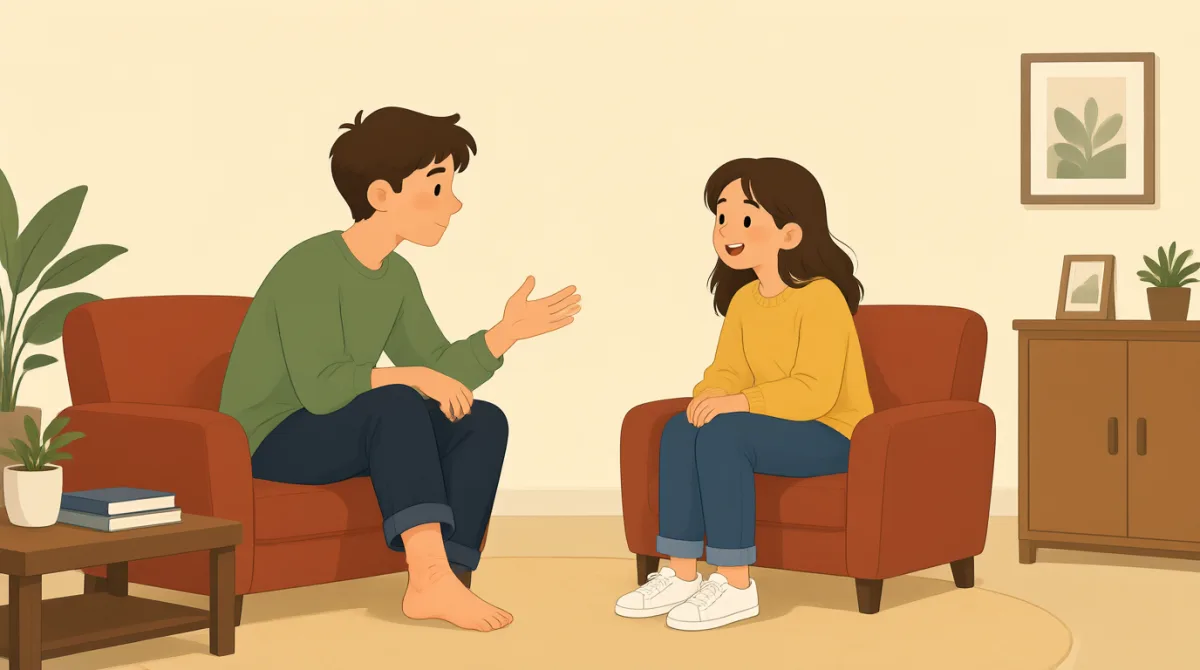

I twisted my ankle playing basketball about an hour ago. It hurts to put weight on it, and it’s starting to swell.
1時間くらい前にバスケをしてて足首をひねったんだ。体重をかけると痛いし、腫れてきた。

Ouch. Can you move it at all? Is the pain getting worse, or does it feel about the same?
うわ、痛そう。少しでも動かせる?痛みはひどくなってる?それとも同じくらい?
I can move it a little, but it really hurts when I stand. I tried putting ice on it, but it still looks pretty swollen.
少しなら動かせるけど、立つとすごく痛いんだ。氷で冷やしてみたけど、まだかなり腫れてるよ。
Since it’s hard to stand and the swelling’s getting worse, I think you should get it checked out today.
立つのも大変だし、腫れもひどくなってるから、今日診てもらったほうがいいと思うよ。
Do you think it’s serious enough for the emergency room? I don’t want to overreact if it’s just a sprain.
救急外来に行くほどひどいと思う?ただの捻挫なら、大げさにしたくないんだけど。
Urgent care sounds like the right next step. They can examine it and decide whether you need an X-ray.
まずは救急診療を受けるのがよさそうだね。診てもらって、レントゲンが必要かどうか判断してもらえるよ。
That makes sense. I can get a ride there, but I’m not sure whether I should keep walking on it.
そうだね。車で連れて行ってもらえるけど、歩き続けてもいいのかよくわからないんだ。
Try to stay off it as much as you can, and keep it elevated while we get ready. I’ll drive you.
できるだけ足に体重をかけないでね。準備してる間は足を高くしておいて。車で連れて行くよ。
Thanks. I was hoping it would settle down on its own, but I guess it’s better to be safe than sorry.
ありがとう。そのうち自然によくなると思ってたけど、念のため診てもらったほうがいいよね。
語彙7
- put weight on it足に体重をかける
To put weight on your ankle means to stand or walk using it to support your body. You can use this phrase to describe an injury that hurts when you stand.
put weight on your ankle は、足首で体を支えて立ったり歩いたりすることです。立つと痛むけがについて説明するときに使えます。
- getting worseひどくなっている
This means becoming more serious or painful. Use it to describe a symptom that is increasing over time.
getting worse は、状態がより深刻になったり、痛みが強くなったりするという意味です。時間とともに症状が悪化していることを表すときに使います。
- get it checked out診てもらう
This means have a medical professional examine it. You can also use “get [something] checked out” when you want an expert to look at a problem.
get it checked out は、医療の専門家に診察してもらうという意味です。問題を専門家に見てもらいたいときは、“get [something] checked out” の形も使えます。
- overreact大げさに反応する
To overreact means to respond more strongly than a situation seems to require. You can use it when you’re unsure whether a problem is serious enough to act on.
overreact は、状況に必要と思われる以上に強く反応するという意味です。問題が行動を起こすほど深刻なのか迷っているときに使えます。
- the right next step次に取るべき適切な行動
This means the best action to take now. Use it when deciding what to do after considering a problem.
the right next step は、今取るのが最善の行動という意味です。問題について考えたあと、次に何をするか決めるときに使います。
- stay off it足に体重をかけない
This means avoid standing or walking on an injured leg or foot. It’s a useful way to give advice about resting an injury.
stay off it は、けがをした脚や足に体重をかけて立ったり歩いたりしないという意味です。けがを休ませるよう勧めるときに便利な表現です。
- better to be safe than sorry用心するに越したことはない
This means it’s wiser to take precautions than risk a bad result. Use it to explain why you’re choosing the cautious option.
better to be safe than sorry は、悪い結果になる危険を冒すより、用心するほうが賢明だという意味です。慎重な選択をする理由を説明するときに使えます。
重要な文7
- 1
It hurts to put weight on it, and it’s starting to swell.
It hurts to put weight on it, and it’s starting to swell.
This sentence clearly describes two symptoms. You can reuse the pattern “It hurts to [action], and it’s starting to [symptom]” to explain how an injury is changing.
この文では、症状を二つはっきり伝えています。“It hurts to [action], and it’s starting to [symptom]” の形を使うと、けがの状態がどう変化しているか説明できます。
- 2
Can you move it at all?
Can you move it at all?
This is a natural question about whether someone can move an injured body part. “At all” emphasizes that you’re asking whether they can move it even a little.
けがをした体の部分を動かせるか尋ねる自然な表現です。“At all” を加えると、少しでも動かせるかどうかを尋ねていることが強調されます。
- 3
Since it’s hard to stand and the swelling’s getting worse, I think you should get it checked out today.
Since it’s hard to stand and the swelling’s getting worse, I think you should get it checked out today.
This sentence gives reasons before making a recommendation. Reuse “Since [reason], I think you should [advice]” to explain a suggestion.
この文は、勧めを伝える前に理由を説明しています。“Since [reason], I think you should [advice]” の形を使うと、提案の理由も伝えられます。
- 4
Do you think it’s serious enough for the emergency room?
Do you think it’s serious enough for the emergency room?
This is a useful way to ask whether a problem needs urgent attention. You can adapt “serious enough for” to ask whether something needs a particular response.
問題に緊急の対応が必要かどうか尋ねるときに便利な表現です。“serious enough for” の部分を変えて、特定の対応が必要かどうか尋ねられます。
- 5
Urgent care sounds like the right next step.
Urgent care sounds like the right next step.
This sentence gives a calm opinion about what to do next. Reuse “ [Option] sounds like the right next step” when suggesting a practical choice.
次に何をするかについて、落ち着いた意見を伝える文です。“[Option] sounds like the right next step” の形を使うと、現実的な選択肢を提案できます。
- 6
Try to stay off it as much as you can, and keep it elevated while we get ready.
Try to stay off it as much as you can, and keep it elevated while we get ready.
This sentence gives two pieces of practical advice. You can reuse “Try to [action] as much as you can” to make a suggestion sound gentle.
この文では、実際に役立つアドバイスを二つ伝えています。“Try to [action] as much as you can” の形を使うと、やわらかく提案できます。
- 7
I was hoping it would settle down on its own, but I guess it’s better to be safe than sorry.
I was hoping it would settle down on its own, but I guess it’s better to be safe than sorry.
This sentence explains that you expected a problem to improve without help but have decided to be cautious. “Settle down on its own” can describe a symptom or problem that improves without intervention.
助けを借りなくても問題がよくなると期待していたけれど、用心することにした、と説明する文です。“Settle down on its own” は、症状や問題が何もしなくても自然によくなることを表せます。