Deciding Whether to Go to Urgent Care
Decidir si ir a un centro de atención urgente
After twisting his ankle, Leo talks with his friend Emma about the pain and whether he should get medical care. They decide urgent care is the right next step.
Después de torcerse el tobillo, Leo habla con su amiga Emma sobre el dolor y sobre si debería recibir atención médica. Deciden que ir a un centro de atención urgente es el siguiente paso adecuado.
Diálogo9
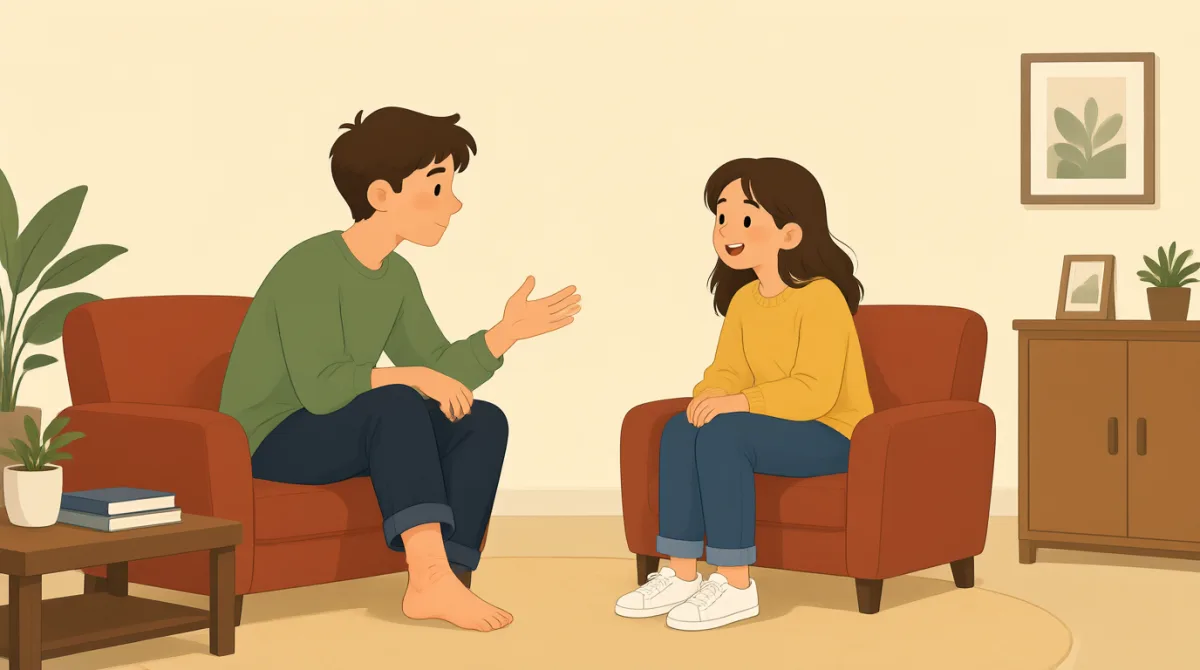

I twisted my ankle playing basketball about an hour ago. It hurts to put weight on it, and it’s starting to swell.
Me torcí el tobillo jugando al baloncesto hace como una hora. Me duele apoyar el pie y se me está empezando a hinchar.

Ouch. Can you move it at all? Is the pain getting worse, or does it feel about the same?
Ay. ¿Puedes moverlo aunque sea un poco? ¿Te duele cada vez más o sigue más o menos igual?
I can move it a little, but it really hurts when I stand. I tried putting ice on it, but it still looks pretty swollen.
Puedo moverlo un poco, pero me duele mucho cuando me pongo de pie. Probé a ponerme hielo, pero sigue bastante hinchado.
Since it’s hard to stand and the swelling’s getting worse, I think you should get it checked out today.
Como te cuesta ponerte de pie y la hinchazón está empeorando, creo que deberías ir a que te lo revisen hoy.
Do you think it’s serious enough for the emergency room? I don’t want to overreact if it’s just a sprain.
¿Crees que es lo bastante grave como para ir a urgencias? No quiero exagerar si solo es un esguince.
Urgent care sounds like the right next step. They can examine it and decide whether you need an X-ray.
Parece que ir a un centro de atención urgente es el siguiente paso adecuado. Pueden examinarte y decidir si necesitas una radiografía.
That makes sense. I can get a ride there, but I’m not sure whether I should keep walking on it.
Tiene sentido. Puedo conseguir que alguien me lleve, pero no sé si debería seguir caminando.
Try to stay off it as much as you can, and keep it elevated while we get ready. I’ll drive you.
Intenta no apoyar el pie todo lo que puedas y mantenlo elevado mientras nos preparamos. Yo te llevo.
Thanks. I was hoping it would settle down on its own, but I guess it’s better to be safe than sorry.
Gracias. Esperaba que se me pasara solo, pero supongo que más vale prevenir que curar.
Vocabulario7
- put weight on itapoyar el pie
To put weight on your ankle means to stand or walk using it to support your body. You can use this phrase to describe an injury that hurts when you stand.
Apoyar el tobillo significa ponerse de pie o caminar usando ese tobillo para sostener el cuerpo. Puedes usar esta expresión para describir una lesión que duele al ponerte de pie.
- getting worseempeorar
This means becoming more serious or painful. Use it to describe a symptom that is increasing over time.
Significa volverse más grave o doloroso. Úsalo para describir un síntoma que aumenta con el tiempo.
- get it checked outir a que se lo revisen
This means have a medical professional examine it. You can also use “get [something] checked out” when you want an expert to look at a problem.
Significa pedirle a un profesional de la salud que lo examine. También puedes usar “get [something] checked out” cuando quieres que un experto revise un problema.
- overreactexagerar
To overreact means to respond more strongly than a situation seems to require. You can use it when you’re unsure whether a problem is serious enough to act on.
Exagerar significa reaccionar con más intensidad de la que la situación parece requerir. Puedes usar esta palabra cuando no tienes claro si un problema es lo bastante grave como para actuar.
- the right next stepel siguiente paso adecuado
This means the best action to take now. Use it when deciding what to do after considering a problem.
Significa la mejor medida que se puede tomar ahora. Úsalo para hablar de qué hacer después de analizar un problema.
- stay off itno apoyar el pie
This means avoid standing or walking on an injured leg or foot. It’s a useful way to give advice about resting an injury.
Significa evitar ponerse de pie o caminar apoyando una pierna o un pie lesionado. Es una forma útil de recomendar que alguien descanse una lesión.
- better to be safe than sorrymás vale prevenir que curar
This means it’s wiser to take precautions than risk a bad result. Use it to explain why you’re choosing the cautious option.
Significa que es más prudente tomar precauciones que arriesgarse a que algo salga mal. Úsalo para explicar por qué eliges la opción más cautelosa.
Frases clave7
- 1
It hurts to put weight on it, and it’s starting to swell.
Me duele apoyar el pie y se me está empezando a hinchar.
This sentence clearly describes two symptoms. You can reuse the pattern “It hurts to [action], and it’s starting to [symptom]” to explain how an injury is changing.
Esta oración describe claramente dos síntomas. Puedes reutilizar el patrón “It hurts to [action], and it’s starting to [symptom]” para explicar cómo va cambiando una lesión.
- 2
Can you move it at all?
¿Puedes moverlo aunque sea un poco?
This is a natural question about whether someone can move an injured body part. “At all” emphasizes that you’re asking whether they can move it even a little.
Es una forma natural de preguntar si alguien puede mover una parte del cuerpo lesionada. “At all” enfatiza que preguntas si puede moverla aunque sea un poco.
- 3
Since it’s hard to stand and the swelling’s getting worse, I think you should get it checked out today.
Como te cuesta ponerte de pie y la hinchazón está empeorando, creo que deberías ir a que te lo revisen hoy.
This sentence gives reasons before making a recommendation. Reuse “Since [reason], I think you should [advice]” to explain a suggestion.
Esta oración da las razones antes de hacer una recomendación. Reutiliza “Since [reason], I think you should [advice]” para explicar una sugerencia.
- 4
Do you think it’s serious enough for the emergency room?
¿Crees que es lo bastante grave como para ir a urgencias?
This is a useful way to ask whether a problem needs urgent attention. You can adapt “serious enough for” to ask whether something needs a particular response.
Es una forma útil de preguntar si un problema requiere atención urgente. Puedes adaptar “serious enough for” para preguntar si algo requiere una respuesta determinada.
- 5
Urgent care sounds like the right next step.
Parece que ir a un centro de atención urgente es el siguiente paso adecuado.
This sentence gives a calm opinion about what to do next. Reuse “ [Option] sounds like the right next step” when suggesting a practical choice.
Esta oración expresa con calma una opinión sobre qué hacer a continuación. Reutiliza “ [Option] sounds like the right next step” cuando quieras sugerir una opción práctica.
- 6
Try to stay off it as much as you can, and keep it elevated while we get ready.
Intenta no apoyarlo todo lo que puedas y mantenlo elevado mientras nos preparamos.
This sentence gives two pieces of practical advice. You can reuse “Try to [action] as much as you can” to make a suggestion sound gentle.
Esta oración da dos consejos prácticos. Puedes reutilizar “Try to [action] as much as you can” para que una sugerencia suene amable.
- 7
I was hoping it would settle down on its own, but I guess it’s better to be safe than sorry.
Esperaba que se me pasara solo, pero supongo que más vale prevenir que curar.
This sentence explains that you expected a problem to improve without help but have decided to be cautious. “Settle down on its own” can describe a symptom or problem that improves without intervention.
Esta oración explica que esperabas que un problema mejorara sin ayuda, pero que has decidido actuar con cautela. “Settle down on its own” puede describir un síntoma o problema que mejora sin intervención.