Explaining the Ankle Injury
足首のけがについて説明する
A clinician asks Leo how he hurt his ankle and about his symptoms. Leo describes what happened and answers questions about the pain and swelling.
医療従事者が、レオに足首をどう痛めたのか、どんな症状があるのかを尋ねます。レオは何が起きたのかを説明し、痛みや腫れについての質問に答えます。
会話10
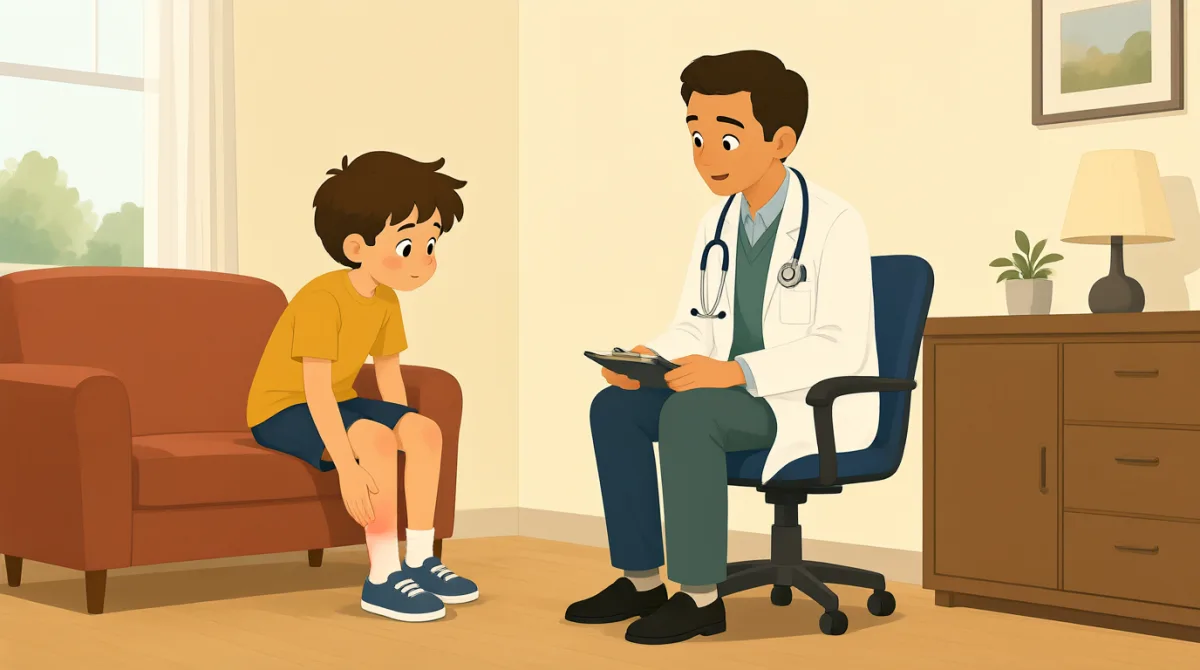

Hi, Leo. I understand you twisted your ankle. Can you tell me what happened?
こんにちは、レオさん。足首をひねったと伺いました。何があったか教えていただけますか?

I was playing basketball and came down awkwardly after a jump. My foot rolled to the side, and I heard a pop.
バスケットボールをしていて、ジャンプのあと着地したときにバランスを崩しました。足が横にひねれて、ポキッという音がしました。
When did this happen, and were you able to put any weight on that foot afterward?
いつ起きましたか?そのあと、その足に体重をかけることはできましたか?
It happened about two hours ago. I can walk, but I’m limping, and it hurts more when I put weight on it.
2時間くらい前です。歩けますが、足を引きずっていますし、体重をかけると痛みが強くなります。
Where does it hurt the most? And have you noticed any swelling, bruising, or numbness?
いちばん痛むのはどこですか?腫れやあざ、しびれはありますか?
The pain is mostly on the outside of my ankle. It’s getting swollen, but I don’t see bruising or feel numb.
足首の外側がいちばん痛いです。腫れてきていますが、あざは見当たりませんし、しびれもありません。
On a scale from zero to ten, how bad is the pain right now? Does anything make it feel better?
痛みを0から10で表すと、今はどのくらいですか?楽になることはありますか?
It’s about a six when I stand, maybe a three when I’m sitting. Keeping it still helps a little.
立っているときは6くらいで、座っているときはたぶん3くらいです。動かさずにいると、少し楽になります。
Any previous ankle injuries, allergies, or medications you’re taking?
以前に足首をけがしたことや、アレルギーはありますか?服用中のお薬はありますか?
No previous injuries or allergies. I’m not taking any medication, and I haven’t put ice on it yet.
けがをしたこともアレルギーもありません。薬は飲んでいませんし、まだ足を冷やしてもいません。
語彙8
- came down awkwardlyバランスを崩して着地した
Landed in an uncomfortable or unbalanced way after jumping. You can use this phrase to explain how you landed or moved when you got hurt.
ジャンプのあと、うまく着地できなかったり、バランスを崩したりしたことを表します。けがをしたとき、どう着地したか、どんな動きをしたかを説明するのに使えます。
- rolled to the side横にひねれた
Describes a foot or ankle turning sideways. It helps explain the movement that caused an injury.
足や足首が横向きにひねれることを表します。けがの原因になった動きを説明するのに役立ちます。
- put any weight on that footその足に体重をかける
Means to stand or walk using that foot to support your body. Clinicians may ask this to understand how an injury affects movement.
その足で体を支えて立ったり歩いたりすることです。けがでどのくらい動けるかを知るために、医療従事者が尋ねることがあります。
- limping足を引きずって歩く
Walking unevenly because one leg or foot hurts. You can say “I’m limping” to describe how an injury affects the way you walk.
脚や足が痛くて、左右均等に歩けないことです。けがが歩き方にどう影響しているかを伝えるときは、「I’m limping」と言えます。
- swelling腫れ
An area of the body becoming larger, often after an injury. You can describe it by saying, “It’s getting swollen.”
けがのあとなどに、体の一部が大きくなることです。「It’s getting swollen」と言えば、腫れてきていると伝えられます。
- on a scale from zero to ten0から10で表すと
A way to rate how strong pain is, with zero meaning no pain and ten meaning the worst pain. It is commonly used when talking with a clinician.
痛みの強さを数字で表す方法です。0は痛みがない状態、10は最も強い痛みを意味します。医療従事者に痛みを伝えるときによく使われます。
- previous ankle injuries以前の足首のけが
Earlier injuries to the ankle. This phrase is useful when answering questions about your medical history.
過去に足首をけがしたことです。病歴について尋ねられたときに役立つ表現です。
- put ice on it患部を冷やす
Apply ice to an injured area, usually to help with pain or swelling. You can use this phrase to explain what treatment you have or haven’t tried.
痛みや腫れを和らげるために、けがをした部分に氷を当てることです。試した治療を伝えるときにも使えます。
重要な文7
- 1
Can you tell me what happened?
何があったか教えていただけますか?
A polite, open question for asking someone to describe an event. You can reuse it to invite someone to explain a problem or situation.
相手に出来事を説明してもらうための、丁寧で答えやすい質問です。問題や状況について説明してもらいたいときにも使えます。
- 2
My foot rolled to the side, and I heard a pop.
足が横にひねれて、ポキッという音がしました。
This sentence describes both how the injury happened and what you heard. You can adapt it to report the movement and sounds connected to an injury.
けがが起きたときの動きと、聞こえた音の両方を説明する文です。けがに関係する動きや音を伝えるときに応用できます。
- 3
I can walk, but I’m limping, and it hurts more when I put weight on it.
歩けますが、足を引きずっていますし、体重をかけると痛みが強くなります。
This explains what you can do and what makes the pain worse. Replace “walk” or “put weight on it” with details that match your symptoms.
できることと、痛みが強くなる状況を説明しています。「walk」や「put weight on it」を、自分の症状に合った表現に置き換えられます。
- 4
The pain is mostly on the outside of my ankle.
足首の外側がいちばん痛いです。
A clear way to say exactly where pain is located. You can replace “the outside of my ankle” with another body area.
痛む場所を具体的に伝える表現です。「the outside of my ankle」を別の体の部位に置き換えて使えます。
- 5
It’s about a six when I stand, maybe a three when I’m sitting.
立っているときは6くらいで、座っているときはたぶん3くらいです。
This compares pain levels in two situations using a number scale. You can use the same structure to explain how your pain changes with movement or rest.
数字を使って、二つの状況での痛みの強さを比べています。同じ形を使って、動いたときと休んでいるときなど、痛みの変化を説明できます。
- 6
Keeping it still helps a little.
動かさずにいると、少し楽になります。
This describes something that reduces the pain slightly. You can use “Keeping [body part] still helps” to explain what makes a symptom better.
痛みを少し和らげることを説明する文です。「Keeping [body part] still helps」という形を使うと、症状が楽になる方法を伝えられます。
- 7
I’m not taking any medication, and I haven’t put ice on it yet.
薬は飲んでいませんし、まだ足を冷やしてもいません。
This gives a clinician useful information about medicine and care you have tried. You can change the details to say what you are taking or what treatment you have used.
服用している薬や、すでに試したケアについて、医療従事者に役立つ情報を伝える文です。自分が飲んでいる薬や受けた治療に合わせて内容を変えられます。