Deciding Whether to Go to Urgent Care
응급 진료를 받으러 갈지 결정하기
After twisting his ankle, Leo talks with his friend Emma about the pain and whether he should get medical care. They decide urgent care is the right next step.
발목을 삔 레오는 친구 에마와 통증에 대해 이야기하며 진료를 받아야 할지 고민해. 두 사람은 응급 진료를 받는 게 다음 단계로 가장 적절하다고 판단해.
대화9
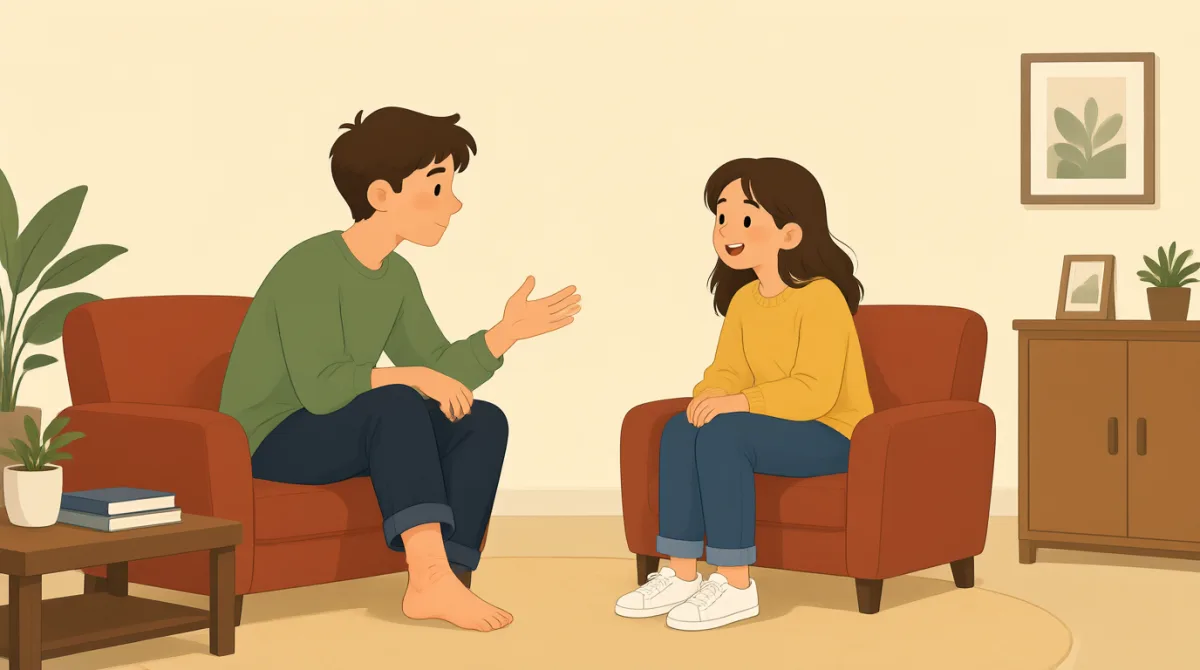

I twisted my ankle playing basketball about an hour ago. It hurts to put weight on it, and it’s starting to swell.
한 시간쯤 전에 농구하다가 발목을 삐었어. 발을 딛으면 아프고, 붓기 시작했어.

Ouch. Can you move it at all? Is the pain getting worse, or does it feel about the same?
아야. 발목을 조금이라도 움직일 수 있어? 통증이 점점 심해져, 아니면 비슷해?
I can move it a little, but it really hurts when I stand. I tried putting ice on it, but it still looks pretty swollen.
조금은 움직일 수 있는데, 서 있으면 정말 아파. 얼음찜질도 해 봤는데 아직 꽤 부어 보여.
Since it’s hard to stand and the swelling’s getting worse, I think you should get it checked out today.
서 있기 힘들고 붓기도 심해지고 있으니까, 오늘 진료를 받아 보는 게 좋을 것 같아.
Do you think it’s serious enough for the emergency room? I don’t want to overreact if it’s just a sprain.
응급실에 갈 정도로 심각한 것 같아? 그냥 염좌인데 내가 너무 호들갑 떠는 건 싫어.
Urgent care sounds like the right next step. They can examine it and decide whether you need an X-ray.
응급 진료를 받는 게 다음 단계로 적절할 것 같아. 거기서 발목을 살펴보고 엑스레이가 필요한지 판단해 줄 거야.
That makes sense. I can get a ride there, but I’m not sure whether I should keep walking on it.
그게 좋겠다. 차를 얻어 타고 갈 수는 있는데, 계속 걸어도 되는지 모르겠어.
Try to stay off it as much as you can, and keep it elevated while we get ready. I’ll drive you.
준비하는 동안 최대한 발에 체중을 싣지 말고, 발을 높이 올려 둬. 내가 차로 데려다줄게.
Thanks. I was hoping it would settle down on its own, but I guess it’s better to be safe than sorry.
고마워. 저절로 괜찮아지길 바랐는데, 그래도 조심해서 나쁠 건 없겠지.
어휘7
- put weight on it발에 체중을 싣다
To put weight on your ankle means to stand or walk using it to support your body. You can use this phrase to describe an injury that hurts when you stand.
“put weight on it”은 발목을 이용해 몸을 지탱하며 서거나 걷는다는 뜻이에요. 서 있을 때 아픈 부상을 설명할 때 쓸 수 있어요.
- getting worse점점 심해지다
This means becoming more serious or painful. Use it to describe a symptom that is increasing over time.
“getting worse”는 상태가 더 심각해지거나 더 아파진다는 뜻이에요. 시간이 지나면서 증상이 심해질 때 사용해요.
- get it checked out진료를 받아 보다
This means have a medical professional examine it. You can also use “get [something] checked out” when you want an expert to look at a problem.
“get it checked out”은 의료 전문가에게 그것을 진찰받는다는 뜻이에요. 전문가에게 문제를 살펴봐 달라고 할 때 “get [something] checked out”이라고도 할 수 있어요.
- overreact과민 반응하다
To overreact means to respond more strongly than a situation seems to require. You can use it when you’re unsure whether a problem is serious enough to act on.
“overreact”는 상황에 필요한 것보다 지나치게 강하게 반응한다는 뜻이에요. 문제가 실제로 조치를 취할 만큼 심각한지 확신이 없을 때 사용할 수 있어요.
- the right next step다음 단계로 가장 적절한 선택
This means the best action to take now. Use it when deciding what to do after considering a problem.
“the right next step”은 지금 취하기에 가장 좋은 조치라는 뜻이에요. 문제를 살펴본 뒤 무엇을 할지 결정할 때 사용해요.
- stay off it다친 발을 딛지 않다
This means avoid standing or walking on an injured leg or foot. It’s a useful way to give advice about resting an injury.
“stay off it”은 다친 다리나 발로 서거나 걷지 않는다는 뜻이에요. 부상을 쉬게 하라고 조언할 때 유용한 표현이에요.
- better to be safe than sorry후회하는 것보다 조심하는 게 낫다
This means it’s wiser to take precautions than risk a bad result. Use it to explain why you’re choosing the cautious option.
“better to be safe than sorry”는 나쁜 결과를 감수하기보다 미리 조심하는 편이 현명하다는 뜻이에요. 신중한 선택을 하는 이유를 설명할 때 사용해요.
핵심 문장7
- 1
It hurts to put weight on it, and it’s starting to swell.
발을 딛으면 아프고, 붓기 시작했어.
This sentence clearly describes two symptoms. You can reuse the pattern “It hurts to [action], and it’s starting to [symptom]” to explain how an injury is changing.
이 문장은 증상 두 가지를 분명하게 설명해요. “It hurts to [action], and it’s starting to [symptom]”이라는 패턴을 활용하면 부상이 어떻게 변하고 있는지 말할 수 있어요.
- 2
Can you move it at all?
조금이라도 움직일 수 있어?
This is a natural question about whether someone can move an injured body part. “At all” emphasizes that you’re asking whether they can move it even a little.
다친 신체 부위를 움직일 수 있는지 물을 때 자연스럽게 쓰는 질문이에요. “at all”은 조금이라도 움직일 수 있는지 묻는다는 점을 강조해요.
- 3
Since it’s hard to stand and the swelling’s getting worse, I think you should get it checked out today.
서 있기 힘들고 붓기도 심해지고 있으니까, 오늘 진료를 받아 보는 게 좋을 것 같아.
This sentence gives reasons before making a recommendation. Reuse “Since [reason], I think you should [advice]” to explain a suggestion.
이 문장은 권하기 전에 이유를 먼저 말해요. “Since [reason], I think you should [advice]”를 활용하면 제안하는 이유를 설명할 수 있어요.
- 4
Do you think it’s serious enough for the emergency room?
응급실에 갈 정도로 심각한 것 같아?
This is a useful way to ask whether a problem needs urgent attention. You can adapt “serious enough for” to ask whether something needs a particular response.
문제가 긴급한 조치를 필요로 하는지 물을 때 유용한 표현이에요. “serious enough for”를 응용하면 어떤 일이 특정한 대응을 필요로 하는지 물어볼 수 있어요.
- 5
Urgent care sounds like the right next step.
응급 진료를 받는 게 다음 단계로 적절할 것 같아.
This sentence gives a calm opinion about what to do next. Reuse “ [Option] sounds like the right next step” when suggesting a practical choice.
다음에 무엇을 할지 차분하게 의견을 말하는 문장이에요. 실용적인 선택지를 제안할 때 “[Option] sounds like the right next step”을 활용해 보세요.
- 6
Try to stay off it as much as you can, and keep it elevated while we get ready.
최대한 발을 딛지 말고, 준비하는 동안 발을 높이 올려 둬.
This sentence gives two pieces of practical advice. You can reuse “Try to [action] as much as you can” to make a suggestion sound gentle.
이 문장은 실용적인 조언 두 가지를 해요. “Try to [action] as much as you can”을 활용하면 부드럽게 제안할 수 있어요.
- 7
I was hoping it would settle down on its own, but I guess it’s better to be safe than sorry.
저절로 괜찮아지길 바랐는데, 그래도 조심해서 나쁠 건 없겠지.
This sentence explains that you expected a problem to improve without help but have decided to be cautious. “Settle down on its own” can describe a symptom or problem that improves without intervention.
이 문장은 도움 없이 문제가 나아지길 기대했지만 신중하게 대처하기로 했다는 뜻이에요. “Settle down on its own”은 증상이나 문제가 별다른 조치 없이 나아지는 것을 말할 때 쓸 수 있어요.