Deciding Whether to Go to Urgent Care
After twisting his ankle, Leo talks with his friend Emma about the pain and whether he should get medical care. They decide urgent care is the right next step.
Dialogue9
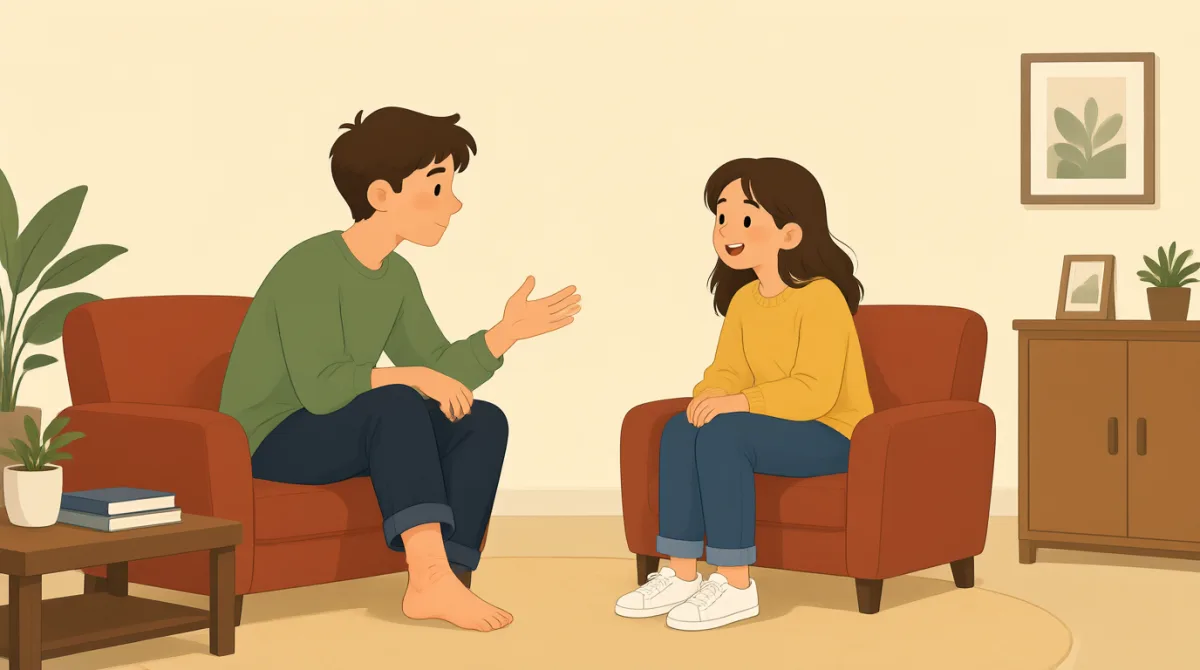

I twisted my ankle playing basketball about an hour ago. It hurts to put weight on it, and it’s starting to swell.

Ouch. Can you move it at all? Is the pain getting worse, or does it feel about the same?
I can move it a little, but it really hurts when I stand. I tried putting ice on it, but it still looks pretty swollen.
Since it’s hard to stand and the swelling’s getting worse, I think you should get it checked out today.
Do you think it’s serious enough for the emergency room? I don’t want to overreact if it’s just a sprain.
Urgent care sounds like the right next step. They can examine it and decide whether you need an X-ray.
That makes sense. I can get a ride there, but I’m not sure whether I should keep walking on it.
Try to stay off it as much as you can, and keep it elevated while we get ready. I’ll drive you.
Thanks. I was hoping it would settle down on its own, but I guess it’s better to be safe than sorry.
Vocabulary7
- put weight on it
To put weight on your ankle means to stand or walk using it to support your body. You can use this phrase to describe an injury that hurts when you stand.
- getting worse
This means becoming more serious or painful. Use it to describe a symptom that is increasing over time.
- get it checked out
This means have a medical professional examine it. You can also use “get [something] checked out” when you want an expert to look at a problem.
- overreact
To overreact means to respond more strongly than a situation seems to require. You can use it when you’re unsure whether a problem is serious enough to act on.
- the right next step
This means the best action to take now. Use it when deciding what to do after considering a problem.
- stay off it
This means avoid standing or walking on an injured leg or foot. It’s a useful way to give advice about resting an injury.
- better to be safe than sorry
This means it’s wiser to take precautions than risk a bad result. Use it to explain why you’re choosing the cautious option.
Key Sentences7
- 1
It hurts to put weight on it, and it’s starting to swell.
This sentence clearly describes two symptoms. You can reuse the pattern “It hurts to [action], and it’s starting to [symptom]” to explain how an injury is changing.
- 2
Can you move it at all?
This is a natural question about whether someone can move an injured body part. “At all” emphasizes that you’re asking whether they can move it even a little.
- 3
Since it’s hard to stand and the swelling’s getting worse, I think you should get it checked out today.
This sentence gives reasons before making a recommendation. Reuse “Since [reason], I think you should [advice]” to explain a suggestion.
- 4
Do you think it’s serious enough for the emergency room?
This is a useful way to ask whether a problem needs urgent attention. You can adapt “serious enough for” to ask whether something needs a particular response.
- 5
Urgent care sounds like the right next step.
This sentence gives a calm opinion about what to do next. Reuse “ [Option] sounds like the right next step” when suggesting a practical choice.
- 6
Try to stay off it as much as you can, and keep it elevated while we get ready.
This sentence gives two pieces of practical advice. You can reuse “Try to [action] as much as you can” to make a suggestion sound gentle.
- 7
I was hoping it would settle down on its own, but I guess it’s better to be safe than sorry.
This sentence explains that you expected a problem to improve without help but have decided to be cautious. “Settle down on its own” can describe a symptom or problem that improves without intervention.