Calling the School
Appeler l’école
Mia calls Emma at the school to say her child is sick and will stay home. Emma asks when the child might return and explains what schoolwork to catch up on.
Mia appelle Emma à l’école pour lui dire que son enfant est malade et restera à la maison. Emma lui demande quand son enfant pourrait revenir et lui explique quels devoirs il devra rattraper.
Dialogue8
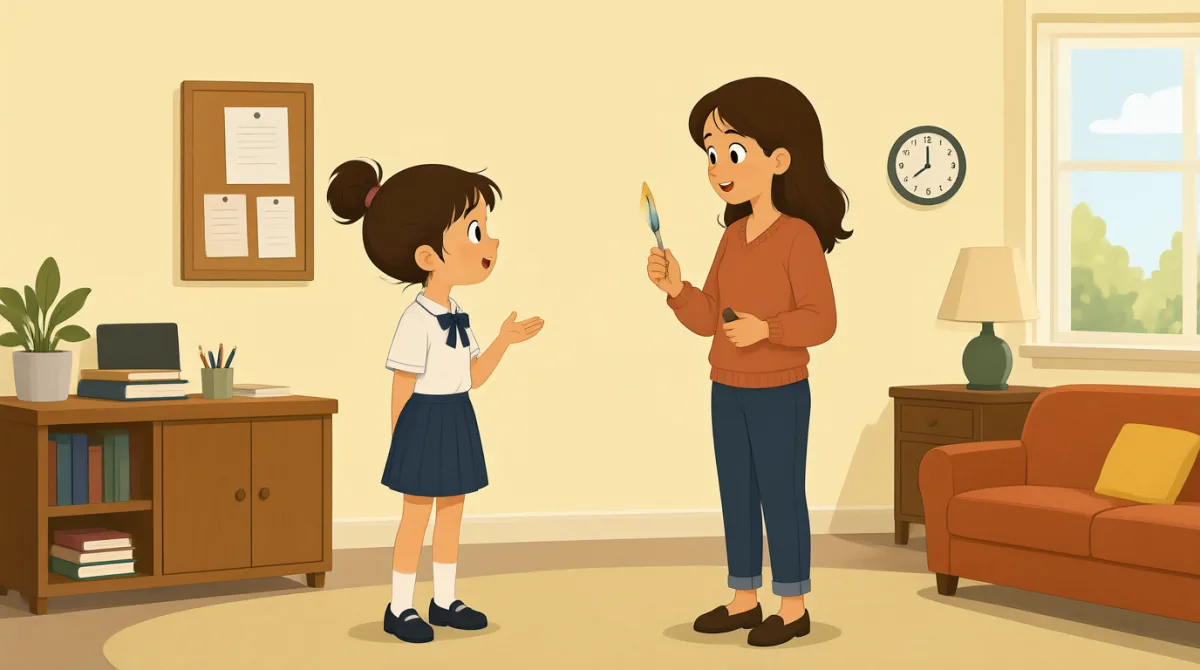

Hi, Emma. This is Mia. My child is sick and will stay home today.
Bonjour, Emma. C’est Mia. Mon enfant est malade et restera à la maison aujourd’hui.

I’m sorry to hear that. I hope your child feels better soon.
Je suis désolée de l’apprendre. J’espère que votre enfant ira bientôt mieux.
Thank you. My child has a fever, so I’m taking them to the doctor.
Merci. Mon enfant a de la fièvre, alors je l’emmène chez le médecin.
Of course. Do you know when your child might come back to school?
Bien sûr. Savez-vous quand votre enfant pourrait revenir à l’école ?
I’m not sure yet. I’ll see what the doctor says and call you tomorrow.
Je ne sais pas encore. Je vais voir ce que dit le médecin et je vous appellerai demain.
That’s fine. I’ll send home the classwork your child misses today.
D’accord. Je vous enverrai les devoirs que votre enfant manque aujourd’hui.
Thanks. Could you tell me what they need to catch up on?
Merci. Pourriez-vous me dire ce qu’il devra rattraper ?
They can read the story and do the short math page. There’s no rush.
Il peut lire l’histoire et faire la petite fiche de maths. Il n’y a pas d’urgence.
Vocabulaire7
- stay homerester à la maison
To stay home means not to go out, such as not going to school because you are sick.
“stay home” signifie rester chez soi au lieu de sortir, par exemple ne pas aller à l’école parce qu’on est malade.
- feels better soonaller bientôt mieux
This is a kind way to wish someone a quick recovery.
“feels better soon” est une façon gentille de souhaiter à quelqu’un de se rétablir rapidement.
- has a feveravoir de la fièvre
This means someone’s body is hotter than usual because they are sick.
“has a fever” signifie que la température du corps est plus élevée que d’habitude parce qu’on est malade.
- come back to schoolrevenir à l’école
This means to return to school after being away.
“come back to school” signifie retourner à l’école après en avoir été absent.
- I’m not sure yet.Je ne sais pas encore.
Use this when you do not know the answer now, but may know later.
Utilisez “I’m not sure yet.” quand vous ne connaissez pas encore la réponse, mais que vous la connaîtrez peut-être plus tard.
- catch up onrattraper
To catch up on schoolwork means to do work you missed while you were away.
“catch up on” signifie rattraper les devoirs qu’on a manqués pendant son absence.
- There’s no rush.Il n’y a pas d’urgence.
This means something does not need to be done quickly.
“There’s no rush.” signifie qu’il n’est pas nécessaire de faire quelque chose rapidement.
Phrases clés7
- 1
My child is sick and will stay home today.
Mon enfant est malade et restera à la maison aujourd’hui.
Use this to tell a school that your child is ill and will not attend today. You can change “today” to another day.
Utilisez “My child is sick and will stay home today.” pour prévenir l’école que votre enfant est malade et n’ira pas en cours aujourd’hui. Vous pouvez remplacer “today” par un autre jour.
- 2
I hope your child feels better soon.
J’espère que votre enfant ira bientôt mieux.
This is a kind way to respond when someone says they or their child is sick. You can use it with friends, family, or coworkers.
“I hope your child feels better soon.” est une réponse bienveillante quand quelqu’un vous dit que lui-même ou son enfant est malade. Vous pouvez l’utiliser avec des amis, des proches ou des collègues.
- 3
My child has a fever, so I’m taking them to the doctor.
Mon enfant a de la fièvre, alors je l’emmène chez le médecin.
Use this to explain that your child is sick and you are getting medical help. You can replace “has a fever” with another symptom.
Utilisez “My child has a fever, so I’m taking them to the doctor.” pour expliquer que votre enfant est malade et que vous l’emmenez consulter. Vous pouvez remplacer “has a fever” par un autre symptôme.
- 4
Do you know when your child might come back to school?
Savez-vous quand votre enfant pourrait revenir à l’école ?
This is a polite way to ask when someone may return. You can change “your child” and “school” to fit the situation.
“Do you know when your child might come back to school?” est une façon polie de demander quand quelqu’un pourrait revenir. Vous pouvez remplacer “your child” et “school” selon la situation.
- 5
I’ll see what the doctor says and call you tomorrow.
Je vais voir ce que dit le médecin et je vous appellerai demain.
Use this to say you will get information first and contact someone later. Change “tomorrow” to the day you plan to call.
Utilisez “I’ll see what the doctor says and call you tomorrow.” pour dire que vous allez d’abord obtenir des informations, puis contacter quelqu’un plus tard. Remplacez “tomorrow” par le jour où vous comptez appeler.
- 6
Could you tell me what they need to catch up on?
Pourriez-vous me dire ce qu’il devra rattraper ?
This is a polite way to ask what work someone missed. You can use it to ask about schoolwork or tasks at work.
“Could you tell me what they need to catch up on?” est une façon polie de demander quel travail quelqu’un a manqué. Vous pouvez l’utiliser pour parler des devoirs scolaires ou des tâches professionnelles.
- 7
There’s no rush.
Il n’y a pas d’urgence.
Use this to reassure someone that they do not need to hurry. It is useful when a task can wait.
Utilisez “There’s no rush.” pour rassurer quelqu’un en lui disant qu’il n’a pas besoin de se dépêcher. C’est utile quand une tâche peut attendre.