Saying Goodbye
Grace and Jack take the relatives to the airport and talk about the highlights of the visit. They say goodbye, promise to stay in touch, and discuss a possible reunion.
Dialogue10
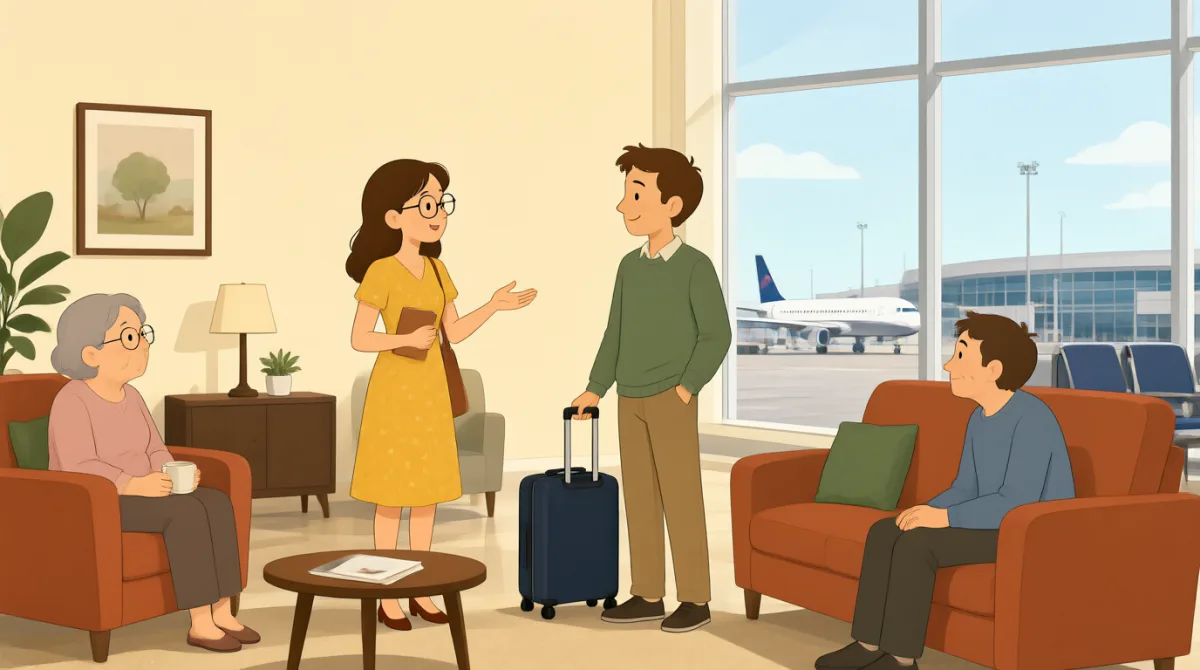

We should head to the check-in desk now. I can’t believe their visit went by so quickly.

The airport’s busy, but we’ve got plenty of time. Did they enjoy the city tour most, or the quiet day at home?
I think the day at home was a surprise hit. They loved cooking together and didn’t have to rush anywhere.
That makes sense. After such a long flight, they probably needed time to catch their breath before exploring.
Exactly. Next time, I’ll leave even more free time in the schedule. We tried to fit in a lot this week.
Still, they got to see the famous sights and experience how people live around here. That’s a pretty good balance.
They said they’d love to come back next summer. Maybe we could visit them overseas after that.
That sounds like a plan. For now, let’s make sure they get through security and remind them to text when they land.
I will. I’m going to miss having them around, but I’m glad we made these memories together.
They’re lucky to have you. Come on, let’s walk them to security before we get too sentimental.
Vocabulary6
- head to the check-in desk
To go to the airport counter where you check in for a flight. Use “head to” to talk about going somewhere.
- a surprise hit
Something that turns out to be more popular or enjoyable than expected. Here, the quiet day at home was a surprise hit with the relatives.
- catch their breath
To rest and recover after being tired or busy. You can use this phrase when someone needs a short break.
- fit in a lot
To do many activities in a limited amount of time. Use it when describing a busy schedule.
- a pretty good balance
A fairly good mix of different things. Here, it means the relatives enjoyed both sightseeing and experiencing everyday life.
- get too sentimental
To become very emotional, especially when remembering meaningful moments or saying goodbye. It is often used lightly or humorously.
Key Sentences7
- 1
I can’t believe their visit went by so quickly.
Use this to express surprise that time passed fast. You can replace “their visit” with another event, such as “the weekend” or “the year.”
- 2
Did they enjoy the city tour most, or the quiet day at home?
This is a natural way to ask someone to compare two experiences. Replace the activities to ask what someone liked best.
- 3
After such a long flight, they probably needed time to catch their breath before exploring.
Use this to explain why someone needed a rest before doing another activity. “Probably” makes the explanation sound like a reasonable guess.
- 4
Next time, I’ll leave even more free time in the schedule.
This is useful for talking about how you would plan differently in the future. “Next time, I’ll…” can introduce a change or improvement.
- 5
They said they’d love to come back next summer.
Use this to report what someone said they would like to do. “They’d love to” expresses strong interest in a future plan.
- 6
For now, let’s make sure they get through security and remind them to text when they land.
This sentence combines two practical tasks before saying goodbye. Use “make sure” and “remind someone to” when arranging important details.
- 7
I’m going to miss having them around, but I’m glad we made these memories together.
This expresses both sadness about someone leaving and happiness about the time you shared. Use “I’m going to miss…” to talk about someone or something you’ll miss.