Saying Goodbye
Despedirse
Grace and Jack take the relatives to the airport and talk about the highlights of the visit. They say goodbye, promise to stay in touch, and discuss a possible reunion.
Grace y Jack llevan a sus familiares al aeropuerto y hablan de los mejores momentos de la visita. Se despiden, prometen mantenerse en contacto y hablan de la posibilidad de reunirse de nuevo.
Diálogo10
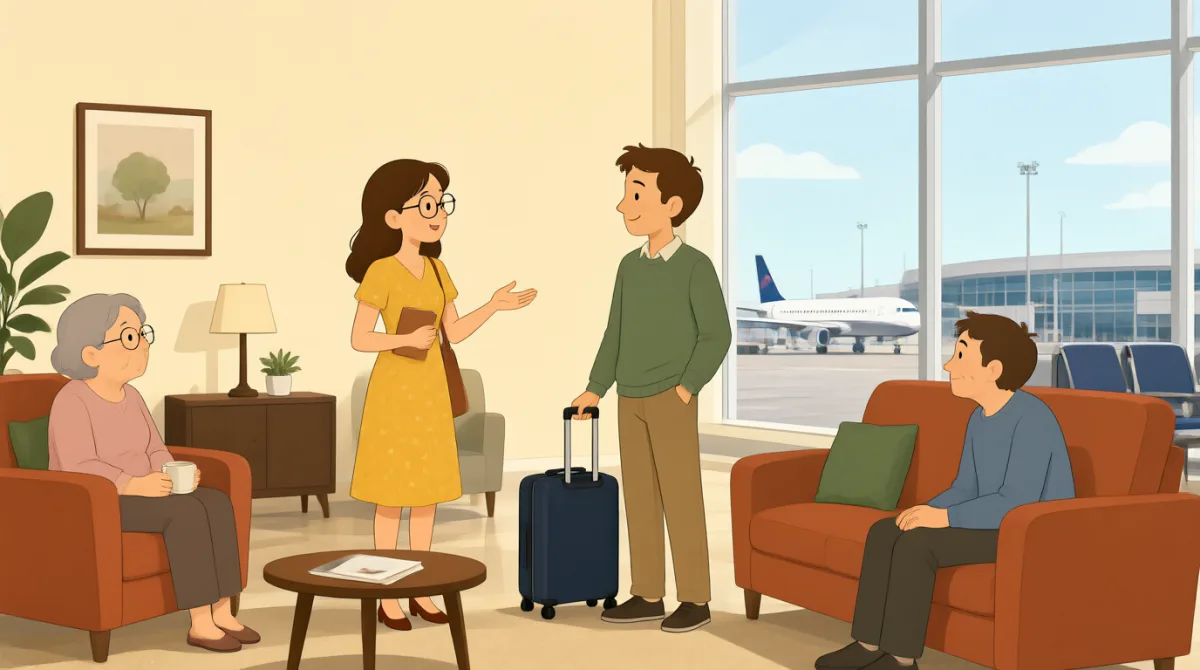

We should head to the check-in desk now. I can’t believe their visit went by so quickly.
Ya deberíamos ir al mostrador de facturación. No puedo creer que su visita haya pasado tan rápido.

The airport’s busy, but we’ve got plenty of time. Did they enjoy the city tour most, or the quiet day at home?
El aeropuerto está lleno, pero tenemos tiempo de sobra. ¿Qué les gustó más: el recorrido por la ciudad o el día tranquilo en casa?
I think the day at home was a surprise hit. They loved cooking together and didn’t have to rush anywhere.
Creo que el día en casa fue todo un éxito inesperado. Les encantó cocinar juntos y no tuvieron que andar corriendo de un lado a otro.
That makes sense. After such a long flight, they probably needed time to catch their breath before exploring.
Tiene sentido. Después de un vuelo tan largo, probablemente necesitaban descansar un poco antes de salir a explorar.
Exactly. Next time, I’ll leave even more free time in the schedule. We tried to fit in a lot this week.
Exacto. La próxima vez dejaré todavía más tiempo libre en el itinerario. Esta semana intentamos hacer un montón de cosas.
Still, they got to see the famous sights and experience how people live around here. That’s a pretty good balance.
Aun así, pudieron ver los lugares famosos y conocer cómo vive la gente por aquí. La verdad, quedó bastante equilibrado.
They said they’d love to come back next summer. Maybe we could visit them overseas after that.
Dijeron que les encantaría volver el próximo verano. Quizá después podríamos ir a visitarlos al extranjero.
That sounds like a plan. For now, let’s make sure they get through security and remind them to text when they land.
Me parece un buen plan. Por ahora, asegurémonos de que pasen el control de seguridad y recordémosles que nos escriban cuando aterricen.
I will. I’m going to miss having them around, but I’m glad we made these memories together.
Lo haré. Voy a extrañar tenerlos por aquí, pero me alegra que hayamos creado estos recuerdos juntos.
They’re lucky to have you. Come on, let’s walk them to security before we get too sentimental.
Tienen suerte de tenerte. Vamos, acompañémoslos hasta el control de seguridad antes de ponernos demasiado sentimentales.
Vocabulario6
- head to the check-in deskir al mostrador de facturación
To go to the airport counter where you check in for a flight. Use “head to” to talk about going somewhere.
Ir al mostrador del aeropuerto donde se factura para un vuelo. Usa “head to” para hablar de ir a algún lugar.
- a surprise hitun éxito inesperado
Something that turns out to be more popular or enjoyable than expected. Here, the quiet day at home was a surprise hit with the relatives.
Algo que resulta ser más popular o agradable de lo esperado. Aquí, el día tranquilo en casa fue un éxito inesperado entre los familiares.
- catch their breathrecuperar el aliento
To rest and recover after being tired or busy. You can use this phrase when someone needs a short break.
Descansar y recuperarse después de estar cansado u ocupado. Puedes usar esta expresión cuando alguien necesita tomarse un breve descanso.
- fit in a lothacer un montón de cosas
To do many activities in a limited amount of time. Use it when describing a busy schedule.
Realizar muchas actividades en poco tiempo. Usa esta expresión para describir una agenda apretada.
- a pretty good balanceun equilibrio bastante bueno
A fairly good mix of different things. Here, it means the relatives enjoyed both sightseeing and experiencing everyday life.
Una combinación bastante buena de cosas distintas. Aquí significa que los familiares disfrutaron tanto de hacer turismo como de conocer la vida cotidiana.
- get too sentimentalponerse demasiado sentimental
To become very emotional, especially when remembering meaningful moments or saying goodbye. It is often used lightly or humorously.
Emocionarse mucho, especialmente al recordar momentos importantes o al despedirse. Suele usarse con ligereza o en tono humorístico.
Frases clave7
- 1
I can’t believe their visit went by so quickly.
No puedo creer que su visita haya pasado tan rápido.
Use this to express surprise that time passed fast. You can replace “their visit” with another event, such as “the weekend” or “the year.”
Usa esta frase para expresar sorpresa porque el tiempo pasó rápido. Puedes cambiar “their visit” por otro evento, como “the weekend” o “the year”.
- 2
Did they enjoy the city tour most, or the quiet day at home?
¿Qué les gustó más: el recorrido por la ciudad o el día tranquilo en casa?
This is a natural way to ask someone to compare two experiences. Replace the activities to ask what someone liked best.
Esta es una forma natural de pedirle a alguien que compare dos experiencias. Cambia las actividades para preguntar qué le gustó más a alguien.
- 3
After such a long flight, they probably needed time to catch their breath before exploring.
Después de un vuelo tan largo, probablemente necesitaban descansar un poco antes de salir a explorar.
Use this to explain why someone needed a rest before doing another activity. “Probably” makes the explanation sound like a reasonable guess.
Usa esta frase para explicar por qué alguien necesitaba descansar antes de hacer otra actividad. “Probably” hace que la explicación suene como una suposición razonable.
- 4
Next time, I’ll leave even more free time in the schedule.
La próxima vez dejaré todavía más tiempo libre en el itinerario.
This is useful for talking about how you would plan differently in the future. “Next time, I’ll…” can introduce a change or improvement.
Esta frase sirve para hablar de cómo planificarías de otra manera en el futuro. “Next time, I’ll…” puede introducir un cambio o una mejora.
- 5
They said they’d love to come back next summer.
Dijeron que les encantaría volver el próximo verano.
Use this to report what someone said they would like to do. “They’d love to” expresses strong interest in a future plan.
Usa esta frase para contar lo que alguien dijo que le gustaría hacer. “They’d love to” expresa mucho interés en un plan futuro.
- 6
For now, let’s make sure they get through security and remind them to text when they land.
Por ahora, asegurémonos de que pasen el control de seguridad y recordémosles que nos escriban cuando aterricen.
This sentence combines two practical tasks before saying goodbye. Use “make sure” and “remind someone to” when arranging important details.
Esta frase combina dos tareas prácticas antes de despedirse. Usa “make sure” y “remind someone to” para ocuparte de detalles importantes.
- 7
I’m going to miss having them around, but I’m glad we made these memories together.
Voy a extrañar tenerlos por aquí, pero me alegra que hayamos creado estos recuerdos juntos.
This expresses both sadness about someone leaving and happiness about the time you shared. Use “I’m going to miss…” to talk about someone or something you’ll miss.
Esta frase expresa tanto tristeza porque alguien se va como alegría por el tiempo que compartieron. Usa “I’m going to miss…” para hablar de alguien o algo que vas a extrañar.