Picking Them Up at the Airport
Grace and Jack wait at the airport and work out what to do when the relatives’ flight is delayed. When the family arrives, they greet them warmly and help with their luggage.
Dialogue8
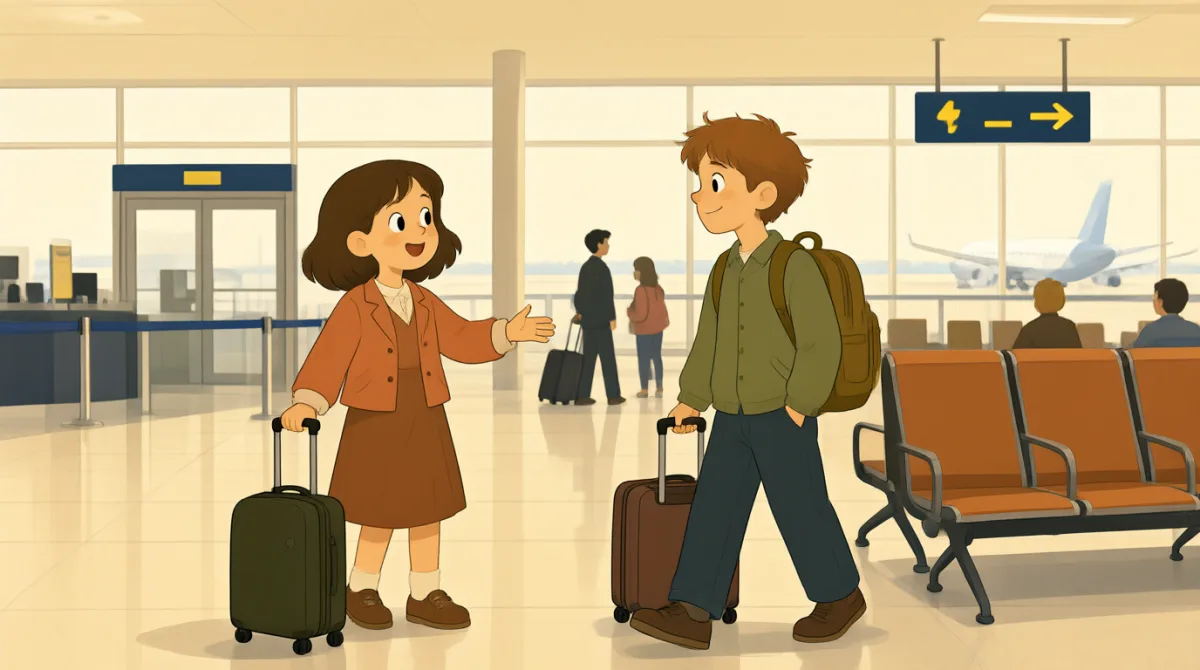

The flight was supposed to land at three, but the airline app says it’s delayed by almost two hours.

That’s a long wait. Do you want me to check whether they’ve posted a new arrival time at the airport?
Please do. I’ll message my relatives and let them know we’re here. They might be worried when they land.
The screen says five o’clock now. We can grab a coffee nearby, but let’s stay close in case it changes again.
Good idea. They’ve had a long flight, so I’ll keep dinner simple and give them time to rest once we get home.
Looks like their plane has landed. The arrivals board says they’re heading to baggage claim now.
There they are! Welcome! You must be exhausted. Let us take those bags for you.
I’ve got the big suitcase. Grace, could you take the smaller one? The car’s just outside, and we’ll be home soon.
Vocabulary7
- was supposed to land
This means the flight was expected to arrive at a particular time. Use “was supposed to” to talk about a plan or expectation that may have changed.
- delayed by almost two hours
This means the flight will arrive nearly two hours later than planned. You can use “delayed by” followed by a length of time to explain how late something is.
- stay close
Here, this means to remain near the airport while waiting. Use it when you want someone to stay nearby and be easy to find.
- keep dinner simple
This means to make or serve an easy meal without much preparation. You can use “keep [something] simple” when you want to avoid making it complicated.
- baggage claim
This is the area at an airport where arriving passengers collect their suitcases. You can ask, “Where is baggage claim?” when looking for it.
- You must be exhausted.
This is a warm way to say that someone looks very tired. “Must be” expresses a strong guess based on what you know.
- take those bags for you
This means to carry the bags to help someone. Use “Let me” or “Let us” before this phrase to offer help.
Key Sentences7
- 1
The flight was supposed to land at three, but the airline app says it’s delayed by almost two hours.
This sentence explains an expected arrival time and a change to the plan. You can reuse the pattern “It was supposed to [happen] at [time], but…” to describe a delay or change.
- 2
Do you want me to check whether they’ve posted a new arrival time at the airport?
This is a polite way to offer to find out information. Replace “check whether” with an action or source that fits the situation.
- 3
I’ll message my relatives and let them know we’re here.
This explains what you plan to do and why. Use “let [someone] know” to say you will give them information.
- 4
We can grab a coffee nearby, but let’s stay close in case it changes again.
This suggests a practical plan while allowing for something unexpected. “In case” introduces a possibility you want to be prepared for.
- 5
They’ve had a long flight, so I’ll keep dinner simple and give them time to rest once we get home.
This gives a reason for making a considerate plan. You can use “They’ve had…, so I’ll…” to explain how someone’s situation affects what you’ll do.
- 6
You must be exhausted.
This is a friendly way to show concern when someone has had a tiring experience. Use “You must be…” to make a caring guess about how someone feels.
- 7
Let us take those bags for you.
This is a warm, polite offer to help. Use “Let us take…” before naming something you can carry or do for someone.