Showing Them Around the City
Emma and her visiting relatives explore the city, choosing between a famous landmark and a quieter neighborhood. They discuss local customs and take breaks when everyone gets tired.
Dialogue9
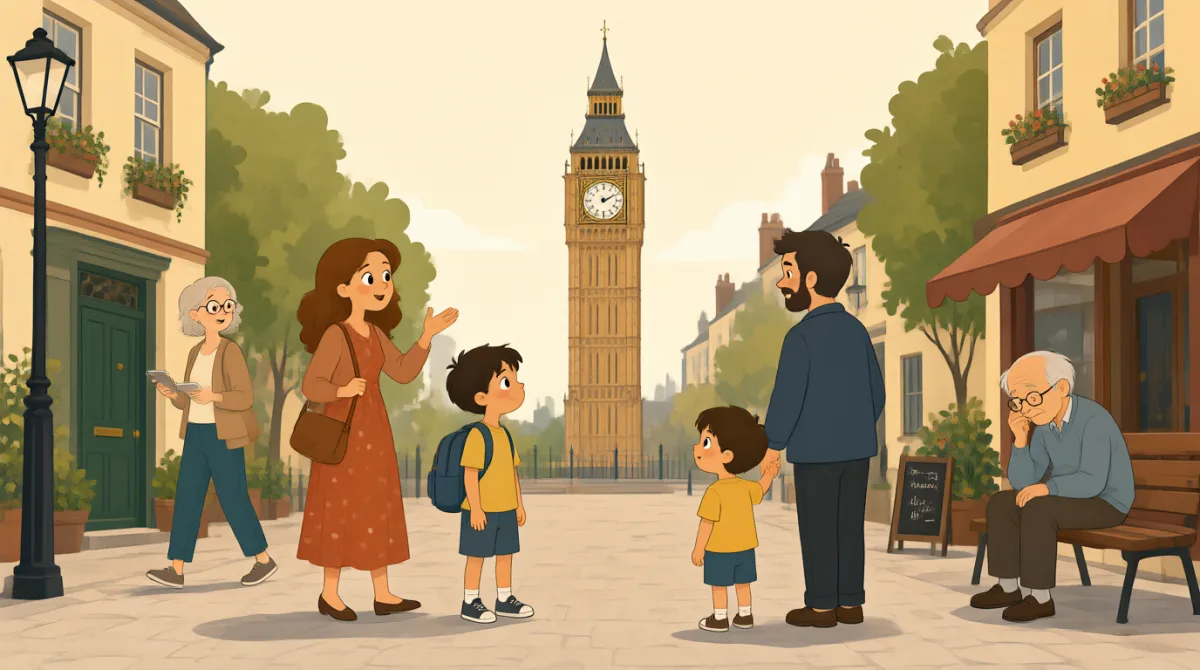

The famous tower is only a few blocks away. We could see it first, then explore the quieter neighborhood nearby.

That sounds good, but let’s check how everyone’s feeling. They had a long flight, so we shouldn’t pack too much into the day.

The tower gets crowded around noon. If we go now, we can take a few photos before the tour groups arrive.
Great. And after that, the neighborhood has little cafés and shops. It’ll be a nice change from the busy tourist spots.
One thing to remember: people usually wait in line here, even for a bus. Let’s give them a heads-up so they know what to expect.
Good point. We can take the bus to the neighborhood, but there’s also a nice walking route if everyone still has energy.
Let’s decide after the tower. There’s a bench nearby where we can sit down, have some water, and see how everyone feels.
Perfect. A little flexibility goes a long way. We want them to enjoy the city, not feel like they’re racing through it.
All right, tower first, then a break, and we’ll play the rest by ear. That should keep the day comfortable for everyone.
Vocabulary7
- a few blocks away
A short distance away, measured in city blocks. Use it to describe how near a place is.
- pack too much into the day
To plan too many activities for one day. Use this phrase when you want to keep a schedule manageable.
- gets crowded
Becomes full of many people. You can use this to describe a place that is busy at certain times.
- give them a heads-up
Tell them about something in advance so they can be prepared. This informal phrase is useful when sharing practical information.
- what to expect
What is likely to happen or what a situation will be like. Use it to help someone prepare for an unfamiliar place or experience.
- a nice change from
Something different and pleasant compared with what came before. Use it when suggesting a welcome alternative.
- play the rest by ear
Decide what to do later based on how things go. This informal idiom is useful when you want to keep plans flexible.
Key Sentences8
- 1
They had a long flight, so we shouldn’t pack too much into the day.
This sentence gives a reason for keeping plans light. Reuse the pattern “They had…, so we shouldn’t…” to explain why you want to avoid doing too much.
- 2
If we go now, we can take a few photos before the tour groups arrive.
This sentence suggests an action and explains its benefit. Use “If we…, we can…” to make a practical plan.
- 3
It’ll be a nice change from the busy tourist spots.
This is a natural way to recommend something different. Reuse “It’ll be a nice change from…” when suggesting a new activity or place.
- 4
Let’s give them a heads-up so they know what to expect.
This sentence suggests warning or informing someone in advance. Use “Let’s give [someone] a heads-up so…” to explain why you’re sharing information.
- 5
There’s a bench nearby where we can sit down, have some water, and see how everyone feels.
This sentence offers a practical place to rest and check in with a group. Reuse “There’s a [place] nearby where we can…” to suggest a convenient option.
- 6
A little flexibility goes a long way.
This concise expression says that being adaptable can make a big difference. Use it when plans may need to change to suit people’s needs.
- 7
We want them to enjoy the city, not feel like they’re racing through it.
This sentence contrasts a positive goal with an unwanted feeling. Reuse “We want [someone] to…, not…” to explain what you hope to achieve.
- 8
We’ll play the rest by ear.
This is an informal way to say you’ll decide later based on the situation. Use it when you want to leave part of a plan open.