Saying Goodbye
さよならを言う
Grace and Jack take the relatives to the airport and talk about the highlights of the visit. They say goodbye, promise to stay in touch, and discuss a possible reunion.
グレースとジャックは親戚を空港まで送り、滞在中の思い出について話します。別れのあいさつをして、連絡を取り合うと約束し、また会えるかどうか話します。
会話10
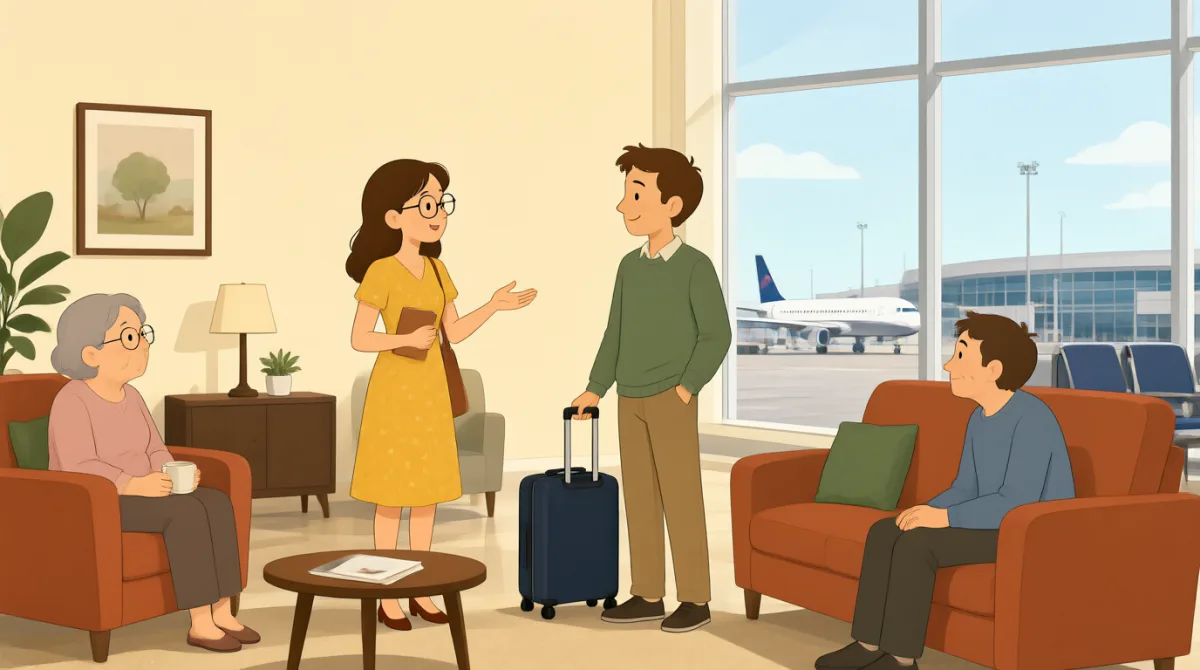

We should head to the check-in desk now. I can’t believe their visit went by so quickly.
そろそろチェックインカウンターに行こう。みんなが来てたの、あっという間だったね。

The airport’s busy, but we’ve got plenty of time. Did they enjoy the city tour most, or the quiet day at home?
空港は混んでるけど、時間はたっぷりあるよ。街の観光と、家でのんびり過ごした日、どっちが一番楽しかったかな?
I think the day at home was a surprise hit. They loved cooking together and didn’t have to rush anywhere.
家で過ごした日が思いがけず大好評だったみたい。一緒に料理を楽しんでたし、どこかへ急いで行く必要もなかったからね。
That makes sense. After such a long flight, they probably needed time to catch their breath before exploring.
それもそうだね。あんなに長いフライトのあとだし、観光する前にひと息つく時間が必要だったんだろうね。
Exactly. Next time, I’ll leave even more free time in the schedule. We tried to fit in a lot this week.
ほんとそうだね。次は予定にもっと自由時間を入れるよ。今週はあれこれ詰め込みすぎたね。
Still, they got to see the famous sights and experience how people live around here. That’s a pretty good balance.
それでも、有名な観光名所も見られたし、この辺りの人たちの日常も体験できたよ。なかなかいいバランスだったね。
They said they’d love to come back next summer. Maybe we could visit them overseas after that.
来年の夏にまた来たいって言ってたよ。その次は、こっちが海外のあの人たちのところへ行くのもいいかもね。
That sounds like a plan. For now, let’s make sure they get through security and remind them to text when they land.
いいね。とりあえず、保安検査をちゃんと通れるようにして、着いたらメッセージするよう伝えよう。
I will. I’m going to miss having them around, but I’m glad we made these memories together.
そうするね。みんながいなくなると寂しいけど、一緒に思い出を作れてよかったよ。
They’re lucky to have you. Come on, let’s walk them to security before we get too sentimental.
みんな、君がいてくれて幸せだね。ほら、感傷的になりすぎる前に保安検査場まで見送ろう。
語彙6
- head to the check-in deskチェックインカウンターに向かう
To go to the airport counter where you check in for a flight. Use “head to” to talk about going somewhere.
飛行機に乗るための手続きをする空港のカウンターへ行くことです。「head to」は、どこかへ向かうと言うときに使います。
- a surprise hit思いがけず大好評
Something that turns out to be more popular or enjoyable than expected. Here, the quiet day at home was a surprise hit with the relatives.
予想していた以上に人気が出たり、楽しんでもらえたりすることです。ここでは、親戚にとって家でのんびり過ごした日が思いがけず大好評だったという意味です。
- catch their breathひと息つく
To rest and recover after being tired or busy. You can use this phrase when someone needs a short break.
疲れたり忙しかったりしたあとに、休んで回復することです。少し休憩が必要なときに使える表現です。
- fit in a lotたくさんのことを詰め込む
To do many activities in a limited amount of time. Use it when describing a busy schedule.
限られた時間の中で、たくさんの活動をすることです。忙しいスケジュールについて話すときに使います。
- a pretty good balanceなかなかいいバランス
A fairly good mix of different things. Here, it means the relatives enjoyed both sightseeing and experiencing everyday life.
いろいろなことがほどよく組み合わさっていることです。ここでは、親戚が観光と日常生活の体験の両方を楽しめたという意味です。
- get too sentimental感傷的になりすぎる
To become very emotional, especially when remembering meaningful moments or saying goodbye. It is often used lightly or humorously.
大切な思い出を振り返ったり、別れを告げたりするときに、とても感情的になることです。軽い冗談めかした言い方として使われることもよくあります。
重要な文7
- 1
I can’t believe their visit went by so quickly.
みんなが来てたの、あっという間だったね。
Use this to express surprise that time passed fast. You can replace “their visit” with another event, such as “the weekend” or “the year.”
時間があっという間に過ぎたことに驚いたときに使います。「their visit」の代わりに「the weekend」や「the year」など、別の出来事を入れることもできます。
- 2
Did they enjoy the city tour most, or the quiet day at home?
街の観光と、家でのんびり過ごした日、どっちが一番楽しかったかな?
This is a natural way to ask someone to compare two experiences. Replace the activities to ask what someone liked best.
二つの体験を比べて、どちらがよかったか自然に尋ねる表現です。活動を別のものに置き換えて、何が一番楽しかったか聞くこともできます。
- 3
After such a long flight, they probably needed time to catch their breath before exploring.
あんなに長いフライトのあとだし、観光する前にひと息つく時間が必要だったんだろうね。
Use this to explain why someone needed a rest before doing another activity. “Probably” makes the explanation sound like a reasonable guess.
次の活動を始める前に、なぜ休憩が必要だったのかを説明するときに使います。「Probably」を使うと、もっともらしい推測として伝わります。
- 4
Next time, I’ll leave even more free time in the schedule.
次は予定にもっと自由時間を入れるよ。
This is useful for talking about how you would plan differently in the future. “Next time, I’ll…” can introduce a change or improvement.
次回はどう計画を変えるか話すときに便利な表現です。「Next time, I’ll…」のあとに、変更点や改善点を続けられます。
- 5
They said they’d love to come back next summer.
来年の夏にまた来たいって言ってたよ。
Use this to report what someone said they would like to do. “They’d love to” expresses strong interest in a future plan.
誰かがやりたいと言っていたことを伝えるときに使います。「They’d love to」は、これからすることへの強い関心を表します。
- 6
For now, let’s make sure they get through security and remind them to text when they land.
とりあえず、保安検査をちゃんと通れるようにして、着いたらメッセージするよう伝えよう。
This sentence combines two practical tasks before saying goodbye. Use “make sure” and “remind someone to” when arranging important details.
別れの前に済ませておきたい、実際的な用事を二つ組み合わせた文です。大切な段取りを整えるときは、「make sure」と「remind someone to」を使えます。
- 7
I’m going to miss having them around, but I’m glad we made these memories together.
みんながいなくなると寂しいけど、一緒に思い出を作れてよかったよ。
This expresses both sadness about someone leaving and happiness about the time you shared. Use “I’m going to miss…” to talk about someone or something you’ll miss.
誰かが帰ってしまう寂しさと、一緒に過ごした時間への喜びの両方を表しています。「I’m going to miss…」は、いなくなったり、なくなったりしたら寂しく思う人や物について話すときに使います。