Different Habits at Home
At home, Grace and her relative discuss differences in meal times, shoes indoors, and how much food to serve. They explain their preferences kindly and find a comfortable compromise.
Dialogue9
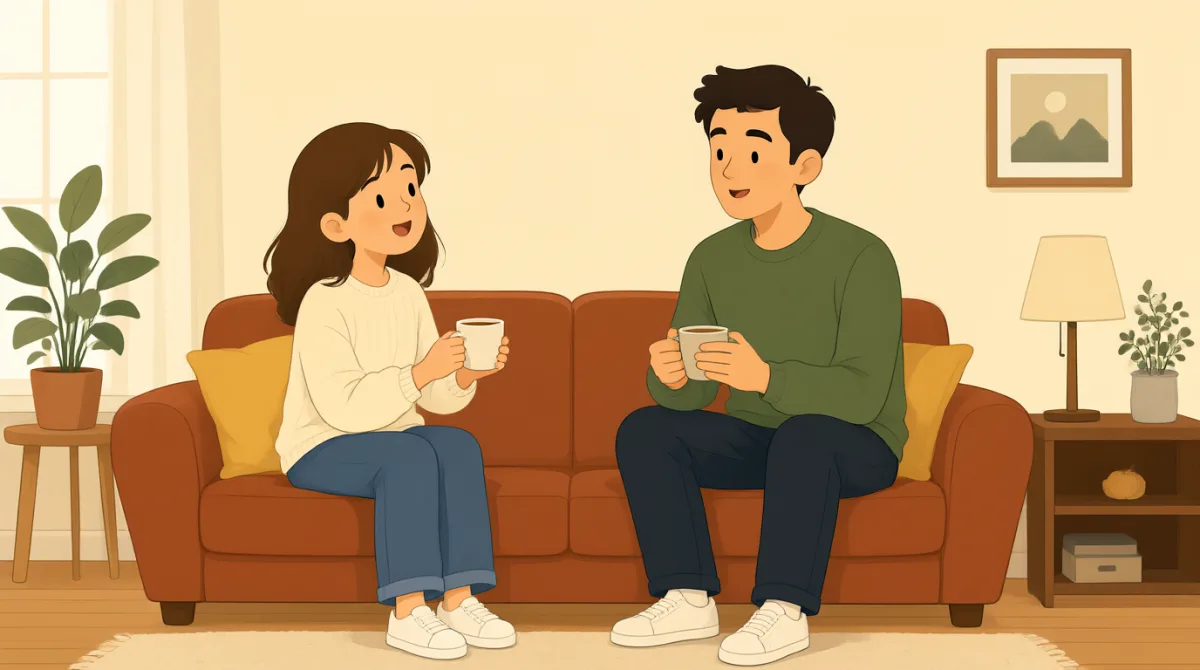

Mia, would you mind taking your shoes off by the door? We usually keep them off indoors to keep the floors clean.

Of course. I’m used to wearing slippers at home, so I’ll just grab a pair from my bag.
Thanks. And please tell me if you’d rather eat earlier. We usually have dinner around seven, but I know that can feel late.
Seven works for me. At home, we often eat a little earlier, but I’m happy to adjust while I’m visiting.
Great. One thing I’m still figuring out is how much food to serve. I don’t want you to feel you have to finish everything.
That’s thoughtful. In my family, offering seconds is a way to show you care, but a full plate can feel like a lot.
I see. I’ll start with smaller portions, and you can always ask for more. That way, we’re both comfortable.
That sounds perfect. And if I’m full, I’ll say so instead of trying to clean my plate. Deal?
Deal. Thanks for telling me what feels comfortable for you. It’s easier to meet halfway when we talk about it.
Vocabulary7
- would you mind
A polite way to ask someone to do something. You can use it before a verb ending in -ing, as in “Would you mind opening the window?”
- keep them off indoors
This means not wearing shoes inside the home. You can use “keep [something] off” to explain a household rule.
- I’m used to wearing slippers
This means wearing slippers at home is familiar and normal for the speaker. Use “be used to” before a noun or an -ing verb to talk about what feels familiar.
- feel late
Here, this means that seven o’clock might seem later than someone’s usual dinner time. You can use “feel” to describe how a time or situation seems to you.
- adjust
To adjust is to change slightly to suit a new situation. Here, Mia is willing to change her usual meal time while she is visiting.
- offering seconds
This means offering someone another serving of food after they have finished their first one. It can be a way to show care or hospitality.
- meet halfway
To meet halfway is to find a compromise that works for both people. It’s useful when people have different preferences.
Key Sentences7
- 1
Would you mind taking your shoes off by the door?
This is a polite way to ask someone to follow a household rule. Reuse “Would you mind + -ing?” for considerate requests.
- 2
Please tell me if you’d rather eat earlier.
This invites someone to share a preference. You can use “if you’d rather” to ask whether someone would prefer a different option.
- 3
I’m happy to adjust while I’m visiting.
This shows willingness to adapt to someone else’s routine. Reuse “I’m happy to adjust” when you’re open to a small change.
- 4
I don’t want you to feel you have to finish everything.
This reassures someone that they don’t need to eat more than they want. You can use “I don’t want you to feel you have to…” to gently remove pressure.
- 5
I’ll start with smaller portions, and you can always ask for more.
This offers a practical solution that respects both people’s preferences. Reuse “I’ll start with…” to explain a first step, followed by “you can always…” to offer flexibility.
- 6
If I’m full, I’ll say so instead of trying to clean my plate.
This explains how someone will communicate that they have eaten enough. “Say so” refers to saying the fact just mentioned, and “instead of” introduces an alternative.
- 7
It’s easier to meet halfway when we talk about it.
This explains why talking openly can help people find a compromise. Reuse “It’s easier to… when…” to connect a helpful action with a positive result.