Picking Them Up at the Airport
공항에서 마중하기
Grace and Jack wait at the airport and work out what to do when the relatives’ flight is delayed. When the family arrives, they greet them warmly and help with their luggage.
그레이스와 잭은 공항에서 기다리며 친척들의 비행기가 지연되자 어떻게 할지 의논해요. 가족이 도착하면 반갑게 맞이하고 짐을 들어 줘요.
대화8
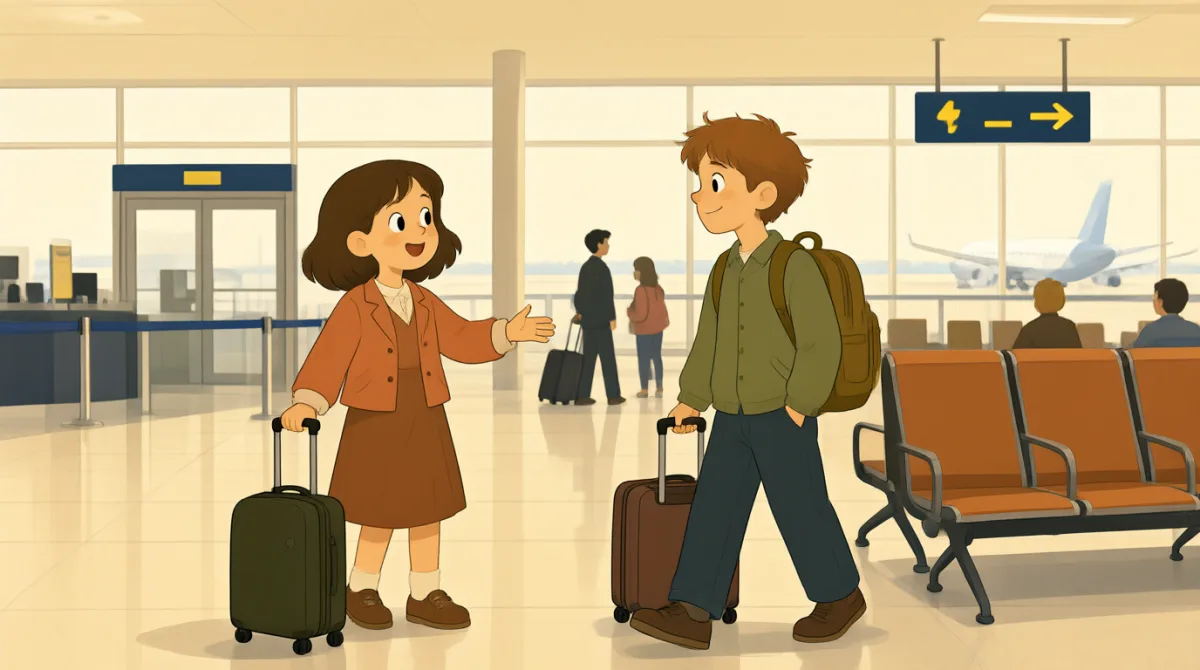

The flight was supposed to land at three, but the airline app says it’s delayed by almost two hours.
비행기가 세 시에 도착할 예정이었는데, 항공사 앱을 보니까 거의 두 시간이나 지연됐대.

That’s a long wait. Do you want me to check whether they’ve posted a new arrival time at the airport?
오래 기다리겠네. 공항에 새 도착 시간이 올라왔는지 내가 확인해 볼까?
Please do. I’ll message my relatives and let them know we’re here. They might be worried when they land.
그래 줘. 친척들한테 메시지 보내서 우리가 여기 있다고 알려 줄게. 도착했을 때 걱정하고 있을지도 몰라.
The screen says five o’clock now. We can grab a coffee nearby, but let’s stay close in case it changes again.
지금은 다섯 시라고 나오네. 근처에서 커피 한잔해도 되지만, 또 바뀔지 모르니까 가까이 있자.
Good idea. They’ve had a long flight, so I’ll keep dinner simple and give them time to rest once we get home.
좋은 생각이야. 장시간 비행했으니까 저녁은 간단하게 준비하고, 집에 도착하면 쉴 시간을 줘야겠다.
Looks like their plane has landed. The arrivals board says they’re heading to baggage claim now.
비행기가 착륙한 것 같아. 도착 안내판에 지금 수하물 찾는 곳으로 가고 있다고 나오네.
There they are! Welcome! You must be exhausted. Let us take those bags for you.
저기 온다! 어서 와! 정말 피곤하겠다. 우리가 그 가방들 들어 줄게.
I’ve got the big suitcase. Grace, could you take the smaller one? The car’s just outside, and we’ll be home soon.
큰 여행 가방은 내가 들게. 그레이스, 작은 건 네가 들어 줄래? 차는 바로 밖에 있어. 금방 집에 도착할 거야.
어휘7
- was supposed to land도착할 예정이었다
This means the flight was expected to arrive at a particular time. Use “was supposed to” to talk about a plan or expectation that may have changed.
비행기가 특정 시간에 도착할 것으로 예상됐다는 뜻이에요. “was supposed to”는 계획이나 예상이 달라졌을 수도 있을 때 사용해요.
- delayed by almost two hours거의 두 시간 지연된
This means the flight will arrive nearly two hours later than planned. You can use “delayed by” followed by a length of time to explain how late something is.
비행기가 예정된 시간보다 거의 두 시간 늦게 도착한다는 뜻이에요. “delayed by” 뒤에 시간을 붙여 얼마나 늦어지는지 설명할 수 있어요.
- stay close가까이 있다
Here, this means to remain near the airport while waiting. Use it when you want someone to stay nearby and be easy to find.
여기서는 기다리는 동안 공항 근처에 머문다는 뜻이에요. 누군가에게 가까운 곳에 있으면서 쉽게 찾을 수 있게 해 달라고 할 때 사용해요.
- keep dinner simple저녁을 간단하게 준비하다
This means to make or serve an easy meal without much preparation. You can use “keep [something] simple” when you want to avoid making it complicated.
준비하는 데 손이 많이 가지 않는 간단한 식사를 만들거나 내놓는다는 뜻이에요. 복잡하게 만들고 싶지 않을 때 “keep [something] simple”이라고 할 수 있어요.
- baggage claim수하물 찾는 곳
This is the area at an airport where arriving passengers collect their suitcases. You can ask, “Where is baggage claim?” when looking for it.
도착한 승객들이 여행 가방을 찾는 공항 구역이에요. 그곳을 찾을 때 “Where is baggage claim?”이라고 물어볼 수 있어요.
- You must be exhausted.정말 피곤하겠다.
This is a warm way to say that someone looks very tired. “Must be” expresses a strong guess based on what you know.
상대가 몹시 피곤해 보인다고 따뜻하게 말하는 표현이에요. “Must be”는 알고 있는 사실을 바탕으로 강하게 추측할 때 사용해요.
- take those bags for you가방을 들어 주다
This means to carry the bags to help someone. Use “Let me” or “Let us” before this phrase to offer help.
누군가를 도와 가방을 옮겨 준다는 뜻이에요. 도움을 제안할 때 이 표현 앞에 “Let me” 또는 “Let us”를 붙여 사용해요.
핵심 문장7
- 1
The flight was supposed to land at three, but the airline app says it’s delayed by almost two hours.
비행기가 세 시에 도착할 예정이었는데, 항공사 앱을 보니까 거의 두 시간이나 지연됐대.
This sentence explains an expected arrival time and a change to the plan. You can reuse the pattern “It was supposed to [happen] at [time], but…” to describe a delay or change.
예상했던 도착 시간과 계획이 바뀐 상황을 설명하는 문장이에요. 지연이나 변경을 말할 때 “It was supposed to [happen] at [time], but…”이라는 패턴을 활용할 수 있어요.
- 2
Do you want me to check whether they’ve posted a new arrival time at the airport?
공항에 새 도착 시간이 올라왔는지 내가 확인해 볼까?
This is a polite way to offer to find out information. Replace “check whether” with an action or source that fits the situation.
필요한 정보를 알아봐 주겠다고 제안하는 공손한 표현이에요. 상황에 맞는 행동이나 정보 출처로 “check whether”를 바꿔 쓸 수 있어요.
- 3
I’ll message my relatives and let them know we’re here.
친척들한테 메시지 보내서 우리가 여기 있다고 알려 줄게.
This explains what you plan to do and why. Use “let [someone] know” to say you will give them information.
무엇을 할 계획인지, 또 그 이유가 무엇인지 설명하는 문장이에요. 정보를 전해 주겠다고 말할 때 “let [someone] know”를 사용해요.
- 4
We can grab a coffee nearby, but let’s stay close in case it changes again.
근처에서 커피 한잔해도 되지만, 또 바뀔지 모르니까 가까이 있자.
This suggests a practical plan while allowing for something unexpected. “In case” introduces a possibility you want to be prepared for.
예상하지 못한 상황에도 대비하면서 실용적인 계획을 제안하는 문장이에요. “In case”는 대비하고 싶은 가능성을 소개할 때 사용해요.
- 5
They’ve had a long flight, so I’ll keep dinner simple and give them time to rest once we get home.
장시간 비행했으니까 저녁은 간단하게 준비하고, 집에 도착하면 쉴 시간을 줘야겠다.
This gives a reason for making a considerate plan. You can use “They’ve had…, so I’ll…” to explain how someone’s situation affects what you’ll do.
상대방을 배려해 계획을 세우는 이유를 설명해요. 누군가의 상황이 내가 할 일에 어떤 영향을 주는지 설명할 때 “They’ve had…, so I’ll…”을 활용할 수 있어요.
- 6
You must be exhausted.
정말 피곤하겠다.
This is a friendly way to show concern when someone has had a tiring experience. Use “You must be…” to make a caring guess about how someone feels.
힘든 일을 겪은 사람에게 걱정과 배려를 보여 주는 친근한 표현이에요. 상대방의 기분이나 상태를 따뜻하게 짐작할 때 “You must be…”를 사용해요.
- 7
Let us take those bags for you.
우리가 그 가방들 들어 줄게.
This is a warm, polite offer to help. Use “Let us take…” before naming something you can carry or do for someone.
도움을 따뜻하고 공손하게 제안하는 표현이에요. 상대를 위해 들어 주거나 해 줄 수 있는 일을 말하기 전에 “Let us take…”을 사용해요.