Picking Them Up at the Airport
空港に迎えに行く
Grace and Jack wait at the airport and work out what to do when the relatives’ flight is delayed. When the family arrives, they greet them warmly and help with their luggage.
グレースとジャックは空港で待ちながら、親戚のフライトが遅れたときにどうするか話し合います。家族が到着すると、温かく出迎え、荷物を運ぶのを手伝います。
会話8
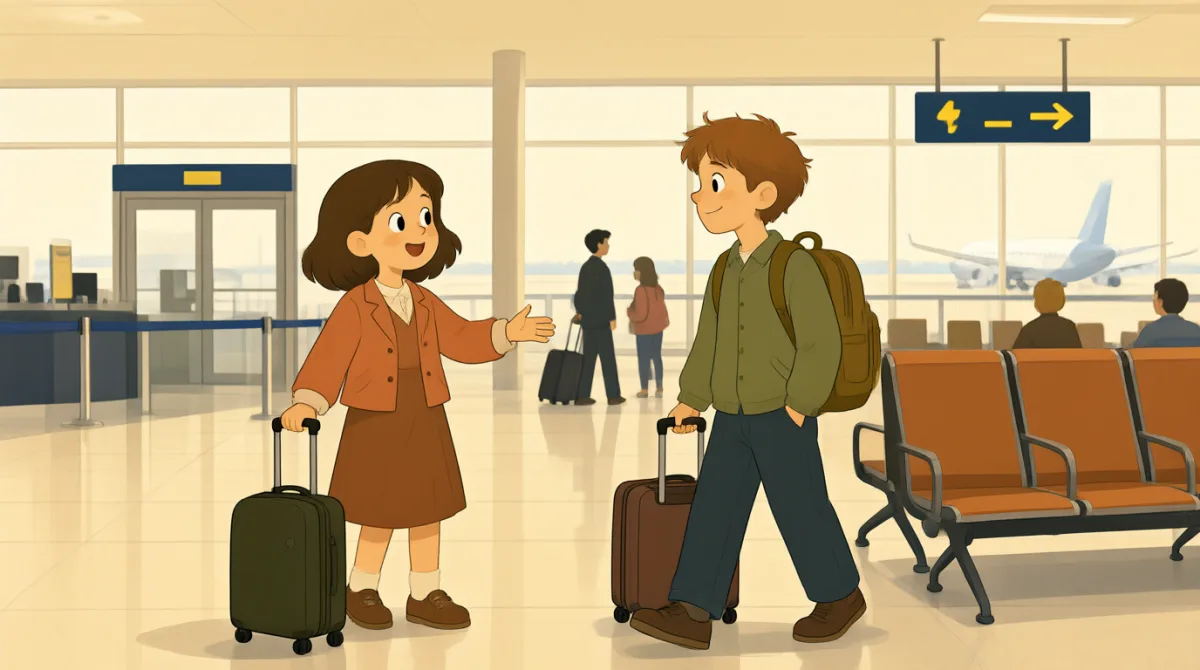

The flight was supposed to land at three, but the airline app says it’s delayed by almost two hours.
フライトは3時に着くはずだったんだけど、航空会社のアプリを見ると、2時間近く遅れてるみたい。

That’s a long wait. Do you want me to check whether they’ve posted a new arrival time at the airport?
それは長い待ち時間だね。空港のサイトに新しい到着時刻が出ているか、僕が確認しようか?
Please do. I’ll message my relatives and let them know we’re here. They might be worried when they land.
お願い。親戚にメッセージを送って、私たちがここにいるって知らせるね。到着したら心配するかもしれないから。
The screen says five o’clock now. We can grab a coffee nearby, but let’s stay close in case it changes again.
今は5時って表示されてる。近くでコーヒーでも飲めるけど、また変更になるといけないから、近くにいよう。
Good idea. They’ve had a long flight, so I’ll keep dinner simple and give them time to rest once we get home.
それがいいね。長いフライトのあとだから、夕食は簡単にして、家に着いたら休む時間をあげるね。
Looks like their plane has landed. The arrivals board says they’re heading to baggage claim now.
飛行機が着陸したみたい。到着案内を見ると、今、手荷物受取所に向かってるところだよ。
There they are! Welcome! You must be exhausted. Let us take those bags for you.
あ、いた!ようこそ!きっとへとへとだね。荷物はこっちで持つよ。
I’ve got the big suitcase. Grace, could you take the smaller one? The car’s just outside, and we’ll be home soon.
大きいスーツケースは僕が持つよ。グレース、小さいほうを持ってくれる?車はすぐ外にあるから、もうすぐ家に着くよ。
語彙7
- was supposed to land着くはずだった
This means the flight was expected to arrive at a particular time. Use “was supposed to” to talk about a plan or expectation that may have changed.
これは、フライトが特定の時刻に到着する予定だったという意味です。「was supposed to」は、変わった可能性のある計画や予想について話すときに使います。
- delayed by almost two hours2時間近く遅れている
This means the flight will arrive nearly two hours later than planned. You can use “delayed by” followed by a length of time to explain how late something is.
これは、フライトが予定より約2時間遅れて到着するという意味です。どれくらい遅れているかを説明するときは、「delayed by」のあとに時間の長さを続けます。
- stay close近くにいる
Here, this means to remain near the airport while waiting. Use it when you want someone to stay nearby and be easy to find.
ここでは、待っている間、空港の近くにとどまるという意味です。誰かに近くにいて、見つけやすい場所にいてほしいときに使います。
- keep dinner simple夕食を簡単にする
This means to make or serve an easy meal without much preparation. You can use “keep [something] simple” when you want to avoid making it complicated.
これは、あまり準備に手間をかけず、簡単な食事を作ったり出したりするという意味です。複雑にしたくないときは、「keep [something] simple」の形を使えます。
- baggage claim手荷物受取所
This is the area at an airport where arriving passengers collect their suitcases. You can ask, “Where is baggage claim?” when looking for it.
到着した乗客がスーツケースを受け取る空港内の場所です。探しているときは、「Where is baggage claim?」と尋ねられます。
- You must be exhausted.きっとへとへとだね。
This is a warm way to say that someone looks very tired. “Must be” expresses a strong guess based on what you know.
相手がとても疲れているように見えることを、温かい気持ちで伝える表現です。「Must be」は、知っていることをもとにした強い推測を表します。
- take those bags for youその荷物はこっちで持つ
This means to carry the bags to help someone. Use “Let me” or “Let us” before this phrase to offer help.
これは、相手を助けるために荷物を運ぶという意味です。手伝いを申し出るときは、このフレーズの前に「Let me」または「Let us」を置きます。
重要な文7
- 1
The flight was supposed to land at three, but the airline app says it’s delayed by almost two hours.
フライトは3時に着くはずだったんだけど、航空会社のアプリを見ると、2時間近く遅れてるみたい。
This sentence explains an expected arrival time and a change to the plan. You can reuse the pattern “It was supposed to [happen] at [time], but…” to describe a delay or change.
この文では、予定されていた到着時刻と、計画の変更を説明しています。遅れや変更について話すときは、「It was supposed to [happen] at [time], but…」というパターンを使えます。
- 2
Do you want me to check whether they’ve posted a new arrival time at the airport?
空港のサイトに新しい到着時刻が出ているか、僕が確認しようか?
This is a polite way to offer to find out information. Replace “check whether” with an action or source that fits the situation.
これは、情報を調べてみようかと丁寧に申し出る表現です。状況に合う行動や情報源に合わせて、「check whether」の部分を置き換えられます。
- 3
I’ll message my relatives and let them know we’re here.
親戚にメッセージを送って、私たちがここにいるって知らせるね。
This explains what you plan to do and why. Use “let [someone] know” to say you will give them information.
これから何をする予定なのか、そしてその目的を説明しています。相手に情報を伝えることを表すときは、「let [someone] know」を使います。
- 4
We can grab a coffee nearby, but let’s stay close in case it changes again.
近くでコーヒーでも飲めるけど、また変更になるといけないから、近くにいよう。
This suggests a practical plan while allowing for something unexpected. “In case” introduces a possibility you want to be prepared for.
予想外のことにも対応できる、現実的な計画を提案しています。「In case」は、備えておきたい可能性を導入するときに使います。
- 5
They’ve had a long flight, so I’ll keep dinner simple and give them time to rest once we get home.
長いフライトのあとだから、夕食は簡単にして、家に着いたら休む時間をあげるね。
This gives a reason for making a considerate plan. You can use “They’ve had…, so I’ll…” to explain how someone’s situation affects what you’ll do.
相手の状況を考えた、思いやりのある計画の理由を説明しています。誰かの状況が自分の行動にどう影響するかを説明するときは、「They’ve had…, so I’ll…」を使えます。
- 6
You must be exhausted.
きっとへとへとだね。
This is a friendly way to show concern when someone has had a tiring experience. Use “You must be…” to make a caring guess about how someone feels.
疲れる経験をした相手を気遣う、親しみのある表現です。相手がどう感じているかを思いやって推測するときは、「You must be…」を使います。
- 7
Let us take those bags for you.
その荷物はこっちで持つよ。
This is a warm, polite offer to help. Use “Let us take…” before naming something you can carry or do for someone.
これは、温かく丁寧に手伝いを申し出る表現です。相手のために運んだり何かをしたりするときは、具体的な物や行動の前に「Let us take…」を使います。