Picking Them Up at the Airport
हवाई अड्डे से उन्हें लेने जाना
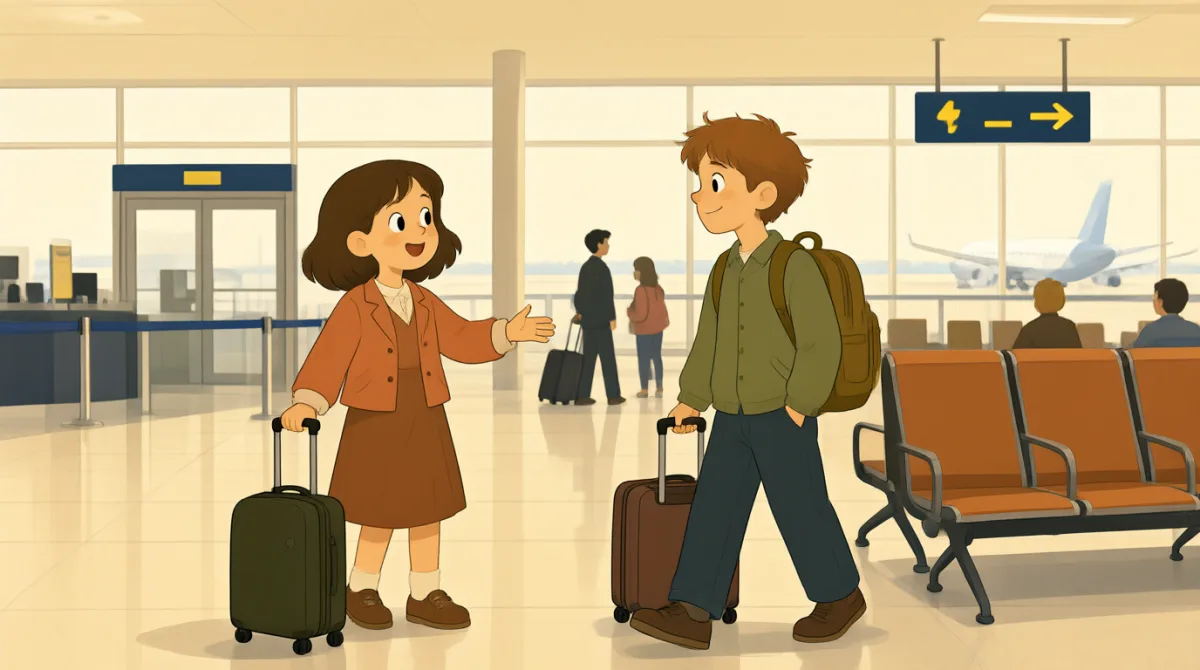
Grace and Jack wait at the airport and work out what to do when the relatives’ flight is delayed. When the family arrives, they greet them warmly and help with their luggage.
ग्रेेस और जैक हवाई अड्डे पर इंतज़ार करते हैं और रिश्तेदारों की उड़ान में देरी होने पर क्या करना है, यह तय करते हैं। परिवार के पहुँचने पर वे उनका गर्मजोशी से स्वागत करते हैं और उनका सामान उठाने में मदद करते हैं।
संवाद8

The flight was supposed to land at three, but the airline app says it’s delayed by almost two hours.
उड़ान को तीन बजे उतरना था, लेकिन एयरलाइन के ऐप में लिखा है कि लगभग दो घंटे की देरी हो गई है।

That’s a long wait. Do you want me to check whether they’ve posted a new arrival time at the airport?
यह तो काफ़ी लंबा इंतज़ार है। क्या मैं देखूँ कि हवाई अड्डे ने पहुँचने का नया समय बताया है या नहीं?
Please do. I’ll message my relatives and let them know we’re here. They might be worried when they land.
हाँ, देखो। मैं अपने रिश्तेदारों को संदेश भेजकर बता दूँगी कि हम यहाँ हैं। उतरने पर उन्हें चिंता हो सकती है।
The screen says five o’clock now. We can grab a coffee nearby, but let’s stay close in case it changes again.
अब स्क्रीन पर पाँच बजे का समय दिख रहा है। हम पास में कॉफ़ी पी सकते हैं, लेकिन यहीं आसपास रहते हैं, अगर समय फिर बदल जाए।
Good idea. They’ve had a long flight, so I’ll keep dinner simple and give them time to rest once we get home.
अच्छा विचार है। उनका सफ़र लंबा रहा है, इसलिए मैं रात का खाना सादा रखूँगी और घर पहुँचने के बाद उन्हें आराम करने का समय दूँगी।
Looks like their plane has landed. The arrivals board says they’re heading to baggage claim now.
लगता है उनका विमान उतर गया है। आगमन बोर्ड पर लिखा है कि वे अब सामान लेने जा रहे हैं।
There they are! Welcome! You must be exhausted. Let us take those bags for you.
वे रहे! स्वागत है! आप लोग बहुत थके हुए होंगे। लाइए, हम आपके बैग उठा लेते हैं।
I’ve got the big suitcase. Grace, could you take the smaller one? The car’s just outside, and we’ll be home soon.
बड़ा सूटकेस मैं ले लेता हूँ। ग्रेस, क्या तुम छोटा वाला ले लोगी? कार बस बाहर ही है, और हम जल्द ही घर पहुँच जाएँगे।
शब्दावली7
- was supposed to landउतरना था
This means the flight was expected to arrive at a particular time. Use “was supposed to” to talk about a plan or expectation that may have changed.
इसका मतलब है कि उड़ान के एक तय समय पर पहुँचने की उम्मीद थी। “was supposed to” का इस्तेमाल किसी ऐसी योजना या अपेक्षा के लिए करें जो शायद बदल गई हो।
- delayed by almost two hoursलगभग दो घंटे की देरी
This means the flight will arrive nearly two hours later than planned. You can use “delayed by” followed by a length of time to explain how late something is.
इसका मतलब है कि उड़ान तय समय से लगभग दो घंटे देर से पहुँचेगी। किसी चीज़ की देरी कितनी है, यह बताने के लिए “delayed by” के बाद समय की अवधि बताई जा सकती है।
- stay closeआसपास ही रहना
Here, this means to remain near the airport while waiting. Use it when you want someone to stay nearby and be easy to find.
यहाँ इसका मतलब है इंतज़ार करते समय हवाई अड्डे के पास ही रहना। जब आप चाहते हैं कि कोई पास रहे और आसानी से मिल जाए, तो इसका इस्तेमाल करें।
- keep dinner simpleरात का खाना सादा रखना
This means to make or serve an easy meal without much preparation. You can use “keep [something] simple” when you want to avoid making it complicated.
इसका मतलब है बिना ज़्यादा तैयारी के आसानी से बनने वाला खाना बनाना या परोसना। जब आप किसी चीज़ को पेचीदा नहीं बनाना चाहते, तो “keep [something] simple” का इस्तेमाल कर सकते हैं।
- baggage claimसामान लेने की जगह
This is the area at an airport where arriving passengers collect their suitcases. You can ask, “Where is baggage claim?” when looking for it.
यह हवाई अड्डे का वह हिस्सा है जहाँ पहुँचने वाले यात्री अपने सूटकेस लेते हैं। जगह ढूँढ़ते समय आप पूछ सकते हैं, “Where is baggage claim?” (सामान लेने की जगह कहाँ है?)
- You must be exhausted.आप बहुत थके हुए होंगे।
This is a warm way to say that someone looks very tired. “Must be” expresses a strong guess based on what you know.
किसी को बहुत थका हुआ देखकर यह बात गर्मजोशी से कहने का तरीका है। “Must be” का इस्तेमाल आप जो जानते हैं, उसके आधार पर पक्का-सा अनुमान जताने के लिए होता है।
- take those bags for youआपके लिए वे बैग उठा लेना
This means to carry the bags to help someone. Use “Let me” or “Let us” before this phrase to offer help.
इसका मतलब है किसी की मदद के लिए उसके बैग उठाना। मदद की पेशकश करते समय इस वाक्यांश से पहले “Let me” या “Let us” का इस्तेमाल करें।
मुख्य वाक्य7
- 1
The flight was supposed to land at three, but the airline app says it’s delayed by almost two hours.
उड़ान को तीन बजे उतरना था, लेकिन एयरलाइन के ऐप में लिखा है कि लगभग दो घंटे की देरी हो गई है।
This sentence explains an expected arrival time and a change to the plan. You can reuse the pattern “It was supposed to [happen] at [time], but…” to describe a delay or change.
यह वाक्य पहुँचने के अपेक्षित समय और योजना में हुए बदलाव के बारे में बताता है। देरी या बदलाव बताने के लिए “It was supposed to [happen] at [time], but…” का ढाँचा फिर से इस्तेमाल कर सकते हैं।
- 2
Do you want me to check whether they’ve posted a new arrival time at the airport?
क्या मैं देखूँ कि हवाई अड्डे ने पहुँचने का नया समय बताया है या नहीं?
This is a polite way to offer to find out information. Replace “check whether” with an action or source that fits the situation.
जानकारी पता करने की पेशकश करने का यह एक विनम्र तरीका है। “check whether” की जगह स्थिति के मुताबिक कोई काम या जानकारी का स्रोत रख सकते हैं।
- 3
I’ll message my relatives and let them know we’re here.
मैं अपने रिश्तेदारों को संदेश भेजकर बता दूँगी कि हम यहाँ हैं।
This explains what you plan to do and why. Use “let [someone] know” to say you will give them information.
इससे आप बताते हैं कि आप क्या करने की योजना बना रहे हैं और क्यों। किसी को जानकारी देने की बात कहने के लिए “let [someone] know” का इस्तेमाल करें।
- 4
We can grab a coffee nearby, but let’s stay close in case it changes again.
हम पास में कॉफ़ी पी सकते हैं, लेकिन यहीं आसपास रहते हैं, अगर समय फिर बदल जाए।
This suggests a practical plan while allowing for something unexpected. “In case” introduces a possibility you want to be prepared for.
यह कोई अप्रत्याशित बात हो सकती है, इसे ध्यान में रखते हुए व्यावहारिक योजना सुझाता है। “In case” ऐसी संभावना बताता है जिसके लिए आप तैयार रहना चाहते हैं।
- 5
They’ve had a long flight, so I’ll keep dinner simple and give them time to rest once we get home.
उनका सफ़र लंबा रहा है, इसलिए मैं रात का खाना सादा रखूँगी और घर पहुँचने के बाद उन्हें आराम करने का समय दूँगी।
This gives a reason for making a considerate plan. You can use “They’ve had…, so I’ll…” to explain how someone’s situation affects what you’ll do.
यह सोच-समझकर योजना बनाने का कारण बताता है। किसी की स्थिति का आपके काम पर असर बताने के लिए “They’ve had…, so I’ll…” का इस्तेमाल कर सकते हैं।
- 6
You must be exhausted.
आप बहुत थके हुए होंगे।
This is a friendly way to show concern when someone has had a tiring experience. Use “You must be…” to make a caring guess about how someone feels.
थका देने वाले अनुभव से गुज़रे किसी व्यक्ति के प्रति चिंता जताने का यह दोस्ताना तरीका है। किसी के महसूस करने के बारे में संवेदनशील अनुमान लगाने के लिए “You must be…” का इस्तेमाल करें।
- 7
Let us take those bags for you.
लाइए, हम आपके बैग उठा लेते हैं।
This is a warm, polite offer to help. Use “Let us take…” before naming something you can carry or do for someone.
मदद की पेशकश करने का यह गर्मजोशी भरा और विनम्र तरीका है। किसी के लिए उठाई जा सकने वाली चीज़ या किए जा सकने वाले काम का नाम बताने से पहले “Let us take…” का इस्तेमाल करें।