Picking Them Up at the Airport
ไปรับญาติที่สนามบิน
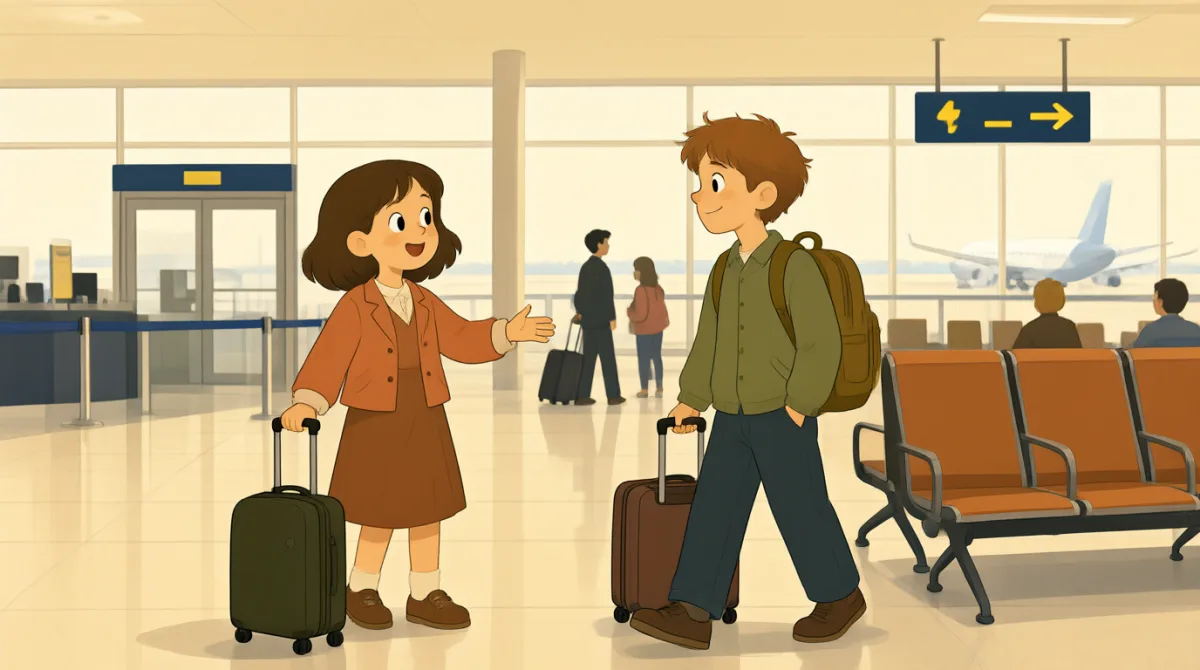
Grace and Jack wait at the airport and work out what to do when the relatives’ flight is delayed. When the family arrives, they greet them warmly and help with their luggage.
เกรซกับแจ็กรออยู่ที่สนามบินและช่วยกันคิดว่าจะทำอย่างไรเมื่อเที่ยวบินของญาติล่าช้า พอครอบครัวมาถึง ทั้งคู่ก็ต้อนรับอย่างอบอุ่นและช่วยยกกระเป๋า
บทสนทนา8

The flight was supposed to land at three, but the airline app says it’s delayed by almost two hours.
เที่ยวบินมีกำหนดลงจอดตอนบ่ายสาม แต่แอปของสายการบินบอกว่าล่าช้าไปเกือบสองชั่วโมง

That’s a long wait. Do you want me to check whether they’ve posted a new arrival time at the airport?
รอนานเลยนะ อยากให้ฉันเช็กไหมว่าที่สนามบินประกาศเวลาเดินทางมาถึงใหม่หรือยัง
Please do. I’ll message my relatives and let them know we’re here. They might be worried when they land.
ช่วยเช็กให้หน่อยนะ ฉันจะส่งข้อความหาญาติแล้วบอกว่าพวกเรามาถึงแล้ว พวกเขาอาจเป็นห่วงตอนเครื่องลงก็ได้
The screen says five o’clock now. We can grab a coffee nearby, but let’s stay close in case it changes again.
หน้าจอบอกว่าตอนนี้เป็นห้าโมงแล้ว เราไปซื้อกาแฟแถวนี้ได้นะ แต่รออยู่ใกล้ ๆ กันเถอะ เผื่อเวลาเปลี่ยนอีก
Good idea. They’ve had a long flight, so I’ll keep dinner simple and give them time to rest once we get home.
เป็นความคิดที่ดี พวกเขานั่งเครื่องมานาน ฉันจะทำมื้อเย็นง่าย ๆ แล้วให้พวกเขาพักสักหน่อยตอนถึงบ้าน
Looks like their plane has landed. The arrivals board says they’re heading to baggage claim now.
ดูเหมือนเครื่องบินของพวกเขาจะลงจอดแล้วนะ จอแสดงเที่ยวบินขาเข้าบอกว่าตอนนี้พวกเขากำลังไปที่จุดรับกระเป๋า
There they are! Welcome! You must be exhausted. Let us take those bags for you.
อยู่นั่นไง! ยินดีต้อนรับนะ! คงเหนื่อยมากเลย ให้เราช่วยถือกระเป๋าพวกนั้นนะ
I’ve got the big suitcase. Grace, could you take the smaller one? The car’s just outside, and we’ll be home soon.
ฉันถือกระเป๋าใบใหญ่เองนะ เกรซ เธอช่วยถือใบเล็กได้ไหม รถจอดอยู่ข้างนอกแล้ว อีกเดี๋ยวก็ถึงบ้านแล้ว
คำศัพท์7
- was supposed to landมีกำหนดลงจอด
This means the flight was expected to arrive at a particular time. Use “was supposed to” to talk about a plan or expectation that may have changed.
วลีนี้หมายถึงเที่ยวบินถูกคาดว่าจะมาถึงในเวลาหนึ่ง ใช้ “was supposed to” เพื่อพูดถึงแผนหรือสิ่งที่คาดไว้ ซึ่งอาจเปลี่ยนแปลงได้
- delayed by almost two hoursล่าช้าไปเกือบสองชั่วโมง
This means the flight will arrive nearly two hours later than planned. You can use “delayed by” followed by a length of time to explain how late something is.
หมายถึงเที่ยวบินจะมาถึงช้ากว่ากำหนดเกือบสองชั่วโมง ใช้ “delayed by” ตามด้วยระยะเวลาเพื่อบอกว่าสิ่งใดล่าช้าไปนานแค่ไหน
- stay closeอยู่ใกล้ ๆ
Here, this means to remain near the airport while waiting. Use it when you want someone to stay nearby and be easy to find.
ในที่นี้หมายถึงอยู่บริเวณใกล้สนามบินระหว่างรอ ใช้เมื่อต้องการให้ใครสักคนอยู่แถว ๆ นั้นและหาเจอได้ง่าย
- keep dinner simpleทำมื้อเย็นง่าย ๆ
This means to make or serve an easy meal without much preparation. You can use “keep [something] simple” when you want to avoid making it complicated.
หมายถึงทำหรือเสิร์ฟอาหารง่าย ๆ ที่ไม่ต้องเตรียมมาก ใช้ “keep [something] simple” เมื่อต้องการไม่ทำอะไรให้ยุ่งยาก
- baggage claimจุดรับกระเป๋า
This is the area at an airport where arriving passengers collect their suitcases. You can ask, “Where is baggage claim?” when looking for it.
บริเวณในสนามบินที่ผู้โดยสารขาเข้ามารับกระเป๋าเดินทาง คุณถามว่า “Where is baggage claim?” (จุดรับกระเป๋าอยู่ที่ไหน) ได้เมื่อต้องการหา
- You must be exhausted.คุณคงเหนื่อยมากเลย
This is a warm way to say that someone looks very tired. “Must be” expresses a strong guess based on what you know.
เป็นวิธีพูดอย่างอบอุ่นว่าอีกฝ่ายดูเหนื่อยมาก “Must be” ใช้แสดงการคาดเดาอย่างมั่นใจจากสิ่งที่คุณรู้
- take those bags for youช่วยถือกระเป๋าพวกนั้นให้
This means to carry the bags to help someone. Use “Let me” or “Let us” before this phrase to offer help.
หมายถึงถือกระเป๋าเพื่อช่วยใครสักคน ใช้ “Let me” หรือ “Let us” นำหน้าวลีนี้เพื่อเสนอตัวช่วย
ประโยคสำคัญ7
- 1
The flight was supposed to land at three, but the airline app says it’s delayed by almost two hours.
เที่ยวบินมีกำหนดลงจอดตอนบ่ายสาม แต่แอปของสายการบินบอกว่าล่าช้าไปเกือบสองชั่วโมง
This sentence explains an expected arrival time and a change to the plan. You can reuse the pattern “It was supposed to [happen] at [time], but…” to describe a delay or change.
ประโยคนี้บอกเวลาที่คาดว่าจะมาถึงและการเปลี่ยนแปลงของแผน คุณนำรูปแบบ “It was supposed to [happen] at [time], but…” ไปใช้พูดถึงความล่าช้าหรือการเปลี่ยนแปลงได้
- 2
Do you want me to check whether they’ve posted a new arrival time at the airport?
อยากให้ฉันเช็กไหมว่าที่สนามบินประกาศเวลาเดินทางมาถึงใหม่หรือยัง
This is a polite way to offer to find out information. Replace “check whether” with an action or source that fits the situation.
นี่เป็นวิธีสุภาพในการเสนอตัวไปหาข้อมูล เปลี่ยน “check whether” เป็นการกระทำหรือแหล่งข้อมูลที่เหมาะกับสถานการณ์ได้
- 3
I’ll message my relatives and let them know we’re here.
ฉันจะส่งข้อความหาญาติแล้วบอกว่าพวกเรามาถึงแล้ว
This explains what you plan to do and why. Use “let [someone] know” to say you will give them information.
ประโยคนี้บอกว่าคุณวางแผนจะทำอะไรและทำไปทำไม ใช้ “let [someone] know” เพื่อบอกว่าจะให้ข้อมูลกับใครสักคน
- 4
We can grab a coffee nearby, but let’s stay close in case it changes again.
เราไปซื้อกาแฟแถวนี้ได้นะ แต่รออยู่ใกล้ ๆ กันเถอะ เผื่อเวลาเปลี่ยนอีก
This suggests a practical plan while allowing for something unexpected. “In case” introduces a possibility you want to be prepared for.
ประโยคนี้เสนอแผนที่ทำได้จริง พร้อมเผื่อสิ่งที่ไม่คาดคิด “In case” ใช้เกริ่นถึงความเป็นไปได้ที่คุณอยากเตรียมรับมือไว้
- 5
They’ve had a long flight, so I’ll keep dinner simple and give them time to rest once we get home.
พวกเขานั่งเครื่องมานาน ฉันจะทำมื้อเย็นง่าย ๆ แล้วให้พวกเขาพักสักหน่อยตอนถึงบ้าน
This gives a reason for making a considerate plan. You can use “They’ve had…, so I’ll…” to explain how someone’s situation affects what you’ll do.
ประโยคนี้ให้เหตุผลว่าทำไมจึงวางแผนโดยคำนึงถึงความรู้สึกของอีกฝ่าย คุณใช้ “They’ve had…, so I’ll…” เพื่ออธิบายว่าสถานการณ์ของใครบางคนส่งผลต่อสิ่งที่คุณจะทำอย่างไร
- 6
You must be exhausted.
คุณคงเหนื่อยมากเลย
This is a friendly way to show concern when someone has had a tiring experience. Use “You must be…” to make a caring guess about how someone feels.
นี่เป็นวิธีเป็นกันเองในการแสดงความห่วงใยเมื่อใครสักคนเพิ่งผ่านประสบการณ์ที่เหน็ดเหนื่อย ใช้ “You must be…” เพื่อคาดเดาอย่างห่วงใยว่าอีกฝ่ายรู้สึกอย่างไร
- 7
Let us take those bags for you.
ให้เราช่วยถือกระเป๋าพวกนั้นนะ
This is a warm, polite offer to help. Use “Let us take…” before naming something you can carry or do for someone.
นี่เป็นการเสนอความช่วยเหลืออย่างอบอุ่นและสุภาพ ใช้ “Let us take…” ก่อนบอกสิ่งที่คุณช่วยถือหรือช่วยทำให้ใครสักคนได้