Picking Them Up at the Airport
去機場接他們
Grace and Jack wait at the airport and work out what to do when the relatives’ flight is delayed. When the family arrives, they greet them warmly and help with their luggage.
Grace和Jack在機場等候,並商量親戚航班延誤時該怎麼辦。親戚抵達後,他們熱情迎接,並幫忙拿行李。
對話8
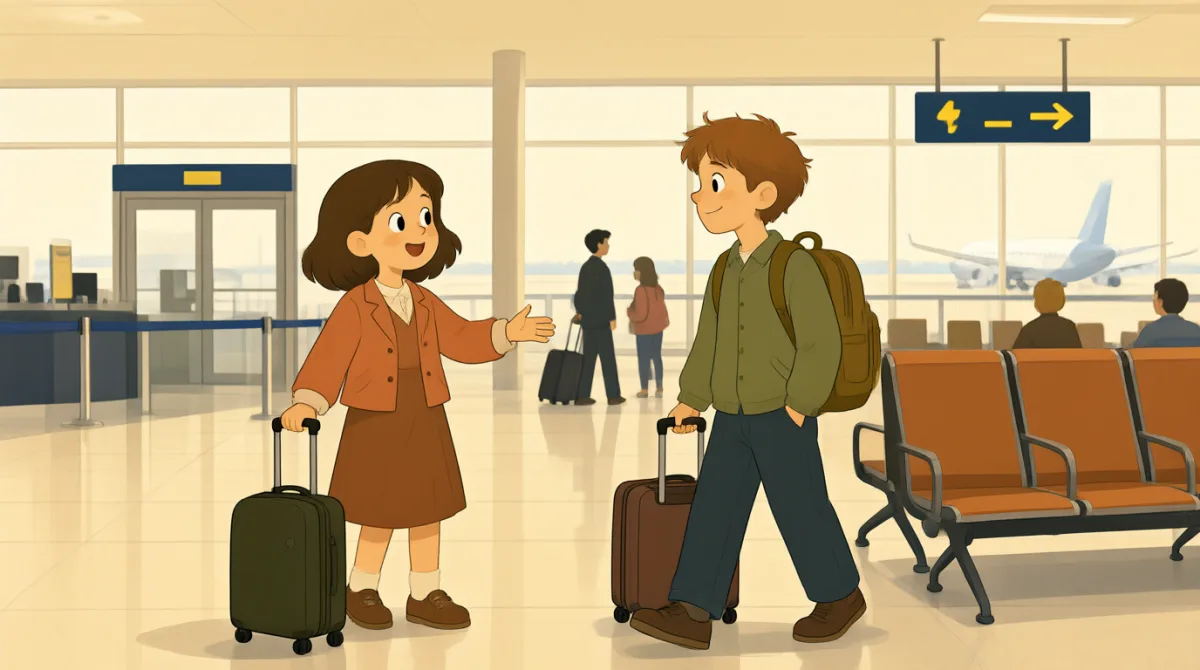

The flight was supposed to land at three, but the airline app says it’s delayed by almost two hours.
航班原定三點降落,但航空公司的應用顯示要晚將近兩個小時。

That’s a long wait. Do you want me to check whether they’ve posted a new arrival time at the airport?
這可要等很久。要不要我去機場看看他們有沒有公佈新的抵達時間?
Please do. I’ll message my relatives and let them know we’re here. They might be worried when they land.
麻煩你了。我給親戚發個訊息,告訴他們我們已經到了。他們落地時可能會擔心找不到我們。
The screen says five o’clock now. We can grab a coffee nearby, but let’s stay close in case it changes again.
螢幕上現在顯示五點。我們可以去附近喝杯咖啡,不過還是別走遠,以防時間又變。
Good idea. They’ve had a long flight, so I’ll keep dinner simple and give them time to rest once we get home.
好主意。他們坐了很久的飛機,所以我會簡單準備晚餐,回家後也讓他們好好休息。
Looks like their plane has landed. The arrivals board says they’re heading to baggage claim now.
看來他們的飛機已經降落了。到達資訊屏顯示他們現在正去行李提取處。
There they are! Welcome! You must be exhausted. Let us take those bags for you.
他們來了!歡迎!你們一定累壞了。我們來幫你們拿行李吧。
I’ve got the big suitcase. Grace, could you take the smaller one? The car’s just outside, and we’ll be home soon.
我來拿這個大行李箱。Grace,你能拿一下小的嗎?車就在外面,我們很快就到家了。
詞彙7
- was supposed to land原定要降落
This means the flight was expected to arrive at a particular time. Use “was supposed to” to talk about a plan or expectation that may have changed.
意思是航班預計在某個時間抵達。用“was supposed to”來談論可能已經改變的計劃或預期。
- delayed by almost two hours晚點將近兩個小時
This means the flight will arrive nearly two hours later than planned. You can use “delayed by” followed by a length of time to explain how late something is.
意思是航班會比原計劃晚近兩個小時抵達。可以在“delayed by”後面加一段時間,說明某事晚了多久。
- stay close待在附近
Here, this means to remain near the airport while waiting. Use it when you want someone to stay nearby and be easy to find.
這裡指等待時留在機場附近。想讓某人待在近處、方便找到時,可以用這個表達。
- keep dinner simple晚餐簡單準備
This means to make or serve an easy meal without much preparation. You can use “keep [something] simple” when you want to avoid making it complicated.
意思是準備或提供一頓不用花太多工夫的簡餐。想避免把事情弄複雜時,可以用“keep [something] simple”。
- baggage claim行李提取處
This is the area at an airport where arriving passengers collect their suitcases. You can ask, “Where is baggage claim?” when looking for it.
這是機場裡抵達的乘客領取行李箱的地方。找不到時可以問:“Where is baggage claim?”
- You must be exhausted.你們一定累壞了。
This is a warm way to say that someone looks very tired. “Must be” expresses a strong guess based on what you know.
這是溫暖地表達對方看起來很疲憊的說法。“Must be”表示根據已知情況作出很有把握的推測。
- take those bags for you幫你們拿那些行李
This means to carry the bags to help someone. Use “Let me” or “Let us” before this phrase to offer help.
意思是幫別人把行李拿過去。可以在這個短語前加“Let me”或“Let us”來主動提出幫忙。
關鍵句7
- 1
The flight was supposed to land at three, but the airline app says it’s delayed by almost two hours.
航班原定三點降落,但航空公司的應用顯示要晚將近兩個小時。
This sentence explains an expected arrival time and a change to the plan. You can reuse the pattern “It was supposed to [happen] at [time], but…” to describe a delay or change.
這句話說明了預期的抵達時間,以及計劃發生的變化。你可以套用“It was supposed to [happen] at [time], but…”這個句型來描述延誤或變化。
- 2
Do you want me to check whether they’ve posted a new arrival time at the airport?
要不要我去機場看看他們有沒有公佈新的抵達時間?
This is a polite way to offer to find out information. Replace “check whether” with an action or source that fits the situation.
這是一種禮貌地表示願意去查明資訊的說法。可以把“check whether”換成符合情境的行動或資訊來源。
- 3
I’ll message my relatives and let them know we’re here.
我給親戚發個訊息,告訴他們我們已經到了。
This explains what you plan to do and why. Use “let [someone] know” to say you will give them information.
這句話說明你打算做什麼,以及這麼做的目的。用“let [someone] know”表示把資訊告訴某人。
- 4
We can grab a coffee nearby, but let’s stay close in case it changes again.
我們可以去附近喝杯咖啡,不過還是別走遠,以防時間又變。
This suggests a practical plan while allowing for something unexpected. “In case” introduces a possibility you want to be prepared for.
這句話提出了一個實際的安排,同時也考慮到了意外情況。“In case”引出一種可能性,表示你想為此做好準備。
- 5
They’ve had a long flight, so I’ll keep dinner simple and give them time to rest once we get home.
他們坐了很久的飛機,所以我會簡單準備晚餐,回家後也讓他們好好休息。
This gives a reason for making a considerate plan. You can use “They’ve had…, so I’ll…” to explain how someone’s situation affects what you’ll do.
這句話說明了體貼安排背後的原因。你可以用“They’ve had…, so I’ll…”來解釋某人的情況會如何影響你的安排。
- 6
You must be exhausted.
你們一定累壞了。
This is a friendly way to show concern when someone has had a tiring experience. Use “You must be…” to make a caring guess about how someone feels.
當別人經歷了令人疲憊的事情時,這是一種友善地表達關心的說法。用“You must be…”來體貼地猜測對方的感受。
- 7
Let us take those bags for you.
我們來幫你們拿那些行李吧。
This is a warm, polite offer to help. Use “Let us take…” before naming something you can carry or do for someone.
這是一種熱情又禮貌的幫忙提議。在說出你能幫對方拿或做的事情前,可以用“Let us take…”。