Showing Them Around the City
街を案内する
Emma and her visiting relatives explore the city, choosing between a famous landmark and a quieter neighborhood. They discuss local customs and take breaks when everyone gets tired.
エマと海外から来た親戚たちは街を散策し、有名な名所に行くか、静かな地区を訪れるか相談する。地元の習慣について話し、みんなが疲れたら休憩を取る。
会話9
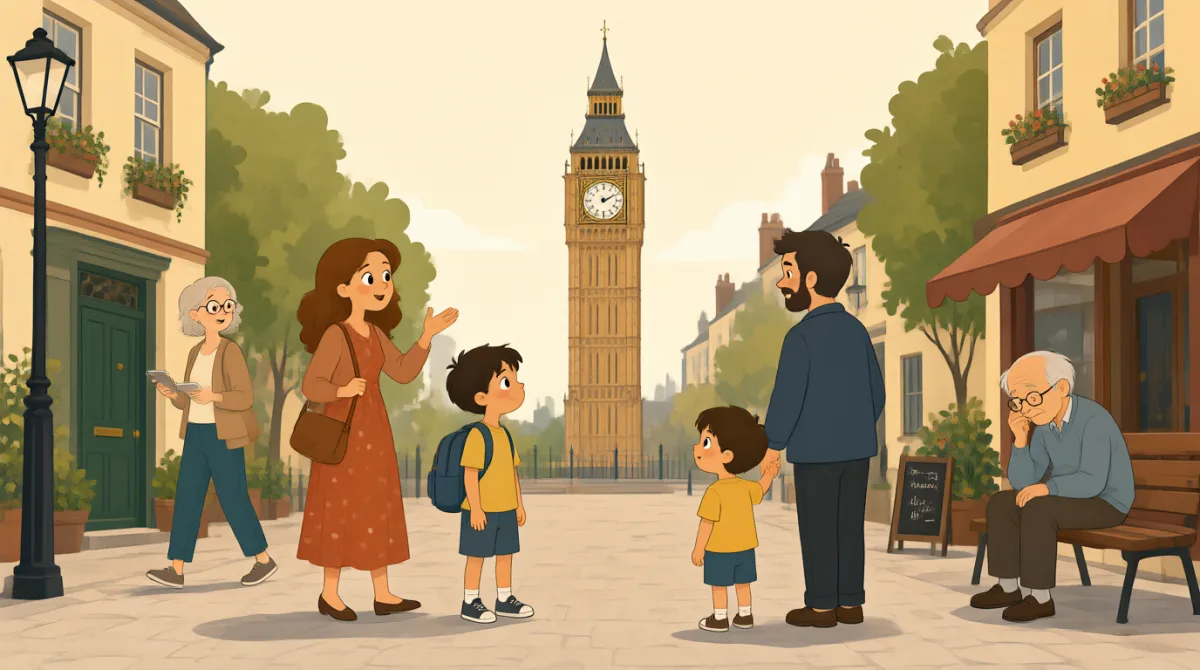

The famous tower is only a few blocks away. We could see it first, then explore the quieter neighborhood nearby.
有名なタワーはほんの数ブロック先だよ。まずそこを見て、それから近くの静かな地区を散策するのもいいね。

That sounds good, but let’s check how everyone’s feeling. They had a long flight, so we shouldn’t pack too much into the day.
いいね。でも、みんなの調子を確認しよう。長時間のフライトだったから、予定を詰め込みすぎないほうがいいよ。

The tower gets crowded around noon. If we go now, we can take a few photos before the tour groups arrive.
タワーはお昼ごろ混むんだ。今行けば、ツアーの団体が来る前に写真を何枚か撮れるよ。
Great. And after that, the neighborhood has little cafés and shops. It’ll be a nice change from the busy tourist spots.
いいね。そのあと行く地区には、小さなカフェやお店があるよ。にぎやかな観光地とは違って、いい気分転換になるね。
One thing to remember: people usually wait in line here, even for a bus. Let’s give them a heads-up so they know what to expect.
ひとつ覚えておいてね。ここではバスに乗るときでも、みんなたいてい列に並ぶよ。どういう感じか分かるように、先に伝えておこう。
Good point. We can take the bus to the neighborhood, but there’s also a nice walking route if everyone still has energy.
そうだね。その地区まではバスでも行けるし、みんなにまだ元気があれば、気持ちのいい散歩道を歩くのもいいね。
Let’s decide after the tower. There’s a bench nearby where we can sit down, have some water, and see how everyone feels.
タワーを見たあとで決めよう。近くにベンチがあるから、座って水を飲みながら、みんなの様子を見られるよ。
Perfect. A little flexibility goes a long way. We want them to enjoy the city, not feel like they’re racing through it.
いいね。少し融通を利かせるだけで、ずいぶん違うよ。みんなに街を楽しんでもらいたいのであって、駆け足で回らせたいわけじゃないからね。
All right, tower first, then a break, and we’ll play the rest by ear. That should keep the day comfortable for everyone.
よし、まずタワーに行って、それから休憩して、あとは様子を見て決めよう。そうすれば、みんな無理なく一日を過ごせるはずだよ。
語彙7
- a few blocks awayほんの数ブロック先
A short distance away, measured in city blocks. Use it to describe how near a place is.
街のブロックを単位にして、少し先にあることを表します。場所がどれくらい近いかを伝えるときに使います。
- pack too much into the day一日の予定を詰め込みすぎる
To plan too many activities for one day. Use this phrase when you want to keep a schedule manageable.
一日にたくさんの予定を入れすぎることです。無理のないスケジュールにしたいときに使える表現です。
- gets crowded混んでくる
Becomes full of many people. You can use this to describe a place that is busy at certain times.
人がたくさん集まって、場所が混雑することです。特定の時間帯に混む場所について話すときに使えます。
- give them a heads-up前もって知らせておく
Tell them about something in advance so they can be prepared. This informal phrase is useful when sharing practical information.
相手が準備できるように、何かを事前に伝えることです。実用的な情報を共有するときに便利な、くだけた表現です。
- what to expectどんなことが起きるか
What is likely to happen or what a situation will be like. Use it to help someone prepare for an unfamiliar place or experience.
起こりそうなことや、どんな状況になりそうかを指します。慣れない場所や経験に備えてもらうときに使えます。
- a nice change from〜とは違ったいい気分転換
Something different and pleasant compared with what came before. Use it when suggesting a welcome alternative.
それまでのものと違う、心地よいものを表します。代わりに楽しめるものを提案するときに使えます。
- play the rest by earあとは様子を見て決める
Decide what to do later based on how things go. This informal idiom is useful when you want to keep plans flexible.
その後の状況を見て、何をするか決めることです。予定に柔軟性を持たせたいときに便利な、くだけた慣用表現です。
重要な文8
- 1
They had a long flight, so we shouldn’t pack too much into the day.
長時間のフライトだったから、予定を詰め込みすぎないほうがいいよ。
This sentence gives a reason for keeping plans light. Reuse the pattern “They had…, so we shouldn’t…” to explain why you want to avoid doing too much.
予定を控えめにする理由を伝える文です。“They had…, so we shouldn’t…”(彼らは〜だったから、私たちは〜しないほうがいい)という形を使うと、やりすぎを避けたい理由を説明できます。
- 2
If we go now, we can take a few photos before the tour groups arrive.
今行けば、ツアーの団体が来る前に写真を何枚か撮れるよ。
This sentence suggests an action and explains its benefit. Use “If we…, we can…” to make a practical plan.
行動を提案し、そのメリットも伝える文です。“If we…, we can…”(もし〜すれば、私たちは〜できる)を使うと、実際的な計画を提案できます。
- 3
It’ll be a nice change from the busy tourist spots.
にぎやかな観光地とは違って、いい気分転換になるね。
This is a natural way to recommend something different. Reuse “It’ll be a nice change from…” when suggesting a new activity or place.
違うものを自然に勧める言い方です。新しい活動や場所を提案するときは、“It’ll be a nice change from…”(〜とは違ったいい気分転換になるよ)という形を使ってみましょう。
- 4
Let’s give them a heads-up so they know what to expect.
どんな感じか分かるように、先に伝えておこう。
This sentence suggests warning or informing someone in advance. Use “Let’s give [someone] a heads-up so…” to explain why you’re sharing information.
相手に前もって注意を促したり、情報を伝えたりする提案です。“Let’s give [someone] a heads-up so…”(〜が分かるように、[誰か]に先に知らせておこう)を使うと、情報を共有する理由も説明できます。
- 5
There’s a bench nearby where we can sit down, have some water, and see how everyone feels.
近くにベンチがあるから、座って水を飲みながら、みんなの様子を見られるよ。
This sentence offers a practical place to rest and check in with a group. Reuse “There’s a [place] nearby where we can…” to suggest a convenient option.
休憩できる場所を提案し、みんなの調子も確認できると伝える文です。“There’s a [place] nearby where we can…”(近くに〜できる[場所]があるよ)を使うと、便利な選択肢を提案できます。
- 6
A little flexibility goes a long way.
少し融通を利かせるだけで、ずいぶん違うよ。
This concise expression says that being adaptable can make a big difference. Use it when plans may need to change to suit people’s needs.
柔軟に対応することで大きな違いが生まれる、という意味の簡潔な表現です。みんなの希望に合わせて予定を変える必要がありそうなときに使えます。
- 7
We want them to enjoy the city, not feel like they’re racing through it.
みんなに街を楽しんでもらいたいのであって、駆け足で回らせたいわけじゃないからね。
This sentence contrasts a positive goal with an unwanted feeling. Reuse “We want [someone] to…, not…” to explain what you hope to achieve.
望ましい目標と、避けたい状態を対比する文です。“We want [someone] to…, not…”([誰か]には〜してほしいのであって、〜してほしくない)という形で、何を目指しているのかを説明できます。
- 8
We’ll play the rest by ear.
あとは様子を見て決めよう。
This is an informal way to say you’ll decide later based on the situation. Use it when you want to leave part of a plan open.
状況を見てから決める、という意味のくだけた言い方です。計画の一部を未定のままにしておきたいときに使えます。