Calling Back About a Reaction
薬の副作用について折り返し電話する
After taking the medicine, Emma calls Jack because she feels dizzy and has an upset stomach. Jack asks about her symptoms and helps her decide what to do next.
薬を飲んだあと、めまいと胃の不調を感じたエマはジャックに電話します。ジャックは症状について尋ね、次にどうすればよいか一緒に考えます。
会話9
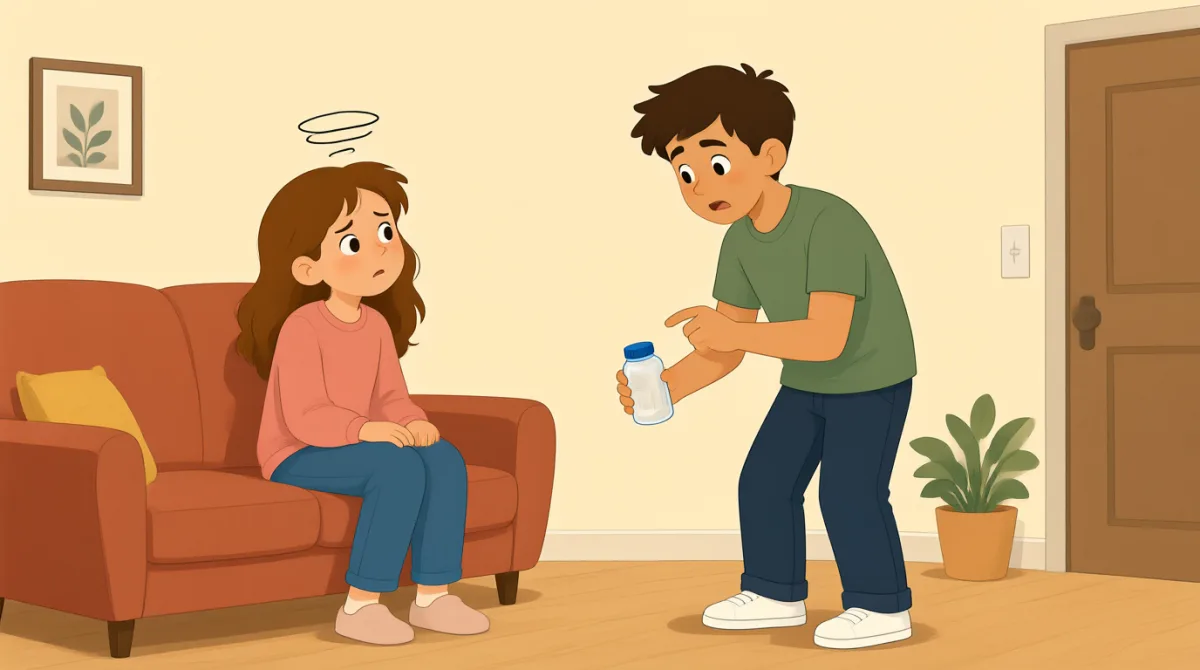

Hi, Jack. I started the new medicine last night, and now I feel dizzy and have an upset stomach.
もしもし、ジャック。昨夜、新しい薬を飲み始めたんだけど、今はめまいがして胃の調子も悪いんだ。

I’m sorry you’re feeling rough. How much did you take, and did you take it with food?
それはつらいね。どれくらい飲んだの?食べ物と一緒に飲んだ?
I took one tablet with dinner, just as the label says. The dizziness started this morning when I got out of bed.
夕食のときに1錠飲んだよ。説明書に書いてあるとおりにね。めまいは今朝、ベッドから起きたときに始まったんだ。
Have you fainted, had trouble breathing, or noticed any swelling or a rash? Those symptoms need urgent medical attention.
気を失ったり、息苦しくなったり、腫れや発疹が出たりした?そういう症状があるなら、すぐに医療機関を受診する必要があるよ。
No, none of those. I’m just light-headed and a little nauseous, but I can keep food and water down.
ううん、そういう症状はないよ。少しふらついて、ちょっと吐き気がするだけ。でも、食べ物も水も吐かずにいられるよ。
For now, sit or lie down, drink some water, and don’t drive while you’re dizzy. I’ll check the medication details.
とりあえず、座るか横になって、水を飲んでね。めまいがしている間は運転しないで。薬の詳細を確認してみるよ。
Should I take the next dose tonight, or wait until I speak with my doctor? I don’t want to make it worse.
今夜、次の分を飲んだほうがいいかな?それとも、お医者さんに相談するまで待つべき?悪化させたくないんだ。
Since you’re having symptoms, call your doctor today for advice before the next dose. If you get worse, seek urgent care.
症状が出ているから、次の分を飲む前に、今日中にお医者さんに電話して相談してね。悪化したら、すぐに医療機関を受診して。
Okay, I’ll call the doctor now and stay home. Thanks for helping me figure out what to do next.
わかった。今すぐお医者さんに電話して、家で休むね。次にどうすればいいか一緒に考えてくれてありがとう。
語彙6
- take it with food食べ物と一緒に飲む
To take medicine while eating or after eating. You can ask, “Should I take this with food?”
食事中、または食後に薬を飲むことです。「Should I take this with food?」(これは食べ物と一緒に飲んだほうがいいですか?)と尋ねられます。
- faint気を失う
To suddenly lose consciousness for a short time. This is an important symptom to mention when asking for medical help.
短い間、突然意識を失うことです。医療機関に相談するときに伝えるべき大切な症状です。
- light-headedふらつく
Feeling as if you might faint or lose your balance. You can use it to describe dizziness to a health professional.
気を失いそう、またはバランスを崩しそうに感じることです。医療従事者にめまいの様子を伝えるときに使えます。
- keep food and water down食べ物や水を吐かずにいられる
To eat or drink without vomiting. This phrase helps explain how serious an upset stomach feels.
食べたり飲んだりしても吐かないことです。胃の不調がどれくらいつらいか伝えるのに役立つ表現です。
- lie down横になる
To rest in a flat position. It’s a useful suggestion when someone feels dizzy or unwell.
体を平らにして休むことです。めまいや体調不良を感じている人に勧めるときに便利な表現です。
- seek urgent careすぐに医療機関を受診する
To get medical help quickly for a serious or worsening problem. You can use this phrase when explaining what to do if symptoms get worse.
深刻な症状や悪化する症状について、速やかに医療的な助けを求めることです。症状が悪化したときにどうすればよいか説明する際に使えます。
重要な文7
- 1
I started the new medicine last night, and now I feel dizzy and have an upset stomach.
昨夜、新しい薬を飲み始めたんだけど、今はめまいがして胃の調子も悪いんだ。
This sentence clearly explains when you started taking medicine and what symptoms you have. Reuse the pattern “I started [medicine] [time], and now I feel [symptom].”
薬を飲み始めた時期と、今ある症状をはっきり伝える文です。「I started [medicine] [time], and now I feel [symptom].」のパターンを応用できます。
- 2
I took one tablet with dinner, just as the label says.
夕食のときに1錠飲んだよ。説明書に書いてあるとおりにね。
This is a clear way to explain how much medicine you took and whether you followed the instructions. Replace “one tablet” and “with dinner” with your own details.
薬をどれくらい飲んだか、指示どおりに飲んだかをわかりやすく伝える表現です。「one tablet」や「with dinner」を自分の場合に合わせて置き換えましょう。
- 3
Have you fainted, had trouble breathing, or noticed any swelling or a rash?
気を失ったり、息苦しくなったり、腫れや発疹が出たりした?
This question checks for several serious symptoms. You can adapt it to ask someone about warning signs in other situations.
深刻な症状がいくつか出ていないか確認する質問です。ほかの状況で警戒すべき症状を尋ねるときにも応用できます。
- 4
For now, sit or lie down, drink some water, and don’t drive while you’re dizzy.
とりあえず、座るか横になって、水を飲んでね。めまいがしている間は運転しないで。
This gives practical advice using clear, direct instructions. You can use the pattern “For now, [action], [action], and don’t [risky activity].”
わかりやすく、はっきりした指示で実用的なアドバイスを伝えています。「For now, [action], [action], and don’t [risky activity].」のパターンで言えます。
- 5
Since you’re having symptoms, call your doctor today for advice before the next dose.
症状が出ているから、次の分を飲む前に、今日中にお医者さんに電話して相談してね。
This sentence gives a reason and a specific next step. Reuse “Since you’re [situation], [action] before [next step]” to explain what someone should do.
理由を説明し、具体的な次の行動を伝える文です。「Since you’re [situation], [action] before [next step]」を使うと、何をすべきか説明できます。
- 6
If you get worse, seek urgent care.
悪化したら、すぐに医療機関を受診して。
This is a concise way to explain what to do if a condition becomes more serious. You can replace “get worse” with a specific change in symptoms.
症状が深刻になった場合にどうするかを、簡潔に伝える表現です。「get worse」を具体的な症状の変化に置き換えることもできます。
- 7
I’ll call the doctor now and stay home.
今すぐお医者さんに電話して、家で休むね。
This sentence explains your immediate plan in a simple, natural way. Use “I’ll [action] and [action]” to say what you intend to do next.
これからすぐにすることを、簡潔で自然に伝える文です。「I’ll [action] and [action]」を使って、次にするつもりのことを伝えられます。