Calling Back About a Reaction
약물 반응에 대해 다시 전화하기
After taking the medicine, Emma calls Jack because she feels dizzy and has an upset stomach. Jack asks about her symptoms and helps her decide what to do next.
약을 복용한 뒤 어지럽고 속이 불편해진 에마는 잭에게 전화합니다. 잭은 증상을 물어보고 다음에 어떻게 해야 할지 결정하도록 도와줍니다.
대화9
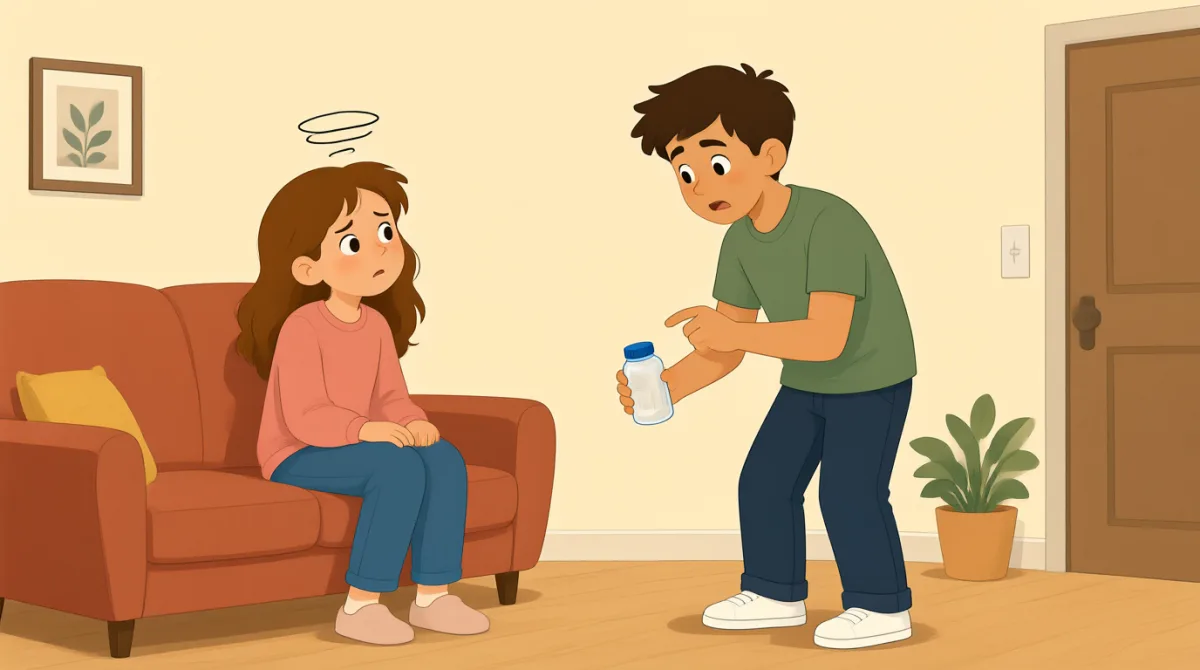

Hi, Jack. I started the new medicine last night, and now I feel dizzy and have an upset stomach.
안녕, 잭. 어젯밤에 새 약을 먹기 시작했는데, 지금 어지럽고 속이 불편해.

I’m sorry you’re feeling rough. How much did you take, and did you take it with food?
몸이 안 좋다니 유감이야. 얼마나 먹었어? 음식이랑 같이 먹었어?
I took one tablet with dinner, just as the label says. The dizziness started this morning when I got out of bed.
설명서에 나온 대로 저녁 먹을 때 한 알 먹었어. 아침에 침대에서 일어났을 때 어지럽기 시작했어.
Have you fainted, had trouble breathing, or noticed any swelling or a rash? Those symptoms need urgent medical attention.
기절했거나 숨쉬기 힘들었어? 아니면 부기나 발진이 생겼어? 그런 증상이 있으면 바로 진료를 받아야 해.
No, none of those. I’m just light-headed and a little nauseous, but I can keep food and water down.
아니, 그런 건 하나도 없어. 그냥 머리가 어질어질하고 조금 메스껍긴 한데, 음식이랑 물은 괜찮아.
For now, sit or lie down, drink some water, and don’t drive while you’re dizzy. I’ll check the medication details.
일단 앉거나 누워서 물을 좀 마셔. 어지러울 땐 운전하지 말고. 약에 관한 정보를 확인해 볼게.
Should I take the next dose tonight, or wait until I speak with my doctor? I don’t want to make it worse.
오늘 밤에 다음 약을 먹어야 해, 아니면 의사랑 얘기할 때까지 기다려야 해? 더 심해질까 봐 걱정돼.
Since you’re having symptoms, call your doctor today for advice before the next dose. If you get worse, seek urgent care.
증상이 있으니까 다음 약을 먹기 전에 오늘 의사한테 전화해서 상담해. 더 심해지면 바로 진료를 받아.
Okay, I’ll call the doctor now and stay home. Thanks for helping me figure out what to do next.
알겠어. 지금 의사한테 전화하고 집에 있을게. 다음에 뭘 해야 할지 같이 생각해 줘서 고마워.
어휘6
- take it with food음식과 함께 복용하다
To take medicine while eating or after eating. You can ask, “Should I take this with food?”
음식을 먹는 중이나 먹은 뒤에 약을 복용한다는 뜻이에요. “Should I take this with food?”(이 약은 음식과 함께 먹어야 하나요?)라고 물어볼 수 있어요.
- faint기절하다
To suddenly lose consciousness for a short time. This is an important symptom to mention when asking for medical help.
잠깐 갑자기 의식을 잃는다는 뜻이에요. 의료진에게 도움을 요청할 때 꼭 알려야 하는 중요한 증상이에요.
- light-headed머리가 어질어질한
Feeling as if you might faint or lose your balance. You can use it to describe dizziness to a health professional.
기절하거나 균형을 잃을 것 같은 느낌을 뜻해요. 의료진에게 어지러운 증상을 설명할 때 쓸 수 있어요.
- keep food and water down음식이나 물을 토하지 않고 먹고 마시다
To eat or drink without vomiting. This phrase helps explain how serious an upset stomach feels.
먹거나 마신 것을 토하지 않는다는 뜻이에요. 이 표현을 쓰면 속이 얼마나 불편한지 설명하는 데 도움이 돼요.
- lie down눕다
To rest in a flat position. It’s a useful suggestion when someone feels dizzy or unwell.
몸을 수평으로 눕혀 쉬는 것을 뜻해요. 누군가 어지럽거나 몸이 안 좋을 때 유용하게 권할 수 있어요.
- seek urgent care긴급 진료를 받다
To get medical help quickly for a serious or worsening problem. You can use this phrase when explaining what to do if symptoms get worse.
심각하거나 악화되는 문제로 신속하게 의료 도움을 받는다는 뜻이에요. 증상이 더 심해지면 어떻게 해야 하는지 설명할 때 쓸 수 있어요.
핵심 문장7
- 1
I started the new medicine last night, and now I feel dizzy and have an upset stomach.
I started the new medicine last night, and now I feel dizzy and have an upset stomach.
This sentence clearly explains when you started taking medicine and what symptoms you have. Reuse the pattern “I started [medicine] [time], and now I feel [symptom].”
이 문장은 언제 약을 먹기 시작했는지와 어떤 증상이 있는지를 분명하게 설명해요. “I started [medicine] [time], and now I feel [symptom].”이라는 표현에 자신의 상황을 넣어 활용해 보세요.
- 2
I took one tablet with dinner, just as the label says.
I took one tablet with dinner, just as the label says.
This is a clear way to explain how much medicine you took and whether you followed the instructions. Replace “one tablet” and “with dinner” with your own details.
얼마나 많은 약을 먹었는지, 복용 지침을 따랐는지를 명확히 설명하는 표현이에요. “one tablet”과 “with dinner” 부분을 자신의 상황에 맞게 바꿔 보세요.
- 3
Have you fainted, had trouble breathing, or noticed any swelling or a rash?
Have you fainted, had trouble breathing, or noticed any swelling or a rash?
This question checks for several serious symptoms. You can adapt it to ask someone about warning signs in other situations.
이 질문은 몇 가지 심각한 증상이 있는지 확인해요. 다른 상황에서 위험 신호가 있는지 물어볼 때도 응용할 수 있어요.
- 4
For now, sit or lie down, drink some water, and don’t drive while you’re dizzy.
For now, sit or lie down, drink some water, and don’t drive while you’re dizzy.
This gives practical advice using clear, direct instructions. You can use the pattern “For now, [action], [action], and don’t [risky activity].”
명확하고 직접적인 지시를 사용해 실용적인 조언을 해요. “For now, [action], [action], and don’t [risky activity].”라는 표현을 활용해 보세요.
- 5
Since you’re having symptoms, call your doctor today for advice before the next dose.
Since you’re having symptoms, call your doctor today for advice before the next dose.
This sentence gives a reason and a specific next step. Reuse “Since you’re [situation], [action] before [next step]” to explain what someone should do.
이 문장은 이유를 제시하고 구체적인 다음 단계를 알려줘요. 누군가에게 어떻게 해야 하는지 설명할 때 “Since you’re [situation], [action] before [next step]”이라는 표현을 활용해 보세요.
- 6
If you get worse, seek urgent care.
If you get worse, seek urgent care.
This is a concise way to explain what to do if a condition becomes more serious. You can replace “get worse” with a specific change in symptoms.
상태가 더 심각해지면 어떻게 해야 하는지 간결하게 설명하는 표현이에요. “get worse”를 특정 증상의 변화로 바꿔 말할 수도 있어요.
- 7
I’ll call the doctor now and stay home.
I’ll call the doctor now and stay home.
This sentence explains your immediate plan in a simple, natural way. Use “I’ll [action] and [action]” to say what you intend to do next.
지금 당장 할 일을 간단하고 자연스럽게 설명하는 문장이에요. 앞으로 하려는 일을 말할 때 “I’ll [action] and [action]”이라는 표현을 써 보세요.