Calling Back About a Reaction
दवा के असर के बारे में दोबारा फोन करना
After taking the medicine, Emma calls Jack because she feels dizzy and has an upset stomach. Jack asks about her symptoms and helps her decide what to do next.
दवा लेने के बाद एमा को चक्कर आते हैं और पेट खराब लगता है, इसलिए वह जैक को फोन करती है। जैक उसके लक्षणों के बारे में पूछता है और आगे क्या करना है, यह तय करने में उसकी मदद करता है।
संवाद9
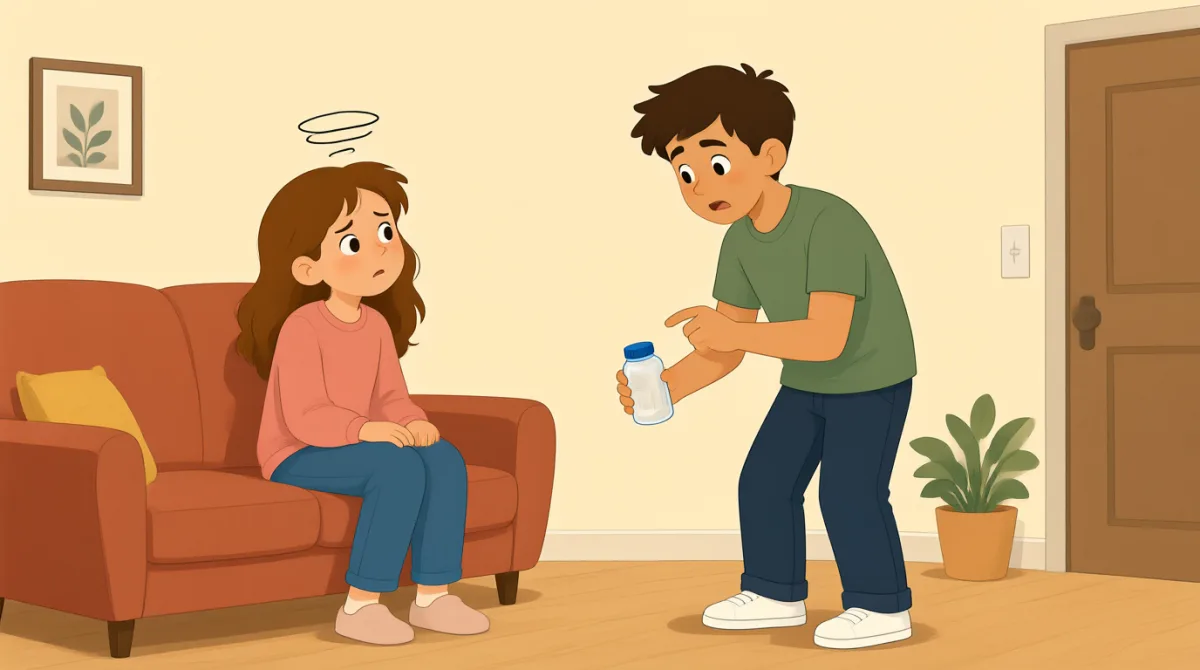

Hi, Jack. I started the new medicine last night, and now I feel dizzy and have an upset stomach.
हाय, जैक। मैंने कल रात नई दवा लेना शुरू किया था, और अब मुझे चक्कर आ रहे हैं और पेट खराब लग रहा है।

I’m sorry you’re feeling rough. How much did you take, and did you take it with food?
अरे, सुनकर बुरा लगा कि तुम्हारी तबीयत खराब है। तुमने कितनी दवा ली थी, और क्या उसे खाने के साथ लिया था?
I took one tablet with dinner, just as the label says. The dizziness started this morning when I got out of bed.
मैंने रात के खाने के साथ एक गोली ली थी, बिल्कुल वैसे ही जैसे लेबल पर लिखा है। आज सुबह बिस्तर से उठने पर चक्कर शुरू हुए।
Have you fainted, had trouble breathing, or noticed any swelling or a rash? Those symptoms need urgent medical attention.
क्या तुम बेहोश हुई हो, तुम्हें साँस लेने में दिक्कत हुई है, या कोई सूजन या दाने दिखे हैं? इन लक्षणों में तुरंत चिकित्सा सहायता लेना ज़रूरी है।
No, none of those. I’m just light-headed and a little nauseous, but I can keep food and water down.
नहीं, इनमें से कुछ भी नहीं। बस सिर हल्का-सा घूम रहा है और थोड़ी मतली हो रही है, लेकिन मैं खाना और पानी रोक पा रही हूँ।
For now, sit or lie down, drink some water, and don’t drive while you’re dizzy. I’ll check the medication details.
अभी के लिए बैठ जाओ या लेट जाओ, थोड़ा पानी पीओ, और जब तक चक्कर आ रहे हैं गाड़ी मत चलाना। मैं दवा की जानकारी देखता हूँ।
Should I take the next dose tonight, or wait until I speak with my doctor? I don’t want to make it worse.
क्या मुझे आज रात अगली खुराक लेनी चाहिए, या डॉक्टर से बात होने तक रुकना चाहिए? मैं नहीं चाहती कि हालत और बिगड़े।
Since you’re having symptoms, call your doctor today for advice before the next dose. If you get worse, seek urgent care.
चूँकि तुम्हें लक्षण हो रहे हैं, अगली खुराक लेने से पहले सलाह के लिए आज ही अपने डॉक्टर को फोन करो। अगर हालत बिगड़े, तो तुरंत चिकित्सा सहायता लो।
Okay, I’ll call the doctor now and stay home. Thanks for helping me figure out what to do next.
ठीक है, मैं अभी डॉक्टर को फोन करूँगी और घर पर रहूँगी। आगे क्या करना है, यह समझने में मेरी मदद करने के लिए शुक्रिया।
शब्दावली6
- take it with foodखाने के साथ दवा लेना
To take medicine while eating or after eating. You can ask, “Should I take this with food?”
खाना खाते समय या खाने के बाद दवा लेना। तुम पूछ सकती हो, “Should I take this with food?”
- faintबेहोश होना
To suddenly lose consciousness for a short time. This is an important symptom to mention when asking for medical help.
थोड़ी देर के लिए अचानक होश खो देना। चिकित्सा सहायता माँगते समय इस लक्षण का ज़िक्र करना ज़रूरी है।
- light-headedसिर हल्का महसूस होना
Feeling as if you might faint or lose your balance. You can use it to describe dizziness to a health professional.
ऐसा महसूस होना जैसे तुम बेहोश हो सकती हो या तुम्हारा संतुलन बिगड़ सकता है। स्वास्थ्यकर्मी को चक्कर आने के बारे में बताने के लिए तुम यह वाक्यांश इस्तेमाल कर सकती हो।
- keep food and water downखाना-पानी पेट में टिकना
To eat or drink without vomiting. This phrase helps explain how serious an upset stomach feels.
बिना उल्टी किए खाना या पीना। पेट खराब होने की परेशानी कितनी गंभीर है, यह बताने में यह वाक्यांश काम आता है।
- lie downलेट जाना
To rest in a flat position. It’s a useful suggestion when someone feels dizzy or unwell.
सीधी सपाट जगह पर आराम करना। किसी को चक्कर आ रहे हों या तबीयत खराब हो, तो यह एक उपयोगी सलाह है।
- seek urgent careतुरंत चिकित्सा सहायता लेना
To get medical help quickly for a serious or worsening problem. You can use this phrase when explaining what to do if symptoms get worse.
किसी गंभीर या बिगड़ती समस्या के लिए जल्दी चिकित्सा सहायता लेना। लक्षण बिगड़ने पर क्या करना चाहिए, यह बताने के लिए तुम इस वाक्यांश का इस्तेमाल कर सकती हो।
मुख्य वाक्य7
- 1
I started the new medicine last night, and now I feel dizzy and have an upset stomach.
मैंने कल रात नई दवा लेना शुरू किया था, और अब मुझे चक्कर आ रहे हैं और पेट खराब लग रहा है।
This sentence clearly explains when you started taking medicine and what symptoms you have. Reuse the pattern “I started [medicine] [time], and now I feel [symptom].”
इस वाक्य में साफ़ बताया गया है कि तुमने दवा लेना कब शुरू किया और तुम्हें कौन-से लक्षण हैं। इस ढाँचे का दोबारा इस्तेमाल करो: “I started [medicine] [time], and now I feel [symptom].”
- 2
I took one tablet with dinner, just as the label says.
मैंने रात के खाने के साथ एक गोली ली थी, बिल्कुल वैसे ही जैसे लेबल पर लिखा है।
This is a clear way to explain how much medicine you took and whether you followed the instructions. Replace “one tablet” and “with dinner” with your own details.
यह बताने का साफ़ तरीका है कि तुमने कितनी दवा ली और क्या निर्देशों का पालन किया। “one tablet” और “with dinner” की जगह अपनी जानकारी बताओ।
- 3
Have you fainted, had trouble breathing, or noticed any swelling or a rash?
क्या तुम बेहोश हुई हो, तुम्हें साँस लेने में दिक्कत हुई है, या कोई सूजन या दाने दिखे हैं?
This question checks for several serious symptoms. You can adapt it to ask someone about warning signs in other situations.
इस सवाल से कई गंभीर लक्षणों के बारे में पता किया जाता है। दूसरी स्थितियों में चेतावनी के संकेतों के बारे में पूछने के लिए तुम इसमें बदलाव कर सकती हो।
- 4
For now, sit or lie down, drink some water, and don’t drive while you’re dizzy.
अभी के लिए बैठ जाओ या लेट जाओ, थोड़ा पानी पीओ, और जब तक चक्कर आ रहे हैं गाड़ी मत चलाना।
This gives practical advice using clear, direct instructions. You can use the pattern “For now, [action], [action], and don’t [risky activity].”
इसमें साफ़ और सीधे निर्देश देकर काम की सलाह दी गई है। इस ढाँचे का इस्तेमाल करो: “For now, [action], [action], and don’t [risky activity].”
- 5
Since you’re having symptoms, call your doctor today for advice before the next dose.
चूँकि तुम्हें लक्षण हो रहे हैं, अगली खुराक लेने से पहले सलाह के लिए आज ही अपने डॉक्टर को फोन करो।
This sentence gives a reason and a specific next step. Reuse “Since you’re [situation], [action] before [next step]” to explain what someone should do.
इस वाक्य में कारण और अगला ठोस कदम बताया गया है। किसी को क्या करना चाहिए, यह समझाने के लिए “Since you’re [situation], [action] before [next step]” का दोबारा इस्तेमाल करो।
- 6
If you get worse, seek urgent care.
अगर हालत बिगड़े, तो तुरंत चिकित्सा सहायता लो।
This is a concise way to explain what to do if a condition becomes more serious. You can replace “get worse” with a specific change in symptoms.
हालत ज़्यादा गंभीर होने पर क्या करना चाहिए, यह बताने का यह संक्षिप्त तरीका है। “get worse” की जगह लक्षणों में किसी खास बदलाव का ज़िक्र कर सकती हो।
- 7
I’ll call the doctor now and stay home.
मैं अभी डॉक्टर को फोन करूँगी और घर पर रहूँगी।
This sentence explains your immediate plan in a simple, natural way. Use “I’ll [action] and [action]” to say what you intend to do next.
इस वाक्य में तुम्हारी तुरंत की योजना सरल और स्वाभाविक ढंग से बताई गई है। आगे क्या करने का इरादा है, यह बताने के लिए “I’ll [action] and [action]” का इस्तेमाल करो।