Calling Back About a Reaction
โทรกลับมาสอบถามเรื่องอาการไม่พึงประสงค์
After taking the medicine, Emma calls Jack because she feels dizzy and has an upset stomach. Jack asks about her symptoms and helps her decide what to do next.
หลังจากกินยา เอมมาโทรหาแจ็กเพราะรู้สึกเวียนหัวและปวดท้อง แจ็กถามเกี่ยวกับอาการของเธอและช่วยเธอตัดสินใจว่าควรทำอย่างไรต่อไป
บทสนทนา9
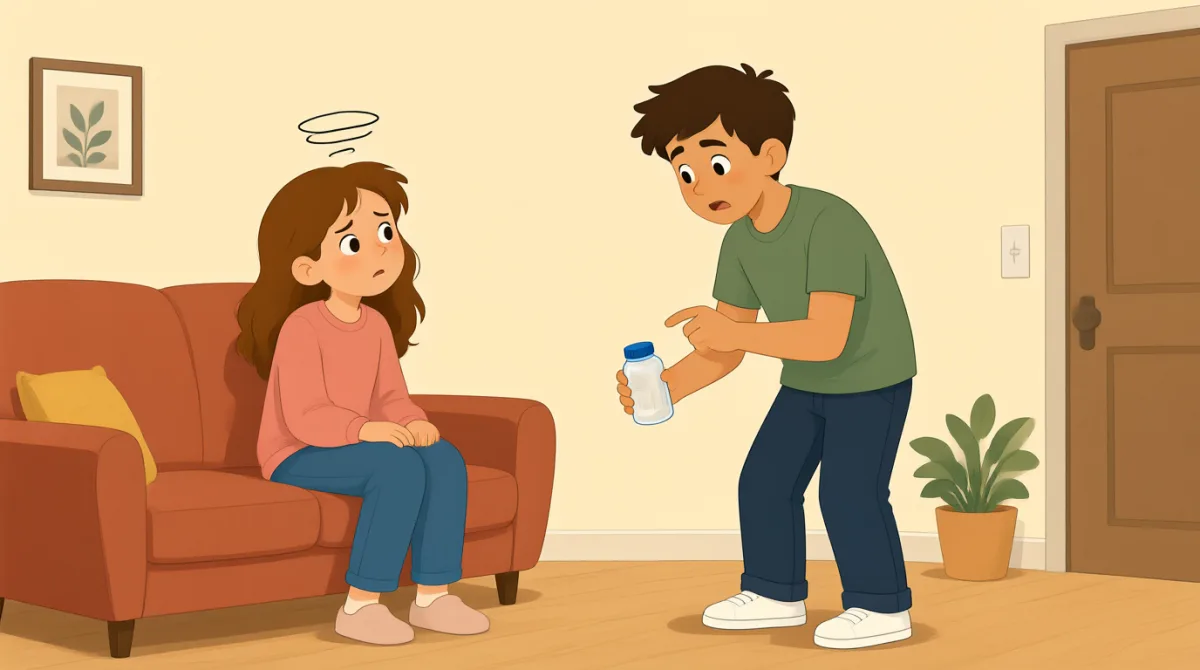

Hi, Jack. I started the new medicine last night, and now I feel dizzy and have an upset stomach.
หวัดดี แจ็ก เมื่อคืนฉันเริ่มกินยาตัวใหม่ แล้วตอนนี้ก็เวียนหัวและปวดท้อง

I’m sorry you’re feeling rough. How much did you take, and did you take it with food?
เสียใจด้วยนะที่รู้สึกไม่สบาย กินไปเท่าไหร่ แล้วกินพร้อมอาหารหรือเปล่า
I took one tablet with dinner, just as the label says. The dizziness started this morning when I got out of bed.
ฉันกินไปหนึ่งเม็ดพร้อมมื้อเย็น ตามที่ฉลากบอกเลย อาการเวียนหัวเริ่มตอนเช้านี้ ตอนที่ฉันลุกจากเตียง
Have you fainted, had trouble breathing, or noticed any swelling or a rash? Those symptoms need urgent medical attention.
เป็นลมหรือเปล่า หายใจลำบาก มีอาการบวมหรือผื่นขึ้นไหม อาการพวกนั้นต้องรีบไปพบแพทย์นะ
No, none of those. I’m just light-headed and a little nauseous, but I can keep food and water down.
ไม่มีเลยสักอย่าง แค่รู้สึกโคลงเคลงแล้วก็คลื่นไส้นิดหน่อย แต่ยังกินอาหารและดื่มน้ำได้โดยไม่อาเจียน
For now, sit or lie down, drink some water, and don’t drive while you’re dizzy. I’ll check the medication details.
ตอนนี้ให้นั่งหรือนอนลง ดื่มน้ำสักหน่อย แล้วก็อย่าขับรถตอนที่ยังเวียนหัวนะ เดี๋ยวฉันตรวจสอบรายละเอียดของยาให้
Should I take the next dose tonight, or wait until I speak with my doctor? I don’t want to make it worse.
คืนนี้ฉันควรกินยามื้อต่อไปไหม หรือรอจนกว่าจะได้คุยกับหมอก่อน ฉันไม่อยากให้อาการแย่ลง
Since you’re having symptoms, call your doctor today for advice before the next dose. If you get worse, seek urgent care.
ในเมื่อมีอาการอยู่ วันนี้โทรหาหมอเพื่อขอคำแนะนำก่อนกินยาครั้งต่อไปนะ ถ้าอาการแย่ลง ให้รีบไปพบแพทย์
Okay, I’ll call the doctor now and stay home. Thanks for helping me figure out what to do next.
โอเค ฉันจะโทรหาหมอตอนนี้ แล้วจะอยู่บ้าน ขอบใจนะที่ช่วยฉันคิดว่าควรทำยังไงต่อ
คำศัพท์6
- take it with foodกินยาพร้อมอาหาร
To take medicine while eating or after eating. You can ask, “Should I take this with food?”
หมายถึงกินยาระหว่างหรือหลังกินอาหาร ถามได้ว่า “Should I take this with food?” (ฉันควรกินยานี้พร้อมอาหารไหม)
- faintเป็นลม
To suddenly lose consciousness for a short time. This is an important symptom to mention when asking for medical help.
หมายถึงหมดสติไปชั่วขณะอย่างกะทันหัน นี่เป็นอาการสำคัญที่ควรแจ้งเมื่อขอความช่วยเหลือทางการแพทย์
- light-headedรู้สึกโคลงเคลง
Feeling as if you might faint or lose your balance. You can use it to describe dizziness to a health professional.
หมายถึงรู้สึกเหมือนจะเป็นลมหรือเสียการทรงตัว ใช้คำนี้อธิบายอาการเวียนหัวให้บุคลากรทางการแพทย์ฟังได้
- keep food and water downกินอาหารและดื่มน้ำได้โดยไม่อาเจียน
To eat or drink without vomiting. This phrase helps explain how serious an upset stomach feels.
หมายถึงกินหรือดื่มแล้วไม่อาเจียน วลีนี้ช่วยอธิบายว่าอาการปวดท้องรุนแรงแค่ไหน
- lie downนอนลง
To rest in a flat position. It’s a useful suggestion when someone feels dizzy or unwell.
หมายถึงพักโดยนอนราบ เป็นคำแนะนำที่มีประโยชน์เมื่อใครสักคนรู้สึกเวียนหัวหรือไม่สบาย
- seek urgent careรีบไปพบแพทย์
To get medical help quickly for a serious or worsening problem. You can use this phrase when explaining what to do if symptoms get worse.
หมายถึงขอความช่วยเหลือทางการแพทย์โดยเร็วเมื่อมีปัญหาร้ายแรงหรืออาการแย่ลง ใช้วลีนี้บอกว่าควรทำอย่างไรหากอาการทรุดลง
ประโยคสำคัญ7
- 1
I started the new medicine last night, and now I feel dizzy and have an upset stomach.
เมื่อคืนฉันเริ่มกินยาตัวใหม่ แล้วตอนนี้ก็เวียนหัวและปวดท้อง
This sentence clearly explains when you started taking medicine and what symptoms you have. Reuse the pattern “I started [medicine] [time], and now I feel [symptom].”
ประโยคนี้บอกได้ชัดเจนว่าคุณเริ่มกินยาเมื่อไหร่และมีอาการอะไรบ้าง ลองนำรูปแบบ “I started [medicine] [time], and now I feel [symptom].” มาใช้ซ้ำ โดยแทนที่ส่วนในวงเล็บด้วยข้อมูลของคุณ
- 2
I took one tablet with dinner, just as the label says.
ฉันกินไปหนึ่งเม็ดพร้อมมื้อเย็น ตามที่ฉลากบอกเลย
This is a clear way to explain how much medicine you took and whether you followed the instructions. Replace “one tablet” and “with dinner” with your own details.
นี่เป็นวิธีบอกอย่างชัดเจนว่าคุณกินยาไปเท่าไหร่และทำตามคำแนะนำหรือไม่ เปลี่ยน “one tablet” และ “with dinner” เป็นข้อมูลของคุณเองได้เลย
- 3
Have you fainted, had trouble breathing, or noticed any swelling or a rash?
เป็นลมหรือเปล่า หายใจลำบาก มีอาการบวมหรือผื่นขึ้นไหม
This question checks for several serious symptoms. You can adapt it to ask someone about warning signs in other situations.
คำถามนี้ใช้ตรวจสอบอาการร้ายแรงหลายอย่าง คุณปรับประโยคนี้เพื่อถามถึงสัญญาณเตือนในสถานการณ์อื่น ๆ ได้
- 4
For now, sit or lie down, drink some water, and don’t drive while you’re dizzy.
ตอนนี้ให้นั่งหรือนอนลง ดื่มน้ำสักหน่อย แล้วก็อย่าขับรถตอนที่ยังเวียนหัวนะ
This gives practical advice using clear, direct instructions. You can use the pattern “For now, [action], [action], and don’t [risky activity].”
ประโยคนี้ให้คำแนะนำที่ทำตามได้จริง โดยใช้คำสั่งที่ชัดเจนและตรงไปตรงมา คุณนำรูปแบบ “For now, [action], [action], and don’t [risky activity].” ไปใช้ได้
- 5
Since you’re having symptoms, call your doctor today for advice before the next dose.
ในเมื่อมีอาการอยู่ วันนี้โทรหาหมอเพื่อขอคำแนะนำก่อนกินยาครั้งต่อไปนะ
This sentence gives a reason and a specific next step. Reuse “Since you’re [situation], [action] before [next step]” to explain what someone should do.
ประโยคนี้บอกทั้งเหตุผลและขั้นตอนต่อไปที่ชัดเจน ลองใช้รูปแบบ “Since you’re [situation], [action] before [next step]” เพื่ออธิบายว่าควรทำอะไร
- 6
If you get worse, seek urgent care.
ถ้าอาการแย่ลง ให้รีบไปพบแพทย์
This is a concise way to explain what to do if a condition becomes more serious. You can replace “get worse” with a specific change in symptoms.
นี่เป็นวิธีสั้น ๆ ในการบอกว่าควรทำอย่างไรเมื่ออาการรุนแรงขึ้น คุณเปลี่ยน “get worse” เป็นอาการที่เปลี่ยนแปลงอย่างเฉพาะเจาะจงได้
- 7
I’ll call the doctor now and stay home.
ฉันจะโทรหาหมอตอนนี้ แล้วจะอยู่บ้าน
This sentence explains your immediate plan in a simple, natural way. Use “I’ll [action] and [action]” to say what you intend to do next.
ประโยคนี้บอกแผนที่คุณจะทำทันทีได้อย่างเรียบง่ายและเป็นธรรมชาติ ใช้ “I’ll [action] and [action]” เพื่อบอกว่าคุณตั้งใจจะทำอะไรต่อไป