Checking Other Medicines
ほかの薬との飲み合わせを確認する
Emma mentions the vitamins and pain reliever she sometimes takes and asks whether they are safe to use with her new medicine. Jack checks for possible interactions and advises her what to avoid.
エマは、ときどき飲んでいるビタミン剤と鎮痛薬について話し、新しい薬と一緒に使っても安全か尋ねます。ジャックは相互作用がないか確認し、避けたほうがよいものを伝えます。
会話10
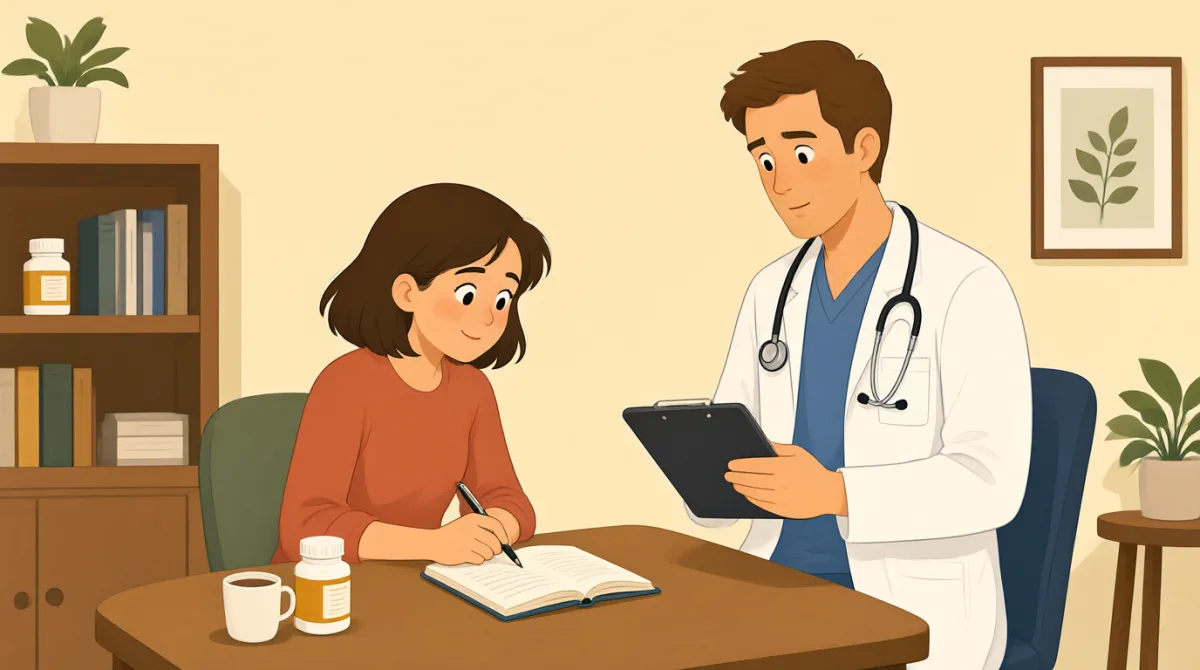

I take a daily multivitamin and sometimes use ibuprofen for headaches. Are those okay with my new medicine?
毎日マルチビタミンを飲んでいて、頭痛のときはイブプロフェンを使うこともあります。新しい薬と一緒に飲んでも大丈夫ですか?

Let me check the medication list and the label. Do you know the name and strength of the pain reliever?
薬のリストとラベルを確認しますね。鎮痛薬の名前と強さは分かりますか?
It’s regular ibuprofen, 200 milligrams. I only take one or two when I really need it.
普通のイブプロフェンで、200ミリグラムです。本当に必要なときに1錠か2錠飲むだけです。
Thanks. This new medicine can interact with ibuprofen, so it’s best to avoid taking them together unless your doctor says otherwise.
ありがとうございます。この新しい薬はイブプロフェンと相互作用を起こすことがあるので、医師から別の指示がない限り、一緒に飲むのは避けたほうがいいです。
Got it. What about the multivitamin? I usually take it with breakfast, so I’d rather not stop if I don’t have to.
分かりました。マルチビタミンはどうですか?いつも朝食と一緒に飲んでいるので、必要がなければやめたくないんです。
That should be fine, but check the vitamin label for minerals like calcium or iron. They may affect how your medicine is absorbed.
それは大丈夫そうですが、ビタミン剤のラベルにカルシウムや鉄などのミネラルが入っていないか確認してください。薬の吸収に影響することがあります。
There’s some calcium in it. Should I take the medicine at a different time, just to be on the safe side?
少しカルシウムが入っています。念のため、薬は時間をずらして飲んだほうがいいですか?
Yes, leave at least two hours between them. And if you need something for a headache, call your doctor or ask us about a safer option.
はい、少なくとも2時間は間隔を空けてください。頭痛薬が必要なときは、医師に電話するか、より安全な選択肢について私たちに相談してください。
Thanks, I’ll keep them apart and avoid the ibuprofen for now. I’m glad I checked before mixing anything.
ありがとうございます。時間を空けて飲んで、今のところイブプロフェンは避けます。何かを一緒に飲む前に確認してよかったです。
You’re welcome. Bring in the vitamin bottle next time, and we can double-check the ingredients together.
どういたしまして。次回、ビタミン剤のボトルを持ってきてください。一緒に成分をもう一度確認できますよ。
語彙8
- interact with〜と相互作用を起こす
To affect each other when used together. Here, the new medicine may have an unwanted effect when taken with ibuprofen.
一緒に使うと、お互いに影響を与えるという意味です。ここでは、新しい薬をイブプロフェンと一緒に飲むと、望ましくない影響が出る可能性があります。
- unless your doctor says otherwise医師から別の指示がない限り
This means you should follow the advice given, except when your doctor gives different instructions. Use it to explain when an exception is allowed.
医師から違う指示があった場合を除いて、言われたとおりにするという意味です。例外が認められる場合を説明するときに使います。
- What about the multivitamin?マルチビタミンはどうですか?
A natural way to ask about another item or topic. You can use “What about…?” to check whether something else is okay.
別のものや話題について尋ねる自然な言い方です。“What about…?”(…はどうですか?)を使うと、ほかのものも大丈夫か確認できます。
- on the safe side念のため
This means doing something extra to avoid possible problems. For example, you might leave more time between medicines just to be on the safe side.
起こりうる問題を避けるために、予防策を取るという意味です。たとえば、念のため薬の間隔を長めに空けることがあります。
- leave at least two hours between them少なくとも2時間は間隔を空ける
This means to wait two or more hours before taking the second item. You can use this structure to describe a time gap between activities or medicines.
2つ目のものを使う前に、2時間以上待つという意味です。この形は、行動や薬の間にどれくらい時間を空けるか説明するときに使えます。
- a safer optionより安全な選択肢
A choice that is less likely to cause a problem. You can ask about a safer option when you are unsure what to use.
問題が起こる可能性がより低い選択肢のことです。何を使えばいいか分からないときは、より安全な選択肢について尋ねられます。
- keep them apartそれらの間隔を空ける
Here, this means not taking the medicines or supplements at the same time. The phrase can also mean keeping two things separate.
ここでは、薬やサプリメントを同時に飲まないという意味です。この表現は、2つのものを別々にしておくという意味でも使えます。
- double-check再確認する
To check something again to make sure it is correct. You can use it when you want someone to confirm details or information.
正しいか確かめるために、もう一度確認することです。詳細や情報を誰かに確かめてもらいたいときに使えます。
重要な文8
- 1
Are those okay with my new medicine?
新しい薬と一緒に使っても大丈夫ですか?
A useful way to ask whether two or more things can be used together. Replace “those” with the items you want to ask about.
2つ以上のものを一緒に使えるか尋ねるときに便利な表現です。“those”を、確認したいものに置き換えて使えます。
- 2
Do you know the name and strength of the pain reliever?
鎮痛薬の名前と強さは分かりますか?
This politely asks for specific details about a medicine. You can use “Do you know the name and strength of…?” when checking a product.
薬について具体的な情報を丁寧に尋ねる表現です。製品を確認するときは、“Do you know the name and strength of…?”(…の名前と強さは分かりますか?)が使えます。
- 3
This new medicine can interact with ibuprofen, so it’s best to avoid taking them together unless your doctor says otherwise.
この新しい薬はイブプロフェンと相互作用を起こすことがあるので、医師から別の指示がない限り、一緒に飲むのは避けたほうがいいです。
This explains a possible risk and gives clear advice with an exception. The pattern “it’s best to avoid… unless…” is useful for cautious recommendations.
起こりうるリスクを説明し、例外も添えてはっきりと助言する表現です。“it’s best to avoid… unless…”(…がない限り、…は避けたほうがいい)は、慎重な勧め方に便利です。
- 4
I usually take it with breakfast, so I’d rather not stop if I don’t have to.
いつも朝食と一緒に飲んでいるので、やめなくていいならやめたくないんです。
This gives a reason and politely explains a preference. Use “I’d rather not…” to say what you prefer to avoid doing.
理由を伝えながら、自分の希望を丁寧に説明する表現です。“I’d rather not…”(できれば…したくありません)を使って、避けたいことを伝えられます。
- 5
Should I take the medicine at a different time, just to be on the safe side?
念のため、薬は時間をずらして飲んだほうがいいですか?
This is a natural way to ask whether an extra precaution is advisable. You can replace “take the medicine at a different time” with another possible precaution.
追加の予防策を取るべきか、自然に尋ねる表現です。“take the medicine at a different time”を別の予防策に置き換えて使えます。
- 6
And if you need something for a headache, call your doctor or ask us about a safer option.
頭痛薬が必要なときは、医師に電話するか、より安全な選択肢について私たちに相談してください。
This gives two practical next steps and offers a safer alternative. The structure “if you need…, call… or ask…” is useful for giving advice.
実行しやすい次の行動を2つ示し、より安全な代替案を提案しています。“if you need…, call… or ask…”(…が必要なら、…に電話するか、…に尋ねてください)は、助言するときに便利な形です。
- 7
I’m glad I checked before mixing anything.
何かを一緒に使う前に確認してよかったです。
This expresses relief about checking something in advance. Use “I’m glad I checked before…” to describe a helpful precaution.
前もって確認しておいてよかったという安堵を表します。“I’m glad I checked before…”(…する前に確認してよかったです)を使うと、役に立った予防策について話せます。
- 8
Bring in the vitamin bottle next time, and we can double-check the ingredients together.
次回、ビタミン剤のボトルを持ってきてください。一緒に成分をもう一度確認できますよ。
This makes a friendly request and explains what will happen next. “Bring in… next time” is useful when asking someone to bring an item for review.
親しみのある頼み方をし、次に何をするか説明する表現です。“Bring in… next time”(次回、…を持ってきてください)は、確認のために品物を持参してほしいときに便利です。