Calling Back About a Reaction
因出現反應而回電諮詢
After taking the medicine, Emma calls Jack because she feels dizzy and has an upset stomach. Jack asks about her symptoms and helps her decide what to do next.
服藥後,Emma 因感到頭暈和胃部不適而打電話給 Jack。Jack 詢問她的症狀,並幫她判斷接下來該怎麼做。
對話9
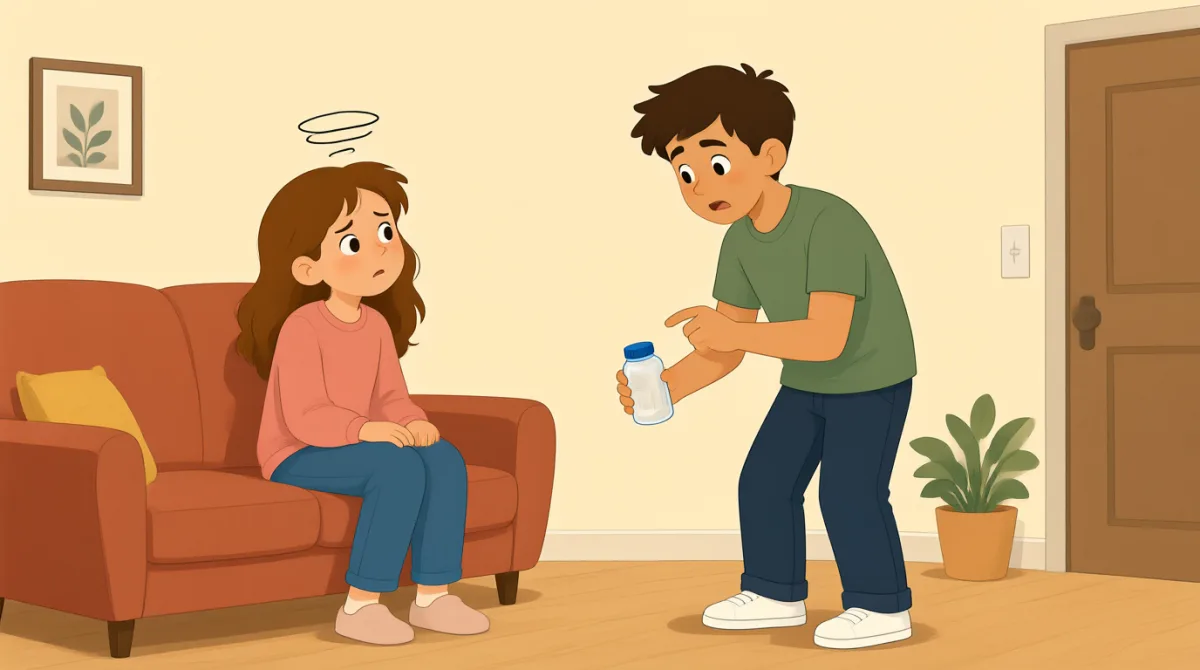

Hi, Jack. I started the new medicine last night, and now I feel dizzy and have an upset stomach.
你好,傑克。我昨晚開始服用新藥,現在覺得頭暈,胃也不舒服。

I’m sorry you’re feeling rough. How much did you take, and did you take it with food?
聽你這麼難受,真讓人擔心。你吃了多少?吃藥時吃東西了嗎?
I took one tablet with dinner, just as the label says. The dizziness started this morning when I got out of bed.
我按照藥瓶上的說明,晚飯時吃了一片。今天早上我起床時開始頭暈。
Have you fainted, had trouble breathing, or noticed any swelling or a rash? Those symptoms need urgent medical attention.
你有昏厥、呼吸困難、腫脹或起疹子嗎?出現這些症狀需要立即就醫。
No, none of those. I’m just light-headed and a little nauseous, but I can keep food and water down.
沒有這些症狀。我只是有點頭昏、噁心,不過還能吃東西,也能喝水。
For now, sit or lie down, drink some water, and don’t drive while you’re dizzy. I’ll check the medication details.
現在先坐下或躺下,喝點水。頭暈時不要開車。我來查一下這種藥的相關資訊。
Should I take the next dose tonight, or wait until I speak with my doctor? I don’t want to make it worse.
我今晚還要繼續服下一劑嗎,還是等跟醫生聯絡後再說?我不想讓情況變得更糟。
Since you’re having symptoms, call your doctor today for advice before the next dose. If you get worse, seek urgent care.
既然你出現了這些症狀,今天就聯絡醫生,並在服下一劑前聽取建議。如果症狀加重,請立即就醫。
Okay, I’ll call the doctor now and stay home. Thanks for helping me figure out what to do next.
好的,我現在就給醫生打電話,先待在家裡。謝謝你幫我弄清楚接下來該怎麼辦。
詞彙6
- take it with food隨餐服用
To take medicine while eating or after eating. You can ask, “Should I take this with food?”
指吃飯時或飯後服藥。你可以問:“Should I take this with food?”(我應該隨餐服用嗎?)
- faint昏厥
To suddenly lose consciousness for a short time. This is an important symptom to mention when asking for medical help.
指突然短暫失去意識。向醫護人員求助時,說明這一重要症狀很有必要。
- light-headed頭昏眼花
Feeling as if you might faint or lose your balance. You can use it to describe dizziness to a health professional.
感覺自己好像要昏倒或站不穩。你可以用這個詞向醫護人員描述頭暈的感覺。
- keep food and water down吃喝後不嘔吐
To eat or drink without vomiting. This phrase helps explain how serious an upset stomach feels.
指吃東西或喝水後沒有嘔吐。這個說法有助於說明胃部不適有多嚴重。
- lie down躺下
To rest in a flat position. It’s a useful suggestion when someone feels dizzy or unwell.
指平躺著休息。有人感到頭暈或不舒服時,這是一條實用的建議。
- seek urgent care緊急就醫
To get medical help quickly for a serious or worsening problem. You can use this phrase when explaining what to do if symptoms get worse.
指遇到嚴重或不斷惡化的問題時,儘快尋求醫療幫助。你可以用這個說法說明症狀加重時該怎麼辦。
關鍵句7
- 1
I started the new medicine last night, and now I feel dizzy and have an upset stomach.
我昨晚開始服用新藥,現在覺得頭暈,胃也不舒服。
This sentence clearly explains when you started taking medicine and what symptoms you have. Reuse the pattern “I started [medicine] [time], and now I feel [symptom].”
這句話清楚地說明了你何時開始服藥,以及現在有什麼症狀。你可以套用這個句型:“I started [medicine] [time], and now I feel [symptom].”(我在[時間]開始服用[藥物],現在覺得[症狀]。)
- 2
I took one tablet with dinner, just as the label says.
我晚飯時吃了一片,完全按照藥品標籤上的說明服用。
This is a clear way to explain how much medicine you took and whether you followed the instructions. Replace “one tablet” and “with dinner” with your own details.
這是一種清楚說明服藥劑量和是否遵循說明的說法。你可以把“one tablet”和“with dinner”換成自己的具體情況。
- 3
Have you fainted, had trouble breathing, or noticed any swelling or a rash?
你有昏厥、呼吸困難、腫脹或起疹子嗎?
This question checks for several serious symptoms. You can adapt it to ask someone about warning signs in other situations.
這個問題是在確認是否出現了幾種嚴重症狀。你也可以調整這個問法,詢問別人在其他情況下是否出現警示症狀。
- 4
For now, sit or lie down, drink some water, and don’t drive while you’re dizzy.
現在先坐下或躺下,喝點水,頭暈時不要開車。
This gives practical advice using clear, direct instructions. You can use the pattern “For now, [action], [action], and don’t [risky activity].”
這句話用清楚直接的指示給出了實用建議。你可以套用這個句型:“For now, [action], [action], and don’t [risky activity].”(現在先[做某事]、[做某事],不要[做有風險的事]。)
- 5
Since you’re having symptoms, call your doctor today for advice before the next dose.
既然你出現了這些症狀,今天就聯絡醫生,並在服下一劑前聽取建議。
This sentence gives a reason and a specific next step. Reuse “Since you’re [situation], [action] before [next step]” to explain what someone should do.
這句話說明了原因,也給出了具體的下一步。你可以套用“Since you’re [situation], [action] before [next step]”來說明某人應該怎麼做。
- 6
If you get worse, seek urgent care.
如果症狀加重,請立即就醫。
This is a concise way to explain what to do if a condition becomes more serious. You can replace “get worse” with a specific change in symptoms.
這是一種簡潔說明病情加重時該怎麼辦的說法。你可以把“get worse”換成具體的症狀變化。
- 7
I’ll call the doctor now and stay home.
我現在就給醫生打電話,然後待在家裡。
This sentence explains your immediate plan in a simple, natural way. Use “I’ll [action] and [action]” to say what you intend to do next.
這句話簡單自然地說明了你接下來馬上要做什麼。用“I’ll [action] and [action]”可以表達自己的下一步打算。