Calling Back Because You Are Not Better
تماس دوباره چون حالتان بهتر نشده است
Leo calls the clinic because he still feels sick after a few days. The nurse asks about his symptoms and tells him what to do next.
لئو چند روز بعد با درمانگاه تماس میگیرد، چون هنوز احساس بیماری میکند. پرستار دربارهٔ علائمش میپرسد و میگوید قدم بعدی چیست.
گفتوگو8
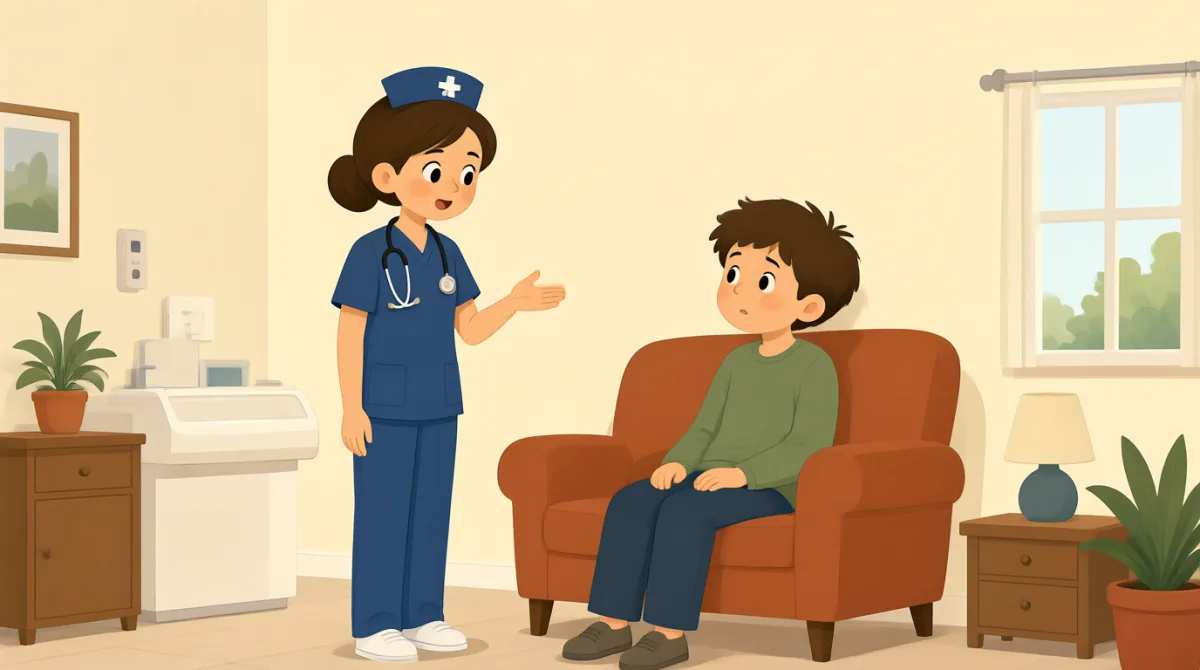

Hi, this is Leo Martinez. I called a few days ago about my cold.
سلام، لئو مارتینز هستم. چند روز پیش بابت سرماخوردگیام تماس گرفتم.

Hi, Leo. Are you feeling any better, or are your symptoms worse?
سلام، لئو. حالتان کمی بهتر شده یا علائمتان بدتر شده؟
I still have a cough and a fever. I feel very tired, too.
هنوز سرفه و تب دارم. خیلی هم خستهام.
I’m sorry to hear that. How high is your fever?
متأسفم که این را میشنوم. تبتان چقدر است؟
It’s about 101 degrees. I’ve had the fever since yesterday.
حدود ۱۰۱ درجه است. از دیروز تب دارم.
Please come in today so the doctor can check you again.
لطفاً امروز به درمانگاه مراجعه کنید تا پزشک دوباره معاینهتان کند.
Okay. Should I keep taking the medicine I got at the pharmacy?
باشه. دارویی را که از داروخانه گرفتم همچنان مصرف کنم؟
Take it as directed, and drink plenty of water. If breathing gets hard, get urgent care.
طبق دستور مصرفش کنید و آب فراوان بنوشید. اگر نفسکشیدن برایتان سخت شد، فوراً به مرکز درمانی مراجعه کنید.
واژگان7
- a few days agoچند روز پیش
This means a small number of days before now. Use it to say when something happened in the recent past.
این عبارت یعنی تعداد کمی روز قبل از حالا. وقتی میخواهید بگویید چیزی در گذشتهٔ نزدیک اتفاق افتاده، از آن استفاده کنید.
- symptomsعلائم
Symptoms are signs that someone is sick, such as a cough or fever. Use this word when talking about how you feel.
علائم نشانههایی هستند که نشان میدهند کسی بیمار است، مثل سرفه یا تب. وقتی دربارهٔ حالتان صحبت میکنید، از این واژه استفاده کنید.
- feverتب
A fever is a higher-than-normal body temperature. You can say, “I have a fever,” when you are sick.
تب یعنی دمای بدن از حد طبیعی بالاتر باشد. وقتی بیمار هستید میتوانید بگویید «I have a fever» (تب دارم).
- come inمراجعه کردن
Here, “come in” means to visit the clinic. You can use it when asking someone to come to a place for an appointment.
در اینجا، “come in” یعنی به درمانگاه مراجعه کردن. وقتی از کسی میخواهید برای یک نوبت به مکانی بیاید، میتوانید از این عبارت استفاده کنید.
- as directedطبق دستور
This means to follow the instructions. It is often used when talking about how to take medicine.
یعنی دستورالعملها را رعایت کنید. این عبارت اغلب برای توضیح نحوهٔ مصرف دارو به کار میرود.
- plenty of waterآب فراوان
This means a lot of water. You can use “plenty of” to recommend having enough of something.
یعنی مقدار زیادی آب. میتوانید از “plenty of” برای توصیه به مصرف مقدار کافی از چیزی استفاده کنید.
- urgent careمراقبت فوری پزشکی
Urgent care is medical help for a problem that needs attention soon. It is useful to know when symptoms become serious.
“Urgent care” یعنی دریافت کمک پزشکی برای مشکلی که باید زود به آن رسیدگی شود. دانستن این عبارت وقتی علائم جدی میشوند مفید است.
جملات کلیدی7
- 1
I called a few days ago about my cold.
چند روز پیش بابت سرماخوردگیام تماس گرفتم.
Use this sentence to remind someone about an earlier call. You can replace “my cold” with another reason for calling.
از این جمله برای یادآوری تماس قبلی به کسی استفاده کنید. میتوانید “my cold” را با دلیل دیگری برای تماس جایگزین کنید.
- 2
Are you feeling any better, or are your symptoms worse?
حالتان کمی بهتر شده یا علائمتان بدتر شده؟
This is a useful way to ask whether someone’s health has improved or become worse. You can use it when checking on a sick person.
این روش خوبی برای پرسیدن این است که آیا حال کسی بهتر شده یا بدتر. وقتی از یک بیمار احوالپرسی میکنید، میتوانید از این جمله استفاده کنید.
- 3
I still have a cough and a fever.
هنوز سرفه و تب دارم.
Use this sentence to describe symptoms that have not gone away. Replace “a cough and a fever” with other symptoms.
از این جمله برای توصیف علائمی استفاده کنید که هنوز برطرف نشدهاند. میتوانید “a cough and a fever” را با علائم دیگری جایگزین کنید.
- 4
I’ve had the fever since yesterday.
از دیروز تب دارم.
This explains how long a symptom has lasted. Use “I’ve had [symptom] since [time]” to give a starting point.
این جمله مدتزمان ادامهداشتن یک علامت را توضیح میدهد. برای گفتن زمان شروع، از “I’ve had [symptom] since [time]” استفاده کنید.
- 5
Please come in today so the doctor can check you again.
لطفاً امروز مراجعه کنید تا پزشک دوباره معاینهتان کند.
This is a polite way to ask someone to visit a clinic. “So” explains the reason for the visit.
این روش مؤدبانهای برای درخواست از کسی است که به درمانگاه مراجعه کند. “So” دلیل مراجعه را توضیح میدهد.
- 6
Take it as directed, and drink plenty of water.
دارو را طبق دستور مصرف کنید و آب فراوان بنوشید.
This gives two simple instructions for caring for yourself. You can use “as directed” when reminding someone to follow medicine instructions.
این جمله دو دستور ساده برای مراقبت از خودتان میدهد. وقتی میخواهید به کسی یادآوری کنید دستورهای مصرف دارو را رعایت کند، میتوانید از “as directed” استفاده کنید.
- 7
If breathing gets hard, get urgent care.
اگر نفسکشیدن سخت شد، فوراً به مرکز درمانی مراجعه کنید.
This gives advice about what to do if a symptom becomes serious. Use “If [problem happens], get [type of help]” to give a safety instruction.
این جمله میگوید اگر علامتی جدی شد چه کار کنید. برای بیان یک توصیهٔ ایمنی، از “If [problem happens], get [type of help]” استفاده کنید.