Calling Back Because You Are Not Better
Volver a llamar porque no mejora
Leo calls the clinic because he still feels sick after a few days. The nurse asks about his symptoms and tells him what to do next.
Leo llama a la clínica porque sigue sintiéndose mal después de unos días. La enfermera le pregunta por sus síntomas y le dice qué debe hacer.
Diálogo8
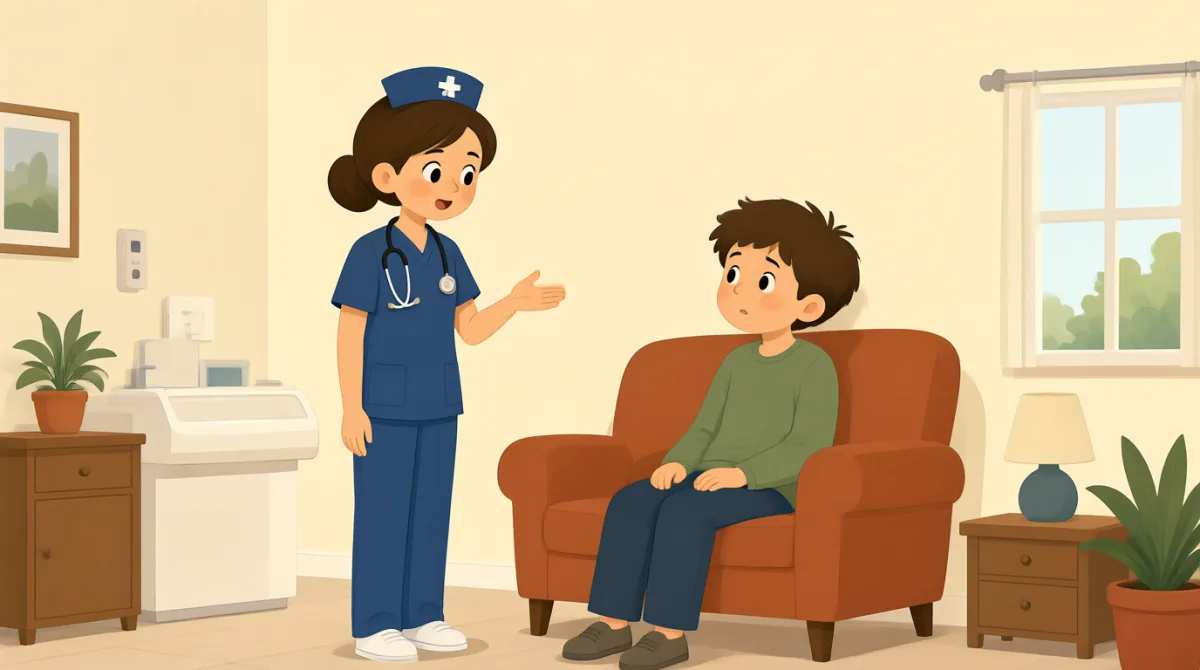

Hi, this is Leo Martinez. I called a few days ago about my cold.
Hola, soy Leo Martinez. Llamé hace unos días por mi resfriado.

Hi, Leo. Are you feeling any better, or are your symptoms worse?
Hola, Leo. ¿Te sientes un poco mejor o han empeorado tus síntomas?
I still have a cough and a fever. I feel very tired, too.
Sigo teniendo tos y fiebre. También me siento muy cansado.
I’m sorry to hear that. How high is your fever?
Siento que sigas así. ¿Cuánto tienes de fiebre?
It’s about 101 degrees. I’ve had the fever since yesterday.
Tengo unos 101 grados. Tengo fiebre desde ayer.
Please come in today so the doctor can check you again.
Por favor, ven hoy para que el médico pueda volver a revisarte.
Okay. Should I keep taking the medicine I got at the pharmacy?
De acuerdo. ¿Debo seguir tomando el medicamento que compré en la farmacia?
Take it as directed, and drink plenty of water. If breathing gets hard, get urgent care.
Tómalo según las indicaciones y bebe mucha agua. Si te cuesta respirar, busca atención médica urgente.
Vocabulario7
- a few days agohace unos días
This means a small number of days before now. Use it to say when something happened in the recent past.
Significa unos pocos días antes de ahora. Se usa para decir cuándo ocurrió algo hace poco.
- symptomssíntomas
Symptoms are signs that someone is sick, such as a cough or fever. Use this word when talking about how you feel.
Los síntomas son señales de que alguien está enfermo, como la tos o la fiebre. Usa esta palabra para hablar de cómo te sientes.
- feverfiebre
A fever is a higher-than-normal body temperature. You can say, “I have a fever,” when you are sick.
La fiebre es una temperatura corporal más alta de lo normal. Cuando estás enfermo, puedes decir “I have a fever” (Tengo fiebre).
- come invenir a la clínica
Here, “come in” means to visit the clinic. You can use it when asking someone to come to a place for an appointment.
Aquí, “come in” significa visitar la clínica. Puedes usar esta expresión para pedirle a alguien que vaya a un lugar para una cita.
- as directedsegún las indicaciones
This means to follow the instructions. It is often used when talking about how to take medicine.
Significa seguir las instrucciones. Se usa a menudo para explicar cómo tomar un medicamento.
- plenty of watermucha agua
This means a lot of water. You can use “plenty of” to recommend having enough of something.
Significa una gran cantidad de agua. Puedes usar “plenty of” para recomendar que alguien tome suficiente de algo.
- urgent careatención médica urgente
Urgent care is medical help for a problem that needs attention soon. It is useful to know when symptoms become serious.
La atención médica urgente es la ayuda médica para un problema que necesita atención pronto. Conviene conocer esta expresión por si los síntomas se vuelven graves.
Frases clave7
- 1
I called a few days ago about my cold.
Llamé hace unos días por mi resfriado.
Use this sentence to remind someone about an earlier call. You can replace “my cold” with another reason for calling.
Usa esta frase para recordarle a alguien una llamada anterior. Puedes cambiar “my cold” por otro motivo de la llamada.
- 2
Are you feeling any better, or are your symptoms worse?
¿Te sientes un poco mejor o han empeorado tus síntomas?
This is a useful way to ask whether someone’s health has improved or become worse. You can use it when checking on a sick person.
Esta es una forma práctica de preguntar si la salud de alguien ha mejorado o empeorado. Puedes usarla para ver cómo sigue una persona enferma.
- 3
I still have a cough and a fever.
Sigo teniendo tos y fiebre.
Use this sentence to describe symptoms that have not gone away. Replace “a cough and a fever” with other symptoms.
Usa esta frase para describir síntomas que no han desaparecido. Cambia “a cough and a fever” por otros síntomas.
- 4
I’ve had the fever since yesterday.
Tengo fiebre desde ayer.
This explains how long a symptom has lasted. Use “I’ve had [symptom] since [time]” to give a starting point.
Esta frase explica cuánto tiempo ha durado un síntoma. Usa “I’ve had [symptom] since [time]” para indicar desde cuándo lo tienes.
- 5
Please come in today so the doctor can check you again.
Por favor, ven hoy para que el médico pueda volver a revisarte.
This is a polite way to ask someone to visit a clinic. “So” explains the reason for the visit.
Esta es una forma amable de pedirle a alguien que vaya a una clínica. “So” explica el motivo de la visita.
- 6
Take it as directed, and drink plenty of water.
Tómalo según las indicaciones y bebe mucha agua.
This gives two simple instructions for caring for yourself. You can use “as directed” when reminding someone to follow medicine instructions.
Esta frase da dos instrucciones sencillas para cuidarte. Puedes usar “as directed” para recordarle a alguien que siga las instrucciones del medicamento.
- 7
If breathing gets hard, get urgent care.
Si te cuesta respirar, busca atención médica urgente.
This gives advice about what to do if a symptom becomes serious. Use “If [problem happens], get [type of help]” to give a safety instruction.
Esta frase aconseja qué hacer si un síntoma se vuelve grave. Usa “If [problem happens], get [type of help]” para dar una indicación de seguridad.