Calling Back Because You Are Not Better
İyileşmediğiniz İçin Kliniği Yeniden Aramak
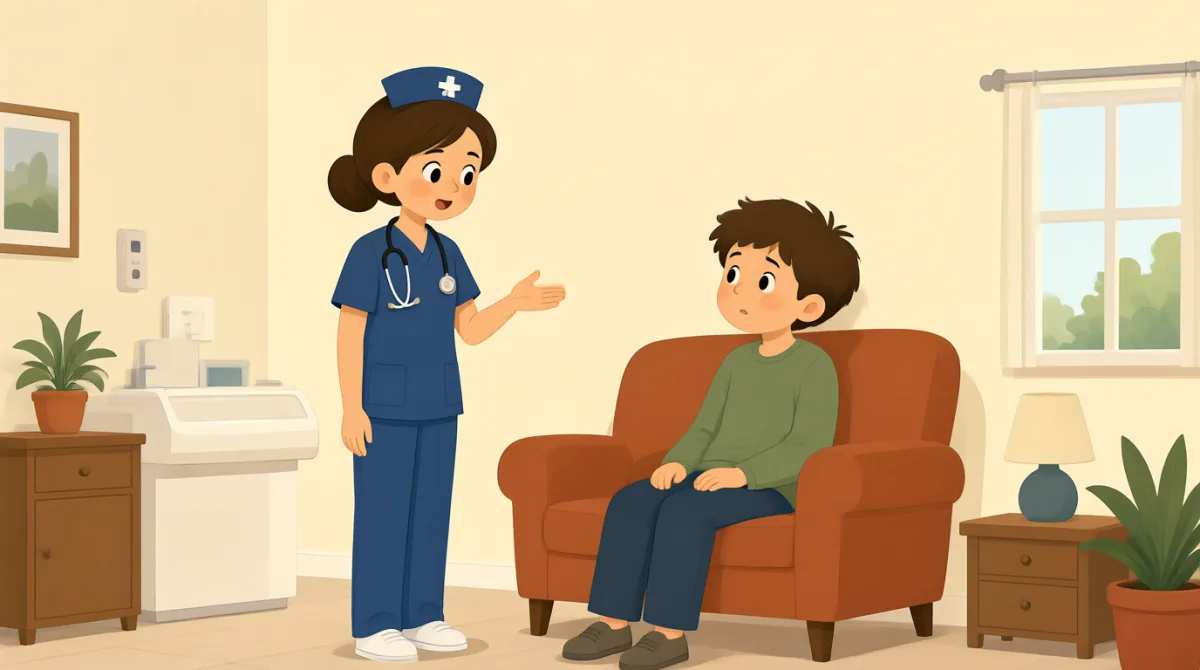
Leo calls the clinic because he still feels sick after a few days. The nurse asks about his symptoms and tells him what to do next.
Leo, birkaç gün geçmesine rağmen hâlâ kendini hasta hissettiği için kliniği arar. Hemşire belirtilerini sorar ve bundan sonra ne yapması gerektiğini söyler.
Diyalog8

Hi, this is Leo Martinez. I called a few days ago about my cold.
Merhaba, ben Leo Martinez. Birkaç gün önce soğuk algınlığım için aramıştım.

Hi, Leo. Are you feeling any better, or are your symptoms worse?
Merhaba Leo. Kendini daha iyi hissediyor musun, yoksa belirtilerin daha mı kötü?
I still have a cough and a fever. I feel very tired, too.
Hâlâ öksürüğüm ve ateşim var. Bir de kendimi çok yorgun hissediyorum.
I’m sorry to hear that. How high is your fever?
Bunu duyduğuma üzüldüm. Ateşin kaç derece?
It’s about 101 degrees. I’ve had the fever since yesterday.
Yaklaşık 101 derece. Ateşim dünden beri var.
Please come in today so the doctor can check you again.
Doktorun seni tekrar muayene edebilmesi için lütfen bugün kliniğe gel.
Okay. Should I keep taking the medicine I got at the pharmacy?
Tamam. Eczaneden aldığım ilacı kullanmaya devam edeyim mi?
Take it as directed, and drink plenty of water. If breathing gets hard, get urgent care.
Talimatlara uygun kullan ve bol bol su iç. Nefes almak zorlaşırsa acil tıbbi yardım al.
Kelime Bilgisi7
- a few days agobirkaç gün önce
This means a small number of days before now. Use it to say when something happened in the recent past.
Bu ifade, şimdiki zamandan birkaç gün öncesini anlatır. Yakın geçmişte bir şeyin ne zaman olduğunu söylerken kullanılır.
- symptomsbelirtiler
Symptoms are signs that someone is sick, such as a cough or fever. Use this word when talking about how you feel.
Belirtiler, öksürük veya ateş gibi bir kişinin hasta olduğunu gösteren işaretlerdir. Nasıl hissettiğinizden söz ederken bu kelimeyi kullanabilirsiniz.
- feverateş
A fever is a higher-than-normal body temperature. You can say, “I have a fever,” when you are sick.
Ateş, vücut sıcaklığının normalden yüksek olmasıdır. Hastayken “Ateşim var” diyebilirsiniz.
- come inkliniğe gelmek
Here, “come in” means to visit the clinic. You can use it when asking someone to come to a place for an appointment.
Burada “come in”, kliniği ziyaret etmek anlamına gelir. Birinden randevu için bir yere gelmesini isterken kullanabilirsiniz.
- as directedtalimatlara uygun
This means to follow the instructions. It is often used when talking about how to take medicine.
Bu ifade, verilen talimatlara uymak anlamına gelir. Genellikle ilaçların nasıl kullanılacağından söz ederken kullanılır.
- plenty of waterbol su
This means a lot of water. You can use “plenty of” to recommend having enough of something.
Bu, çok miktarda su demektir. Bir şeyden yeterince tüketmeyi önerirken “plenty of” ifadesini kullanabilirsiniz.
- urgent careacil tıbbi yardım
Urgent care is medical help for a problem that needs attention soon. It is useful to know when symptoms become serious.
Acil tıbbi yardım, kısa sürede ilgilenilmesi gereken bir sağlık sorunu için alınan tıbbi yardımdır. Belirtiler ciddileşirse bu ifadeyi bilmek işe yarar.
Önemli Cümleler7
- 1
I called a few days ago about my cold.
Birkaç gün önce soğuk algınlığım için aramıştım.
Use this sentence to remind someone about an earlier call. You can replace “my cold” with another reason for calling.
Bu cümleyi, birine daha önce yaptığınız bir telefon görüşmesini hatırlatmak için kullanabilirsiniz. Arama nedenini belirtmek için “my cold” yerine başka bir neden söyleyebilirsiniz.
- 2
Are you feeling any better, or are your symptoms worse?
Kendini daha iyi hissediyor musun, yoksa belirtilerin daha mı kötü?
This is a useful way to ask whether someone’s health has improved or become worse. You can use it when checking on a sick person.
Bu, birinin sağlığının iyileşip iyileşmediğini ya da kötüleşip kötüleşmediğini sormanın kullanışlı bir yoludur. Hasta birinin nasıl olduğunu sorarken kullanabilirsiniz.
- 3
I still have a cough and a fever.
Hâlâ öksürüğüm ve ateşim var.
Use this sentence to describe symptoms that have not gone away. Replace “a cough and a fever” with other symptoms.
Geçmemiş belirtilerinizi anlatmak için bu cümleyi kullanabilirsiniz. “a cough and a fever” yerine başka belirtiler söyleyebilirsiniz.
- 4
I’ve had the fever since yesterday.
Ateşim dünden beri var.
This explains how long a symptom has lasted. Use “I’ve had [symptom] since [time]” to give a starting point.
Bu cümle, bir belirtinin ne kadar süredir devam ettiğini açıklar. Başlangıç zamanını belirtmek için “I’ve had [symptom] since [time]” kalıbını kullanın.
- 5
Please come in today so the doctor can check you again.
Doktorun seni tekrar muayene edebilmesi için lütfen bugün kliniğe gel.
This is a polite way to ask someone to visit a clinic. “So” explains the reason for the visit.
Bu, birinden kliniği ziyaret etmesini kibarca istemenin bir yoludur. “So”, ziyaretin nedenini açıklar.
- 6
Take it as directed, and drink plenty of water.
İlacı talimatlara uygun kullan ve bol bol su iç.
This gives two simple instructions for caring for yourself. You can use “as directed” when reminding someone to follow medicine instructions.
Bu cümle, kendinize iyi bakmanız için iki basit talimat verir. Birine ilaç talimatlarına uymasını hatırlatırken “as directed” ifadesini kullanabilirsiniz.
- 7
If breathing gets hard, get urgent care.
Nefes almak zorlaşırsa acil tıbbi yardım al.
This gives advice about what to do if a symptom becomes serious. Use “If [problem happens], get [type of help]” to give a safety instruction.
Bu cümle, bir belirti ciddileşirse ne yapılması gerektiğini söyler. Güvenlikle ilgili bir talimat vermek için “If [problem happens], get [type of help]” kalıbını kullanın.