Calling Back Because You Are Not Better
ठीक न होने पर दोबारा फ़ोन करना
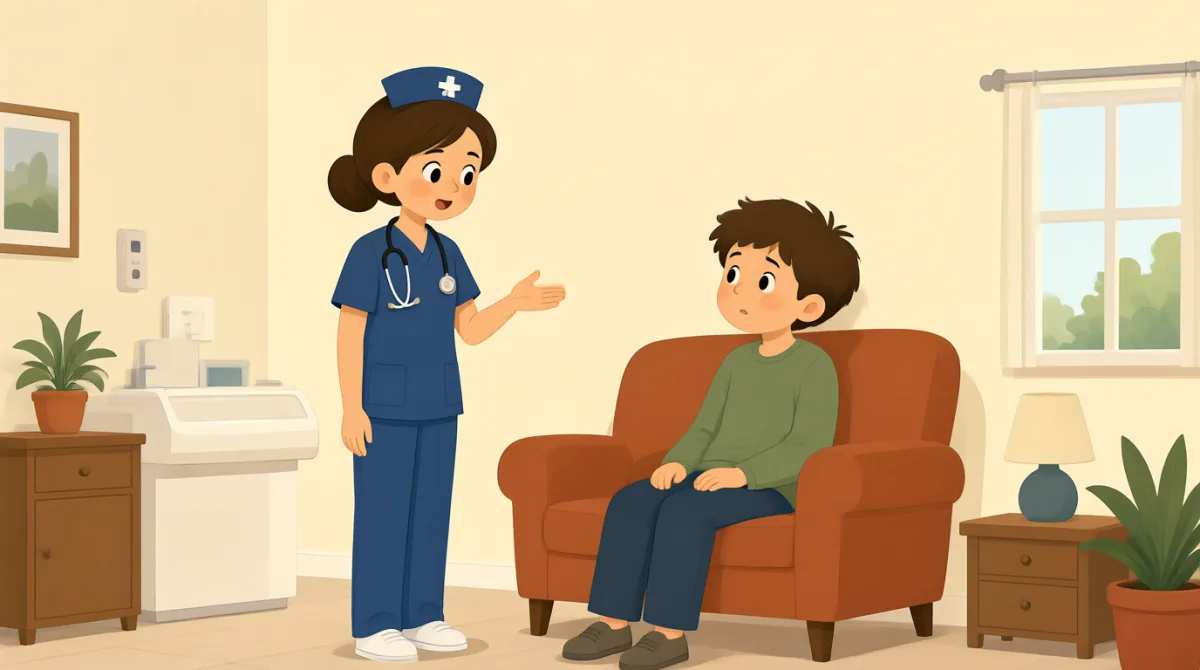
Leo calls the clinic because he still feels sick after a few days. The nurse asks about his symptoms and tells him what to do next.
कुछ दिनों बाद भी तबीयत ठीक न होने पर Leo क्लिनिक में फ़ोन करता है। नर्स उसके लक्षणों के बारे में पूछती है और आगे क्या करना है, बताती है।
संवाद8

Hi, this is Leo Martinez. I called a few days ago about my cold.
नमस्ते, मैं Leo Martinez बोल रहा हूँ। मैंने कुछ दिन पहले अपनी सर्दी-जुकाम के बारे में फ़ोन किया था।

Hi, Leo. Are you feeling any better, or are your symptoms worse?
नमस्ते, Leo। क्या अब कुछ बेहतर महसूस हो रहा है, या आपके लक्षण और बिगड़ गए हैं?
I still have a cough and a fever. I feel very tired, too.
मुझे अब भी खाँसी और बुखार है। मैं बहुत थका हुआ भी महसूस कर रहा हूँ।
I’m sorry to hear that. How high is your fever?
यह सुनकर अफ़सोस हुआ। आपका बुखार कितना है?
It’s about 101 degrees. I’ve had the fever since yesterday.
लगभग 101 डिग्री है। मुझे कल से बुखार है।
Please come in today so the doctor can check you again.
कृपया आज ही क्लिनिक आ जाइए, ताकि डॉक्टर आपकी फिर से जाँच कर सकें।
Okay. Should I keep taking the medicine I got at the pharmacy?
ठीक है। क्या मैं फ़ार्मेसी से मिली दवा लेना जारी रखूँ?
Take it as directed, and drink plenty of water. If breathing gets hard, get urgent care.
निर्देश के अनुसार दवा लें और खूब पानी पिएँ। अगर साँस लेने में तकलीफ़ हो, तो तुरंत चिकित्सा सहायता लें।
शब्दावली7
- a few days agoकुछ दिन पहले
This means a small number of days before now. Use it to say when something happened in the recent past.
इसका मतलब है, आज से कुछ दिन पहले। हाल ही में हुई किसी घटना का समय बताने के लिए इसका इस्तेमाल करें।
- symptomsलक्षण
Symptoms are signs that someone is sick, such as a cough or fever. Use this word when talking about how you feel.
लक्षण वे संकेत हैं जिनसे पता चलता है कि कोई बीमार है, जैसे खाँसी या बुखार। आप कैसा महसूस कर रहे हैं, यह बताने के लिए इस शब्द का इस्तेमाल करें।
- feverबुखार
A fever is a higher-than-normal body temperature. You can say, “I have a fever,” when you are sick.
बुखार में शरीर का तापमान सामान्य से ज़्यादा होता है। बीमार होने पर आप “I have a fever,” कह सकते हैं (मुझे बुखार है)।
- come inआना
Here, “come in” means to visit the clinic. You can use it when asking someone to come to a place for an appointment.
यहाँ “come in” का मतलब है क्लिनिक आना। किसी को अपॉइंटमेंट के लिए किसी जगह बुलाते समय इसका इस्तेमाल किया जा सकता है।
- as directedनिर्देश के अनुसार
This means to follow the instructions. It is often used when talking about how to take medicine.
इसका मतलब है दिए गए निर्देशों का पालन करना। दवा लेने के तरीके के बारे में बात करते समय इसका अक्सर इस्तेमाल होता है।
- plenty of waterखूब पानी
This means a lot of water. You can use “plenty of” to recommend having enough of something.
इसका मतलब है बहुत सारा पानी। किसी चीज़ की पर्याप्त मात्रा लेने की सलाह देने के लिए “plenty of” का इस्तेमाल कर सकते हैं।
- urgent careतत्काल चिकित्सा सहायता
Urgent care is medical help for a problem that needs attention soon. It is useful to know when symptoms become serious.
“Urgent care” ऐसी समस्या के लिए चिकित्सा सहायता है, जिस पर जल्द ध्यान देना ज़रूरी हो। लक्षण गंभीर होने पर यह जानना उपयोगी है।
मुख्य वाक्य7
- 1
I called a few days ago about my cold.
मैंने कुछ दिन पहले अपनी सर्दी-जुकाम के बारे में फ़ोन किया था।
Use this sentence to remind someone about an earlier call. You can replace “my cold” with another reason for calling.
पहले किए गए फ़ोन की याद दिलाने के लिए इस वाक्य का इस्तेमाल करें। फ़ोन करने की दूसरी वजह बताने के लिए “my cold” की जगह वह वजह रख सकते हैं।
- 2
Are you feeling any better, or are your symptoms worse?
क्या अब कुछ बेहतर महसूस हो रहा है, या आपके लक्षण और बिगड़ गए हैं?
This is a useful way to ask whether someone’s health has improved or become worse. You can use it when checking on a sick person.
यह पूछने का एक उपयोगी तरीका है कि किसी की तबीयत बेहतर हुई है या बिगड़ी है। किसी बीमार व्यक्ति का हाल पूछते समय इसका इस्तेमाल करें।
- 3
I still have a cough and a fever.
मुझे अब भी खाँसी और बुखार है।
Use this sentence to describe symptoms that have not gone away. Replace “a cough and a fever” with other symptoms.
जो लक्षण अभी तक ठीक नहीं हुए हैं, उन्हें बताने के लिए इस वाक्य का इस्तेमाल करें। दूसरे लक्षण बताने के लिए “a cough and a fever” की जगह उनके नाम रख सकते हैं।
- 4
I’ve had the fever since yesterday.
मुझे कल से बुखार है।
This explains how long a symptom has lasted. Use “I’ve had [symptom] since [time]” to give a starting point.
इससे पता चलता है कि कोई लक्षण कितने समय से है। लक्षण कब शुरू हुआ, यह बताने के लिए “I’ve had [symptom] since [time]” का इस्तेमाल करें।
- 5
Please come in today so the doctor can check you again.
कृपया आज ही क्लिनिक आ जाइए, ताकि डॉक्टर आपकी फिर से जाँच कर सकें।
This is a polite way to ask someone to visit a clinic. “So” explains the reason for the visit.
किसी को क्लिनिक आने के लिए विनम्रता से कहने का यह तरीका है। “So” आने का कारण बताता है।
- 6
Take it as directed, and drink plenty of water.
निर्देश के अनुसार दवा लें और खूब पानी पिएँ।
This gives two simple instructions for caring for yourself. You can use “as directed” when reminding someone to follow medicine instructions.
यह अपनी देखभाल के लिए दो आसान हिदायतें देता है। किसी को दवा के निर्देशों का पालन याद दिलाने के लिए “as directed” का इस्तेमाल कर सकते हैं।
- 7
If breathing gets hard, get urgent care.
अगर साँस लेने में तकलीफ़ हो, तो तुरंत चिकित्सा सहायता लें।
This gives advice about what to do if a symptom becomes serious. Use “If [problem happens], get [type of help]” to give a safety instruction.
यह बताता है कि कोई लक्षण गंभीर हो जाए तो क्या करना चाहिए। सुरक्षा संबंधी हिदायत देने के लिए “If [problem happens], get [type of help]” का इस्तेमाल करें।