Calling Back Because You Are Not Better
โทรกลับเพราะอาการยังไม่ดีขึ้น
Leo calls the clinic because he still feels sick after a few days. The nurse asks about his symptoms and tells him what to do next.
ลีโอโทรหาคลินิกเพราะผ่านไปสองสามวันแล้ว แต่อาการก็ยังไม่หาย พยาบาลถามเกี่ยวกับอาการและแนะนำว่าควรทำอย่างไรต่อ
บทสนทนา8
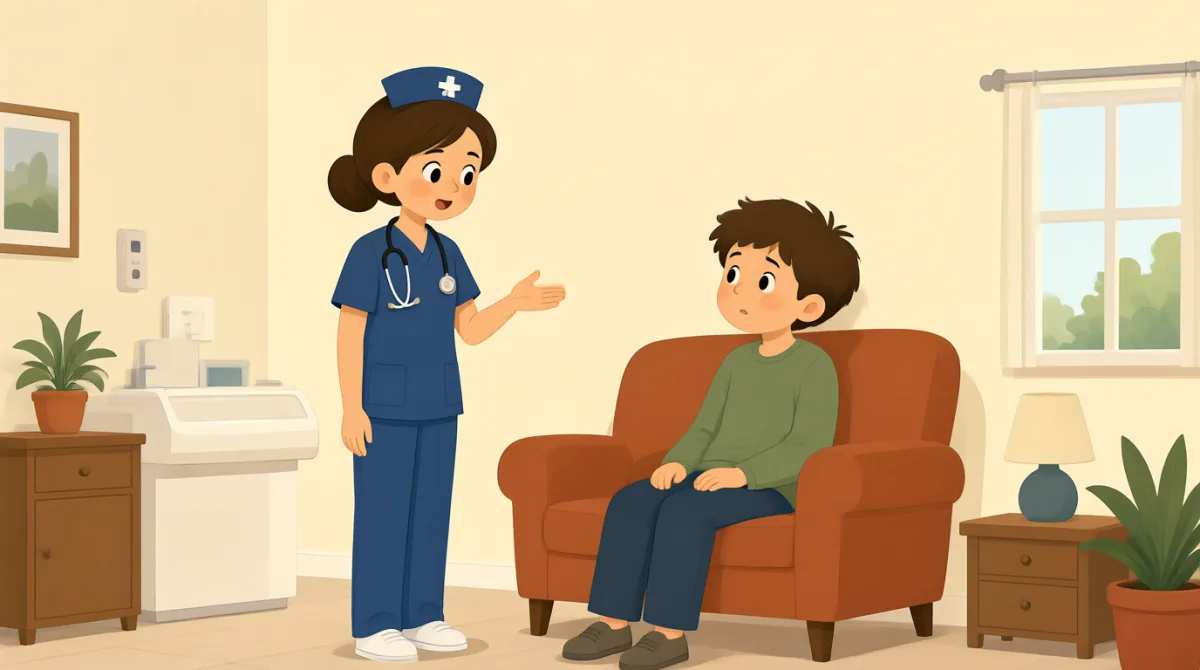

Hi, this is Leo Martinez. I called a few days ago about my cold.
สวัสดีครับ ผมลีโอ มาร์ติเนซครับ ผมโทรมาเมื่อสองสามวันก่อนเรื่องหวัดครับ

Hi, Leo. Are you feeling any better, or are your symptoms worse?
สวัสดีค่ะ ลีโอ อาการดีขึ้นบ้างไหมคะ หรือว่าอาการแย่ลง?
I still have a cough and a fever. I feel very tired, too.
ผมยังไอและมีไข้ครับ แล้วก็รู้สึกเหนื่อยมากด้วย
I’m sorry to hear that. How high is your fever?
เสียใจด้วยนะคะที่ได้ยินแบบนั้น ไข้สูงเท่าไรคะ?
It’s about 101 degrees. I’ve had the fever since yesterday.
ประมาณ 101 องศาครับ ผมมีไข้มาตั้งแต่เมื่อวานครับ
Please come in today so the doctor can check you again.
วันนี้รบกวนมาที่คลินิกนะคะ คุณหมอจะได้ตรวจอาการอีกครั้งค่ะ
Okay. Should I keep taking the medicine I got at the pharmacy?
ได้ครับ ผมควรกินยาที่ได้จากร้านขายยาต่อไหมครับ?
Take it as directed, and drink plenty of water. If breathing gets hard, get urgent care.
กินยาตามคำแนะนำ แล้วดื่มน้ำเยอะ ๆ นะคะ ถ้าหายใจลำบาก ให้รีบไปพบแพทย์ฉุกเฉินค่ะ
คำศัพท์7
- a few days agoเมื่อสองสามวันก่อน
This means a small number of days before now. Use it to say when something happened in the recent past.
หมายถึงช่วงเวลาไม่กี่วันก่อนหน้านี้ ใช้บอกว่าเรื่องหนึ่งเกิดขึ้นเมื่อไม่นานมานี้
- symptomsอาการ
Symptoms are signs that someone is sick, such as a cough or fever. Use this word when talking about how you feel.
Symptoms หมายถึงสัญญาณที่บอกว่าคนคนหนึ่งกำลังป่วย เช่น ไอหรือมีไข้ ใช้คำนี้เมื่อพูดถึงอาการที่คุณรู้สึก
- feverไข้
A fever is a higher-than-normal body temperature. You can say, “I have a fever,” when you are sick.
Fever หมายถึงอุณหภูมิร่างกายที่สูงกว่าปกติ เวลาป่วย คุณพูดได้ว่า “I have a fever” (ฉันมีไข้)
- come inมาที่คลินิก
Here, “come in” means to visit the clinic. You can use it when asking someone to come to a place for an appointment.
ในที่นี้ “come in” หมายถึงมาที่คลินิก ใช้สำนวนนี้เมื่อต้องการขอให้ใครมาที่สถานที่แห่งหนึ่งเพื่อนัดหมาย
- as directedตามคำแนะนำ
This means to follow the instructions. It is often used when talking about how to take medicine.
หมายถึงทำตามคำแนะนำ มักใช้เมื่อพูดถึงวิธีกินยา
- plenty of waterน้ำเยอะ ๆ
This means a lot of water. You can use “plenty of” to recommend having enough of something.
หมายถึงน้ำปริมาณมาก คุณใช้ “plenty of” เพื่อแนะนำให้มีหรือใช้สิ่งใดสิ่งหนึ่งให้เพียงพอได้
- urgent careการรักษาเร่งด่วน
Urgent care is medical help for a problem that needs attention soon. It is useful to know when symptoms become serious.
Urgent care คือการรักษาทางการแพทย์สำหรับปัญหาที่ต้องได้รับการดูแลโดยเร็ว คำนี้มีประโยชน์เมื่ออาการเริ่มรุนแรงขึ้น
ประโยคสำคัญ7
- 1
I called a few days ago about my cold.
ผมโทรมาเมื่อสองสามวันก่อนเรื่องหวัดครับ
Use this sentence to remind someone about an earlier call. You can replace “my cold” with another reason for calling.
ใช้ประโยคนี้เพื่อเตือนให้อีกฝ่ายนึกถึงการโทรครั้งก่อน คุณเปลี่ยน “my cold” เป็นเหตุผลอื่นที่โทรมาได้
- 2
Are you feeling any better, or are your symptoms worse?
อาการดีขึ้นบ้างไหมคะ หรือว่าอาการแย่ลง?
This is a useful way to ask whether someone’s health has improved or become worse. You can use it when checking on a sick person.
นี่เป็นวิธีถามที่มีประโยชน์ว่าอาการของใครดีขึ้นหรือแย่ลง ใช้ถามไถ่คนที่กำลังป่วยได้
- 3
I still have a cough and a fever.
ผมยังไอและมีไข้ครับ
Use this sentence to describe symptoms that have not gone away. Replace “a cough and a fever” with other symptoms.
ใช้ประโยคนี้บอกอาการที่ยังไม่หาย คุณเปลี่ยน “a cough and a fever” เป็นอาการอื่นได้
- 4
I’ve had the fever since yesterday.
ผมมีไข้มาตั้งแต่เมื่อวานครับ
This explains how long a symptom has lasted. Use “I’ve had [symptom] since [time]” to give a starting point.
ประโยคนี้บอกว่าอาการเป็นมานานแค่ไหน ใช้ “I’ve had [symptom] since [time]” เพื่อบอกว่าเริ่มมีอาการตั้งแต่เมื่อไร
- 5
Please come in today so the doctor can check you again.
วันนี้รบกวนมาที่คลินิกนะคะ คุณหมอจะได้ตรวจอาการอีกครั้งค่ะ
This is a polite way to ask someone to visit a clinic. “So” explains the reason for the visit.
นี่เป็นวิธีสุภาพในการขอให้ใครมาที่คลินิก “So” ใช้อธิบายเหตุผลที่ต้องมาพบแพทย์
- 6
Take it as directed, and drink plenty of water.
กินยาตามคำแนะนำ แล้วดื่มน้ำเยอะ ๆ นะคะ
This gives two simple instructions for caring for yourself. You can use “as directed” when reminding someone to follow medicine instructions.
ประโยคนี้ให้คำแนะนำง่าย ๆ สองข้อในการดูแลตัวเอง คุณใช้ “as directed” เพื่อเตือนให้ใครทำตามคำแนะนำในการใช้ยาได้
- 7
If breathing gets hard, get urgent care.
ถ้าหายใจลำบาก ให้รีบไปพบแพทย์ฉุกเฉินค่ะ
This gives advice about what to do if a symptom becomes serious. Use “If [problem happens], get [type of help]” to give a safety instruction.
ประโยคนี้แนะนำว่าควรทำอย่างไรหากอาการรุนแรงขึ้น ใช้ “If [problem happens], get [type of help]” เพื่อบอกวิธีปฏิบัติเพื่อความปลอดภัย