Explaining the Ankle Injury
Explicar la lesión de tobillo
A clinician asks Leo how he hurt his ankle and about his symptoms. Leo describes what happened and answers questions about the pain and swelling.
Una profesional de la salud le pregunta a Leo cómo se lastimó el tobillo y qué síntomas tiene. Leo cuenta lo que pasó y responde preguntas sobre el dolor y la hinchazón.
Diálogo10
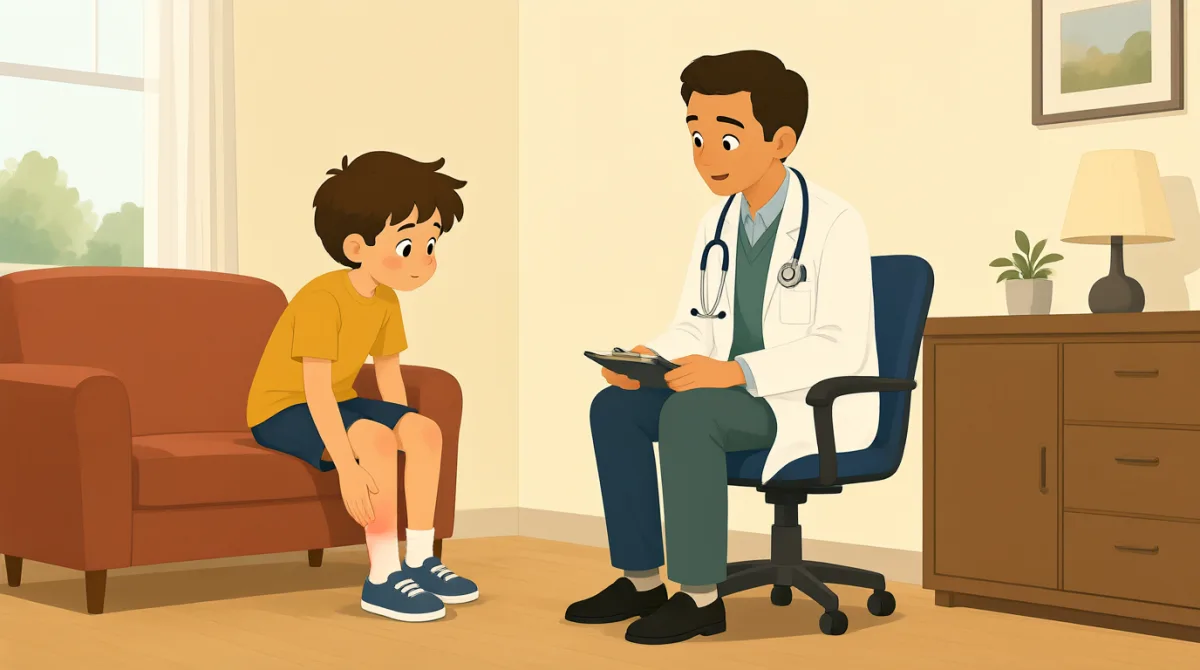

Hi, Leo. I understand you twisted your ankle. Can you tell me what happened?
Hola, Leo. Entiendo que te torciste el tobillo. ¿Puedes contarme qué pasó?

I was playing basketball and came down awkwardly after a jump. My foot rolled to the side, and I heard a pop.
Estaba jugando al básquet y caí mal después de saltar. El pie se me torció hacia un lado y oí un chasquido.
When did this happen, and were you able to put any weight on that foot afterward?
¿Cuándo pasó? ¿Y pudiste apoyar el pie después?
It happened about two hours ago. I can walk, but I’m limping, and it hurts more when I put weight on it.
Pasó hace unas dos horas. Puedo caminar, pero cojeo y me duele más cuando apoyo el pie.
Where does it hurt the most? And have you noticed any swelling, bruising, or numbness?
¿Dónde te duele más? ¿Has notado hinchazón, moretones o entumecimiento?
The pain is mostly on the outside of my ankle. It’s getting swollen, but I don’t see bruising or feel numb.
Me duele sobre todo en la parte externa del tobillo. Se me está hinchando, pero no veo moretones ni siento entumecimiento.
On a scale from zero to ten, how bad is the pain right now? Does anything make it feel better?
En una escala del cero al diez, ¿cuánto te duele ahora? ¿Hay algo que te alivie?
It’s about a six when I stand, maybe a three when I’m sitting. Keeping it still helps a little.
Como un seis cuando estoy de pie, quizá un tres cuando estoy sentado. Mantenerlo quieto ayuda un poco.
Any previous ankle injuries, allergies, or medications you’re taking?
¿Has tenido lesiones anteriores en los tobillos, tienes alergias o estás tomando algún medicamento?
No previous injuries or allergies. I’m not taking any medication, and I haven’t put ice on it yet.
No he tenido lesiones anteriores ni tengo alergias. No estoy tomando ningún medicamento y todavía no me he puesto hielo.
Vocabulario8
- came down awkwardlycaí mal
Landed in an uncomfortable or unbalanced way after jumping. You can use this phrase to explain how you landed or moved when you got hurt.
Caer de una forma incómoda o desequilibrada después de saltar. Puedes usar esta expresión para explicar cómo caíste o te moviste cuando te lastimaste.
- rolled to the sidese torció hacia un lado
Describes a foot or ankle turning sideways. It helps explain the movement that caused an injury.
Describe cómo el pie o el tobillo gira hacia un lado. Sirve para explicar el movimiento que causó una lesión.
- put any weight on that footapoyar el pie
Means to stand or walk using that foot to support your body. Clinicians may ask this to understand how an injury affects movement.
Significa ponerse de pie o caminar usando ese pie para sostener el cuerpo. El personal médico puede preguntarte esto para entender cómo afecta la lesión a tus movimientos.
- limpingcojeando
Walking unevenly because one leg or foot hurts. You can say “I’m limping” to describe how an injury affects the way you walk.
Caminar de forma desigual porque te duele una pierna o un pie. Puedes decir “I’m limping” (cojeo) para describir cómo afecta una lesión a tu forma de caminar.
- swellinghinchazón
An area of the body becoming larger, often after an injury. You can describe it by saying, “It’s getting swollen.”
Cuando una parte del cuerpo aumenta de tamaño, a menudo después de una lesión. Puedes describirlo diciendo “It’s getting swollen” (Se está hinchando).
- on a scale from zero to tenen una escala del cero al diez
A way to rate how strong pain is, with zero meaning no pain and ten meaning the worst pain. It is commonly used when talking with a clinician.
Una forma de indicar cuánto duele algo: cero significa que no hay dolor y diez, el peor dolor posible. Se usa habitualmente al hablar con un profesional de la salud.
- previous ankle injurieslesiones anteriores en los tobillos
Earlier injuries to the ankle. This phrase is useful when answering questions about your medical history.
Lesiones que tuviste antes en el tobillo. Esta expresión es útil para responder preguntas sobre tus antecedentes médicos.
- put ice on itponerse hielo
Apply ice to an injured area, usually to help with pain or swelling. You can use this phrase to explain what treatment you have or haven’t tried.
Aplicar hielo en una zona lesionada, normalmente para aliviar el dolor o la hinchazón. Puedes usar esta expresión para explicar qué tratamiento has probado o no.
Frases clave7
- 1
Can you tell me what happened?
¿Puedes contarme qué pasó?
A polite, open question for asking someone to describe an event. You can reuse it to invite someone to explain a problem or situation.
Una pregunta abierta y cortés para pedirle a alguien que describa un suceso. Puedes usarla para invitar a alguien a explicar un problema o una situación.
- 2
My foot rolled to the side, and I heard a pop.
El pie se me torció hacia un lado y oí un chasquido.
This sentence describes both how the injury happened and what you heard. You can adapt it to report the movement and sounds connected to an injury.
Esta oración describe tanto cómo ocurrió la lesión como lo que oíste. Puedes adaptarla para contar qué movimiento hiciste y qué sonidos se produjeron al lesionarte.
- 3
I can walk, but I’m limping, and it hurts more when I put weight on it.
Puedo caminar, pero cojeo y me duele más cuando apoyo el pie.
This explains what you can do and what makes the pain worse. Replace “walk” or “put weight on it” with details that match your symptoms.
Esta oración explica qué puedes hacer y qué empeora el dolor. Puedes cambiar “walk” o “put weight on it” por detalles que describan tus síntomas.
- 4
The pain is mostly on the outside of my ankle.
Me duele sobre todo en la parte externa del tobillo.
A clear way to say exactly where pain is located. You can replace “the outside of my ankle” with another body area.
Una forma clara de decir exactamente dónde te duele. Puedes reemplazar “the outside of my ankle” por otra parte del cuerpo.
- 5
It’s about a six when I stand, maybe a three when I’m sitting.
Como un seis cuando estoy de pie, quizá un tres cuando estoy sentado.
This compares pain levels in two situations using a number scale. You can use the same structure to explain how your pain changes with movement or rest.
Esta oración compara el nivel de dolor en dos situaciones usando una escala numérica. Puedes usar la misma estructura para explicar cómo cambia el dolor cuando te mueves o descansas.
- 6
Keeping it still helps a little.
Mantenerlo quieto ayuda un poco.
This describes something that reduces the pain slightly. You can use “Keeping [body part] still helps” to explain what makes a symptom better.
Esto describe algo que reduce un poco el dolor. Puedes usar “Keeping [body part] still helps” para explicar qué alivia un síntoma.
- 7
I’m not taking any medication, and I haven’t put ice on it yet.
No estoy tomando ningún medicamento y todavía no me he puesto hielo.
This gives a clinician useful information about medicine and care you have tried. You can change the details to say what you are taking or what treatment you have used.
Esta oración le da al profesional de la salud información útil sobre los medicamentos y cuidados que has probado. Puedes cambiar los detalles para decir qué estás tomando o qué tratamiento has usado.