Rain in the Night
Lluvia por la noche
Rain wakes Emma and Jack during the night, and they check that their things are dry. In the morning, they make a plan for the wet weather.
La lluvia despierta a Emma y Jack durante la noche, y comprueban que sus cosas estén secas. Por la mañana, hacen un plan para el mal tiempo.
Diálogo8
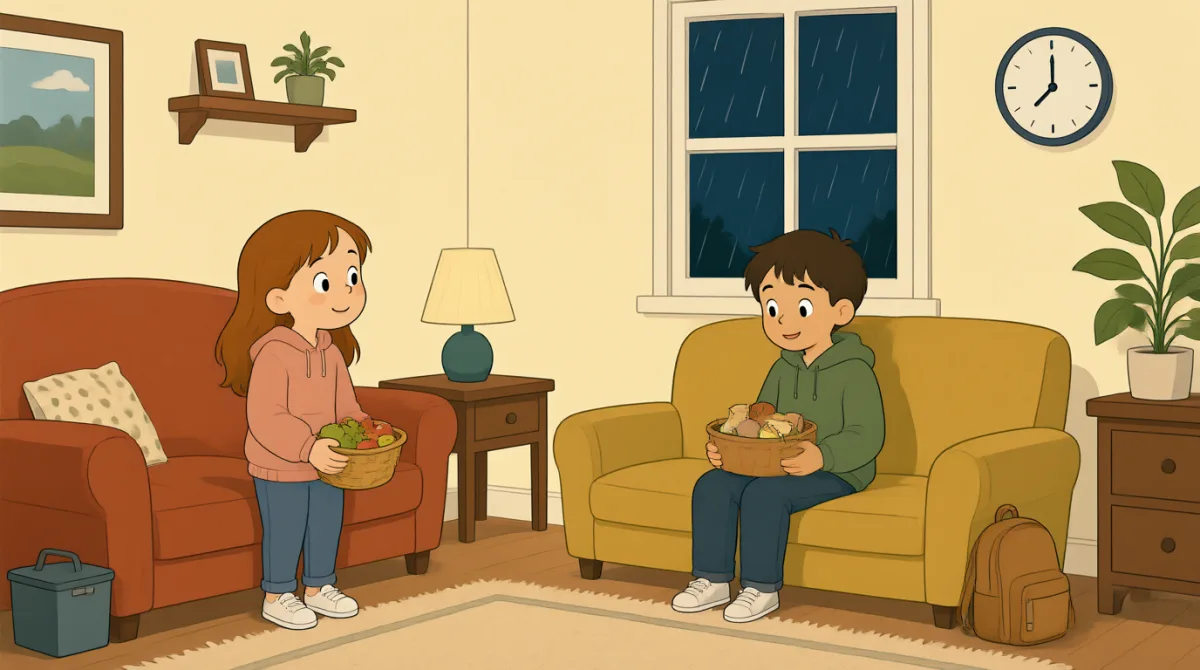

Jack, wake up! I hear rain hitting the tent. Is everything getting wet?
¡Jack, despierta! Oigo la lluvia golpear la tienda. ¿Se está mojando todo?

I’m awake. The tent feels dry inside. Let’s check our bags and food.
Ya estoy despierto. Por dentro, la tienda se siente seca. Revisemos las mochilas y la comida.
My clothes are dry, but one corner of the tent is a little damp.
Mi ropa está seca, pero una esquina de la tienda está un poco húmeda.
Move your bag away from that corner. I’ll put a towel on the floor.
Aleja tu mochila de esa esquina. Pondré una toalla en el suelo.
Good idea. The rain is still coming down hard. What should we do tomorrow?
Buena idea. Sigue lloviendo muy fuerte. ¿Qué hacemos mañana?
Let’s check the weather in the morning. We can take a short walk if it stops.
Revisemos el tiempo por la mañana. Podemos dar un paseo corto si deja de llover.
And if it keeps raining, we can stay here and play cards.
Y si sigue lloviendo, podemos quedarnos aquí y jugar a las cartas.
That works. Keep your shoes by the door, and we’ll see what morning brings.
Me parece bien. Deja tus zapatos junto a la puerta y mañana veremos qué pasa.
Vocabulario7
- wake updespertarse
To stop sleeping. Emma uses it to get Jack’s attention.
Dejar de dormir. Emma usa esta expresión para llamar la atención de Jack.
- getting wetmojándose
Becoming covered with water. You can use this phrase to ask if rain is making your things wet.
Cubriéndose de agua. Puedes usar esta expresión para preguntar si la lluvia está mojando tus cosas.
- damphúmedo
A little wet, but not completely soaked. You can use it to describe clothes, a tent, or a floor.
Un poco mojado, pero no empapado del todo. Puedes usar esta palabra para describir la ropa, una tienda de campaña o el suelo.
- move your bag awayaleja tu mochila
Put your bag in a different place, farther from something. Use this phrase to tell someone how to keep an item safe or dry.
Pon tu mochila en otro lugar, más lejos de algo. Usa esta expresión para decirle a alguien cómo mantener una cosa a salvo o seca.
- coming down hardllover muy fuerte
Raining heavily. You can use this phrase to describe strong rain.
Llover con intensidad. Puedes usar esta expresión para describir una lluvia fuerte.
- keeps rainingsigue lloviendo
Continues to rain. Use it to talk about rain that does not stop.
Continúa lloviendo. Úsala para hablar de una lluvia que no para.
- by the doorjunto a la puerta
Next to the door. You can use this phrase to say where to put or keep something.
Al lado de la puerta. Puedes usar esta expresión para indicar dónde poner o dejar algo.
Frases clave7
- 1
Is everything getting wet?
¿Se está mojando todo?
This is a simple way to check if things are becoming wet. You can replace “everything” with “your clothes” or “the bags.”
Esta es una manera sencilla de comprobar si las cosas se están mojando. Puedes cambiar “everything” por “your clothes” o “the bags”.
- 2
The tent feels dry inside.
Por dentro, la tienda se siente seca.
Use this sentence to describe how a place feels. You can replace “the tent” with “the room” or “the car.”
Usa esta oración para describir cómo se siente un lugar. Puedes cambiar “the tent” por “the room” o “the car”.
- 3
Move your bag away from that corner.
Aleja tu mochila de esa esquina.
This gives a clear instruction to move something farther from a place. You can replace “your bag” and “that corner” with other items and locations.
Esta oración da una instrucción clara para apartar algo de un lugar. Puedes cambiar “your bag” y “that corner” por otros objetos y lugares.
- 4
What should we do tomorrow?
¿Qué hacemos mañana?
This is a useful way to ask for ideas or advice about a future plan. You can change “tomorrow” to another time.
Esta es una forma útil de pedir ideas o consejos sobre un plan futuro. Puedes cambiar “tomorrow” por otro momento.
- 5
We can take a short walk if it stops.
Podemos dar un paseo corto si deja de llover.
This suggests a possible plan with a condition. Use “if” to say what needs to happen first.
Esta oración propone un plan posible con una condición. Usa “if” para decir qué tiene que pasar primero.
- 6
And if it keeps raining, we can stay here and play cards.
Y si sigue lloviendo, podemos quedarnos aquí y jugar a las cartas.
This sentence offers a backup plan if the weather does not improve. You can use the same pattern to make plans for other situations.
Esta oración propone un plan alternativo si el tiempo no mejora. Puedes usar la misma estructura para hacer planes en otras situaciones.
- 7
Keep your shoes by the door, and we’ll see what morning brings.
Deja tus zapatos junto a la puerta y mañana veremos qué pasa.
This gives a practical instruction and says you will decide later. “We’ll see what morning brings” means you will wait and find out what happens.
Esta oración da una instrucción práctica y dice que decidirán más tarde. “We’ll see what morning brings” significa que esperarán para descubrir qué pasa.