Rain in the Night
夜里下雨
Rain wakes Emma and Jack during the night, and they check that their things are dry. In the morning, they make a plan for the wet weather.
夜里的雨声吵醒了 Emma 和 Jack,他们检查物品是否被淋湿。早上,他们为潮湿的天气做了新的安排。
对话8
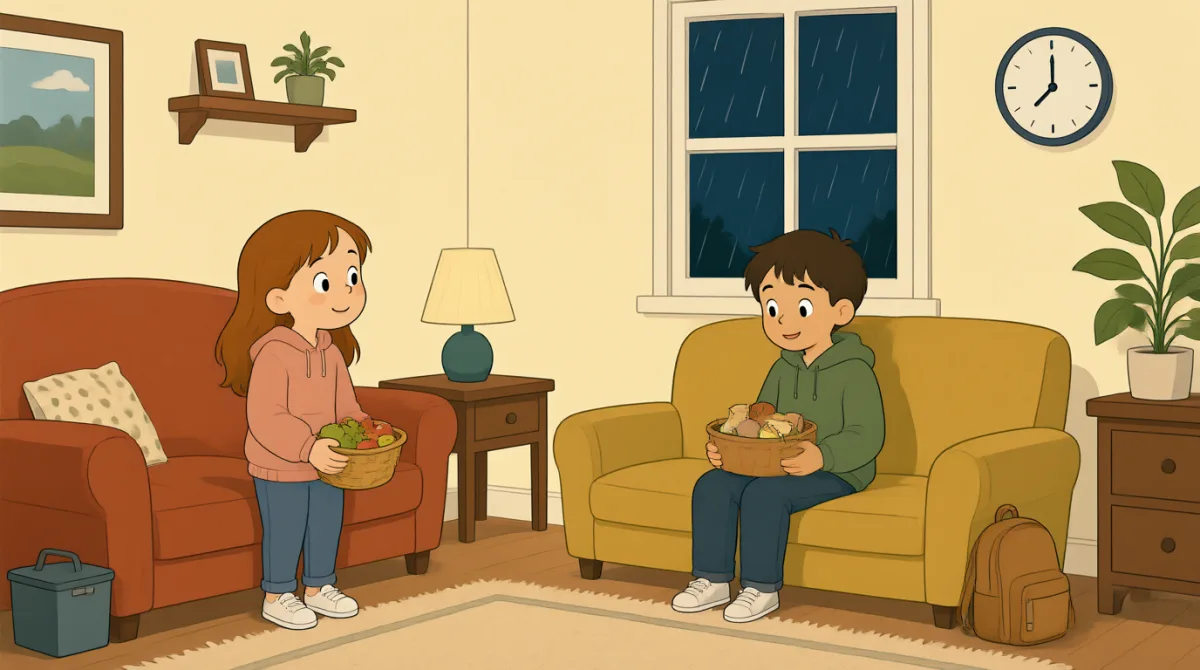

Jack, wake up! I hear rain hitting the tent. Is everything getting wet?
杰克,醒醒!我听见雨打在帐篷上。东西都湿了吗?

I’m awake. The tent feels dry inside. Let’s check our bags and food.
我醒了。帐篷里面还是干的。我们检查一下背包和食物吧。
My clothes are dry, but one corner of the tent is a little damp.
我的衣服是干的,不过帐篷有个角有点潮。
Move your bag away from that corner. I’ll put a towel on the floor.
把你的背包挪开那个角。我来在地上铺条毛巾。
Good idea. The rain is still coming down hard. What should we do tomorrow?
好主意。雨还下得很大。我们明天该怎么办?
Let’s check the weather in the morning. We can take a short walk if it stops.
我们早上看看天气。如果雨停了,可以出去走一小段。
And if it keeps raining, we can stay here and play cards.
要是一直下雨,我们就待在这里打牌。
That works. Keep your shoes by the door, and we’ll see what morning brings.
好啊。把鞋放在门边,明早再看看天气怎么样。
词汇7
- wake up醒来
To stop sleeping. Emma uses it to get Jack’s attention.
停止睡觉。艾玛用这个短语来叫杰克,让他注意她。
- getting wet被淋湿
Becoming covered with water. You can use this phrase to ask if rain is making your things wet.
变得沾满水。你可以用这个短语询问雨水有没有把东西淋湿。
- damp潮湿的
A little wet, but not completely soaked. You can use it to describe clothes, a tent, or a floor.
有点湿,但还没有完全湿透。你可以用它来形容衣服、帐篷或地面。
- move your bag away把你的包挪开
Put your bag in a different place, farther from something. Use this phrase to tell someone how to keep an item safe or dry.
把包放到别处,离某样东西远一点。你可以用这个短语告诉别人怎样保护物品,让它保持干燥。
- coming down hard下得很大
Raining heavily. You can use this phrase to describe strong rain.
雨下得很大。你可以用这个短语来形容大雨。
- keeps raining一直下雨
Continues to rain. Use it to talk about rain that does not stop.
雨一直下,没有停。你可以用这个短语来描述雨下个不停。
- by the door在门边
Next to the door. You can use this phrase to say where to put or keep something.
在门旁边。你可以用这个短语说明该把东西放在哪里。
重点句子7
- 1
Is everything getting wet?
东西都湿了吗?
This is a simple way to check if things are becoming wet. You can replace “everything” with “your clothes” or “the bags.”
这是询问东西有没有变湿的一种简单说法。你可以把“everything”换成“your clothes”或“the bags”。
- 2
The tent feels dry inside.
帐篷里面摸起来是干的。
Use this sentence to describe how a place feels. You can replace “the tent” with “the room” or “the car.”
用这个句子来描述一个地方给人的感觉。你可以把“the tent”换成“the room”或“the car”。
- 3
Move your bag away from that corner.
把你的包挪开那个角。
This gives a clear instruction to move something farther from a place. You can replace “your bag” and “that corner” with other items and locations.
这是清楚地告诉别人把东西挪到离某处远一点的地方。你可以把“your bag”和“that corner”换成其他物品和地点。
- 4
What should we do tomorrow?
我们明天该怎么办?
This is a useful way to ask for ideas or advice about a future plan. You can change “tomorrow” to another time.
这是询问别人对未来计划有什么想法或建议的一种实用说法。你可以把“tomorrow”换成其他时间。
- 5
We can take a short walk if it stops.
如果雨停了,我们可以出去走一小段。
This suggests a possible plan with a condition. Use “if” to say what needs to happen first.
这个句子用一个条件提出可能的计划。用“if”说明需要先发生什么。
- 6
And if it keeps raining, we can stay here and play cards.
要是一直下雨,我们就待在这里打牌。
This sentence offers a backup plan if the weather does not improve. You can use the same pattern to make plans for other situations.
这个句子提出了一个备用计划,以防天气没有好转。你也可以用同样的句型来安排其他情况。
- 7
Keep your shoes by the door, and we’ll see what morning brings.
把鞋放在门边,明早再看看情况。
This gives a practical instruction and says you will decide later. “We’ll see what morning brings” means you will wait and find out what happens.
这句话先给出一个实用的指示,也表示之后再做决定。“We’ll see what morning brings”意思是我们先等等,看看之后会发生什么。