Rain in the Night
المطر ليلًا
Rain wakes Emma and Jack during the night, and they check that their things are dry. In the morning, they make a plan for the wet weather.
يوقظ المطر إيما وجاك أثناء الليل، فيتأكدان من أن أغراضهما جافة. وفي الصباح، يضعان خطة للتعامل مع الطقس الممطر.
حوار8
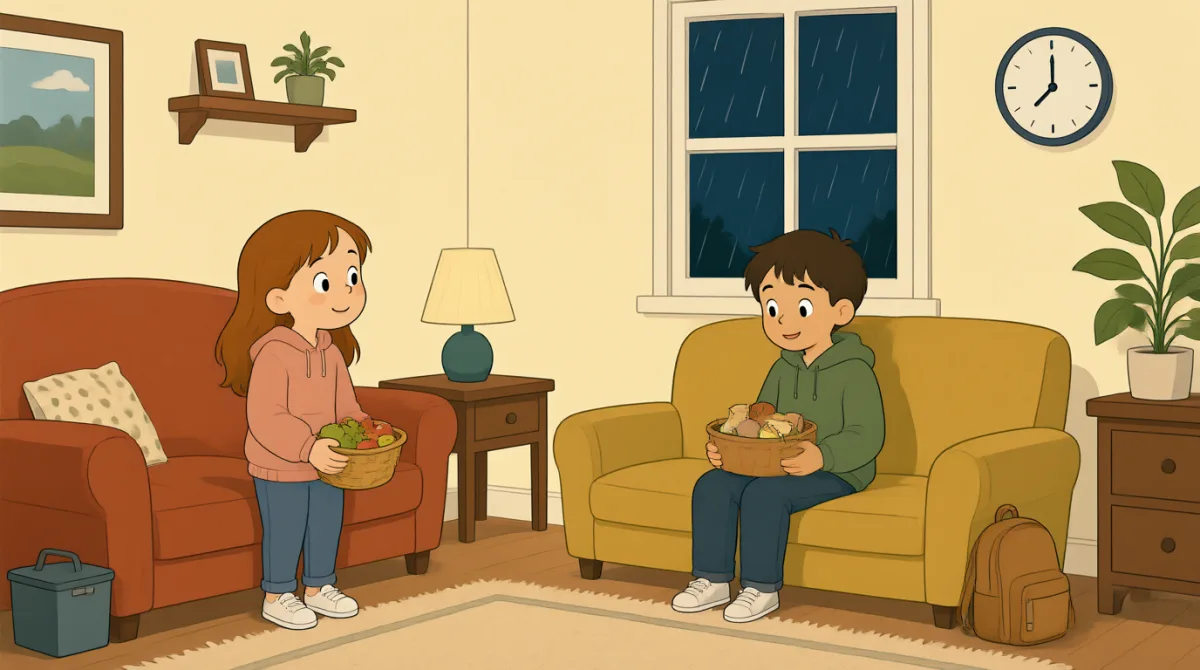

Jack, wake up! I hear rain hitting the tent. Is everything getting wet?
جاك، استيقظ! أسمع المطر وهو يضرب الخيمة. هل تبتلّ كل الأشياء؟

I’m awake. The tent feels dry inside. Let’s check our bags and food.
أنا مستيقظ. تبدو الخيمة جافة من الداخل. لنتفقد حقائبنا وطعامنا.
My clothes are dry, but one corner of the tent is a little damp.
ملابسي جافة، لكن إحدى زوايا الخيمة رطبة قليلًا.
Move your bag away from that corner. I’ll put a towel on the floor.
أبعد حقيبتك عن تلك الزاوية. سأضع منشفة على الأرض.
Good idea. The rain is still coming down hard. What should we do tomorrow?
فكرة جيدة. ما زال المطر يهطل بغزارة. ماذا ينبغي أن نفعل غدًا؟
Let’s check the weather in the morning. We can take a short walk if it stops.
لنتفقد حالة الطقس في الصباح. يمكننا أن نتمشى قليلًا إذا توقف المطر.
And if it keeps raining, we can stay here and play cards.
وإذا استمر هطول المطر، فيمكننا البقاء هنا ولعب الورق.
That works. Keep your shoes by the door, and we’ll see what morning brings.
هذا مناسب. أبقِ حذاءك بجانب الباب، وسنرى ما سيحمله الصباح.
المفردات7
- wake upwake up
To stop sleeping. Emma uses it to get Jack’s attention.
تعني التوقف عن النوم. تستخدمها إيما لجذب انتباه جاك.
- getting wetgetting wet
Becoming covered with water. You can use this phrase to ask if rain is making your things wet.
تعني أن شيئًا ما أصبح مغطى بالماء. يمكنك استخدام هذه العبارة للسؤال عما إذا كان المطر يجعل أغراضك مبتلة.
- dampdamp
A little wet, but not completely soaked. You can use it to describe clothes, a tent, or a floor.
تعني رطبًا قليلًا، لكنه ليس مبللًا تمامًا. يمكنك استخدامها لوصف الملابس أو الخيمة أو الأرضية.
- move your bag awaymove your bag away
Put your bag in a different place, farther from something. Use this phrase to tell someone how to keep an item safe or dry.
تعني وضع حقيبتك في مكان آخر أبعد عن شيء ما. استخدم هذه العبارة لإخبار شخص بكيفية إبقاء غرض ما آمنًا أو جافًا.
- coming down hardcoming down hard
Raining heavily. You can use this phrase to describe strong rain.
تعني أن المطر يهطل بغزارة. يمكنك استخدام هذه العبارة لوصف المطر الشديد.
- keeps rainingkeeps raining
Continues to rain. Use it to talk about rain that does not stop.
تعني أن المطر يستمر في الهطول. استخدمها للحديث عن المطر الذي لا يتوقف.
- by the doorby the door
Next to the door. You can use this phrase to say where to put or keep something.
تعني بجانب الباب. يمكنك استخدام هذه العبارة لقول المكان الذي ينبغي وضع شيء ما فيه أو إبقاؤه فيه.
الجمل الأساسية7
- 1
Is everything getting wet?
هل تبتلّ كل الأشياء؟
This is a simple way to check if things are becoming wet. You can replace “everything” with “your clothes” or “the bags.”
هذه طريقة بسيطة للتحقق مما إذا كانت الأشياء تبتل. يمكنك استبدال “everything” بـ “your clothes” أو “the bags”.
- 2
The tent feels dry inside.
تبدو الخيمة جافة من الداخل.
Use this sentence to describe how a place feels. You can replace “the tent” with “the room” or “the car.”
استخدم هذه الجملة لوصف الإحساس بمكان ما. يمكنك استبدال “the tent” بـ “the room” أو “the car”.
- 3
Move your bag away from that corner.
أبعد حقيبتك عن تلك الزاوية.
This gives a clear instruction to move something farther from a place. You can replace “your bag” and “that corner” with other items and locations.
تعطي هذه الجملة تعليمات واضحة لتحريك شيء إلى مكان أبعد. يمكنك استبدال “your bag” و“that corner” بأغراض وأماكن أخرى.
- 4
What should we do tomorrow?
ماذا ينبغي أن نفعل غدًا؟
This is a useful way to ask for ideas or advice about a future plan. You can change “tomorrow” to another time.
هذه طريقة مفيدة لطلب أفكار أو نصيحة بشأن خطة مستقبلية. يمكنك تغيير “tomorrow” إلى وقت آخر.
- 5
We can take a short walk if it stops.
يمكننا أن نتمشى قليلًا إذا توقف المطر.
This suggests a possible plan with a condition. Use “if” to say what needs to happen first.
تقترح هذه الجملة خطة ممكنة مرتبطة بشرط. استخدم “if” لقول ما الذي يجب أن يحدث أولًا.
- 6
And if it keeps raining, we can stay here and play cards.
وإذا استمر هطول المطر، فيمكننا البقاء هنا ولعب الورق.
This sentence offers a backup plan if the weather does not improve. You can use the same pattern to make plans for other situations.
تقدم هذه الجملة خطة بديلة إذا لم يتحسن الطقس. يمكنك استخدام النمط نفسه لوضع خطط لمواقف أخرى.
- 7
Keep your shoes by the door, and we’ll see what morning brings.
أبقِ حذاءك بجانب الباب، وسنرى ما سيحمله الصباح.
This gives a practical instruction and says you will decide later. “We’ll see what morning brings” means you will wait and find out what happens.
تعطي هذه الجملة تعليمات عملية وتقول إنكم ستقررون لاحقًا. تعني “We’ll see what morning brings” أنكم ستنتظرون لتروا ما سيحدث.