Rain in the Night
夜の雨
Rain wakes Emma and Jack during the night, and they check that their things are dry. In the morning, they make a plan for the wet weather.
夜中に雨の音で目を覚ましたエマとジャックは、荷物が濡れていないか確かめます。朝になって、雨の日の過ごし方を考えます。
会話8
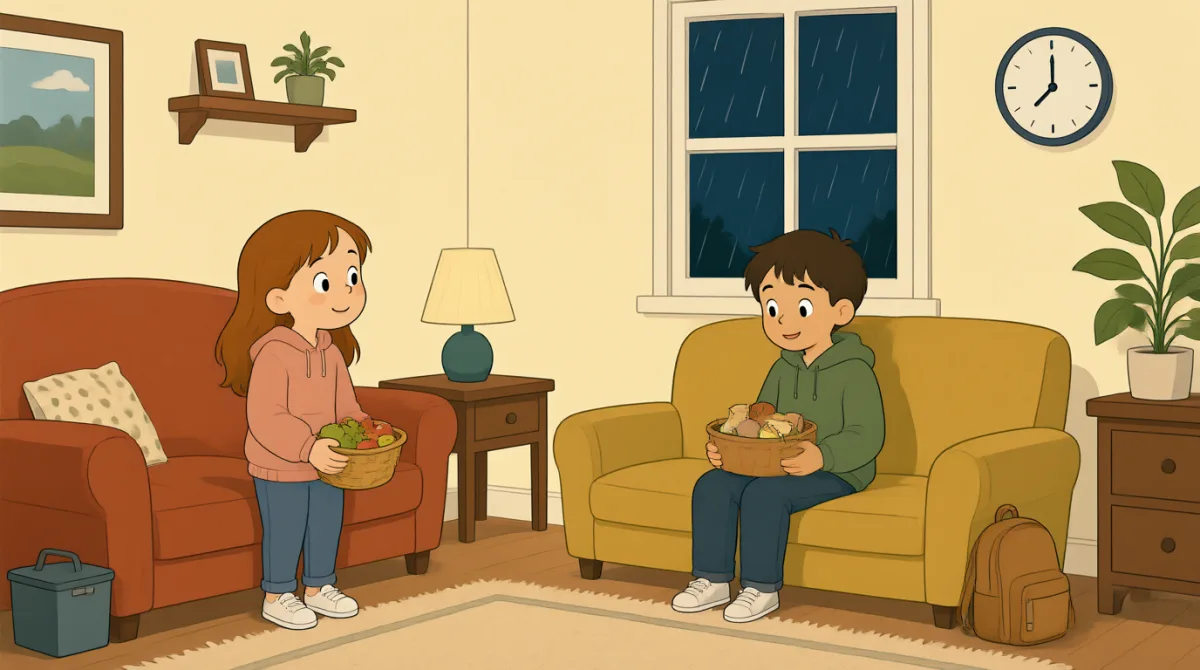

Jack, wake up! I hear rain hitting the tent. Is everything getting wet?
ジャック、起きて!テントに雨が当たる音がする。荷物、濡れてきてない?

I’m awake. The tent feels dry inside. Let’s check our bags and food.
起きてるよ。テントの中は乾いてるみたい。バッグと食べ物を確認しよう。
My clothes are dry, but one corner of the tent is a little damp.
服は乾いてるけど、テントの隅が少し湿ってる。
Move your bag away from that corner. I’ll put a towel on the floor.
バッグをあの隅から離して。床にタオルを敷くよ。
Good idea. The rain is still coming down hard. What should we do tomorrow?
いい考えだね。まだすごい雨だね。明日はどうしよう?
Let’s check the weather in the morning. We can take a short walk if it stops.
朝になったら天気を確認しよう。雨がやんだら、少し散歩できるよ。
And if it keeps raining, we can stay here and play cards.
それに、雨が降り続くなら、ここにいてトランプをしてもいいね。
That works. Keep your shoes by the door, and we’ll see what morning brings.
それでいいね。靴はドアのそばに置いておいて。朝になったらどうするか考えよう。
語彙7
- wake up目を覚ます
To stop sleeping. Emma uses it to get Jack’s attention.
眠るのをやめて起きることです。エマはジャックに呼びかけるために使っています。
- getting wet濡れてきている
Becoming covered with water. You can use this phrase to ask if rain is making your things wet.
水がかかって濡れた状態になっていくことです。雨で荷物が濡れていないか尋ねるときに使えます。
- damp湿った
A little wet, but not completely soaked. You can use it to describe clothes, a tent, or a floor.
びしょ濡れではないけれど、少し濡れている状態です。服やテント、床の様子を表すときに使えます。
- move your bag awayバッグを離れた場所に移す
Put your bag in a different place, farther from something. Use this phrase to tell someone how to keep an item safe or dry.
何かから離れた別の場所にバッグを置くことです。物を安全に、または濡れないようにするための指示に使えます。
- coming down hard激しく降っている
Raining heavily. You can use this phrase to describe strong rain.
雨が強く降っていることです。大雨の様子を表すときに使えます。
- keeps raining雨が降り続く
Continues to rain. Use it to talk about rain that does not stop.
雨がやまずに降り続けることです。雨が止まないときの話に使えます。
- by the doorドアのそばに
Next to the door. You can use this phrase to say where to put or keep something.
ドアのすぐ近くに、という意味です。物をどこに置くか、どこに置いておくかを伝えるときに使えます。
重要な文7
- 1
Is everything getting wet?
荷物、濡れてきてない?
This is a simple way to check if things are becoming wet. You can replace “everything” with “your clothes” or “the bags.”
物が濡れてきているかを確かめるシンプルな言い方です。“everything” を “your clothes” や “the bags” に置き換えることもできます。
- 2
The tent feels dry inside.
テントの中は乾いてるみたい。
Use this sentence to describe how a place feels. You can replace “the tent” with “the room” or “the car.”
場所がどんな感じかを伝える文です。“the tent” を “the room” や “the car” に置き換えられます。
- 3
Move your bag away from that corner.
バッグをあの隅から離して。
This gives a clear instruction to move something farther from a place. You can replace “your bag” and “that corner” with other items and locations.
何かをある場所から離して移動させる、はっきりとした指示です。“your bag” と “that corner” を別の物や場所に置き換えて使えます。
- 4
What should we do tomorrow?
明日はどうしよう?
This is a useful way to ask for ideas or advice about a future plan. You can change “tomorrow” to another time.
これからの予定について、アイデアやアドバイスを求める便利な言い方です。“tomorrow” を別の時間に変えて使えます。
- 5
We can take a short walk if it stops.
雨がやんだら、少し散歩できるよ。
This suggests a possible plan with a condition. Use “if” to say what needs to happen first.
条件つきで、できそうな予定を提案する文です。“if” を使うと、まず何が起きる必要があるかを伝えられます。
- 6
And if it keeps raining, we can stay here and play cards.
それに、雨が降り続くなら、ここにいてトランプをしてもいいね。
This sentence offers a backup plan if the weather does not improve. You can use the same pattern to make plans for other situations.
天気がよくならない場合の代わりの予定を提案する文です。同じ形を使って、ほかの状況に合わせた予定も立てられます。
- 7
Keep your shoes by the door, and we’ll see what morning brings.
靴はドアのそばに置いておいて。朝になったらどうするか考えよう。
This gives a practical instruction and says you will decide later. “We’ll see what morning brings” means you will wait and find out what happens.
実用的な指示を伝えつつ、決めるのは後にするという文です。“We’ll see what morning brings” は、朝になって何が起きるか確かめてから決めよう、という意味です。