Rain in the Night
Chuva durante a noite
Rain wakes Emma and Jack during the night, and they check that their things are dry. In the morning, they make a plan for the wet weather.
A chuva acorda Emma e Jack durante a noite, e eles conferem se seus pertences estão secos. De manhã, fazem um plano para o tempo chuvoso.
Diálogo8
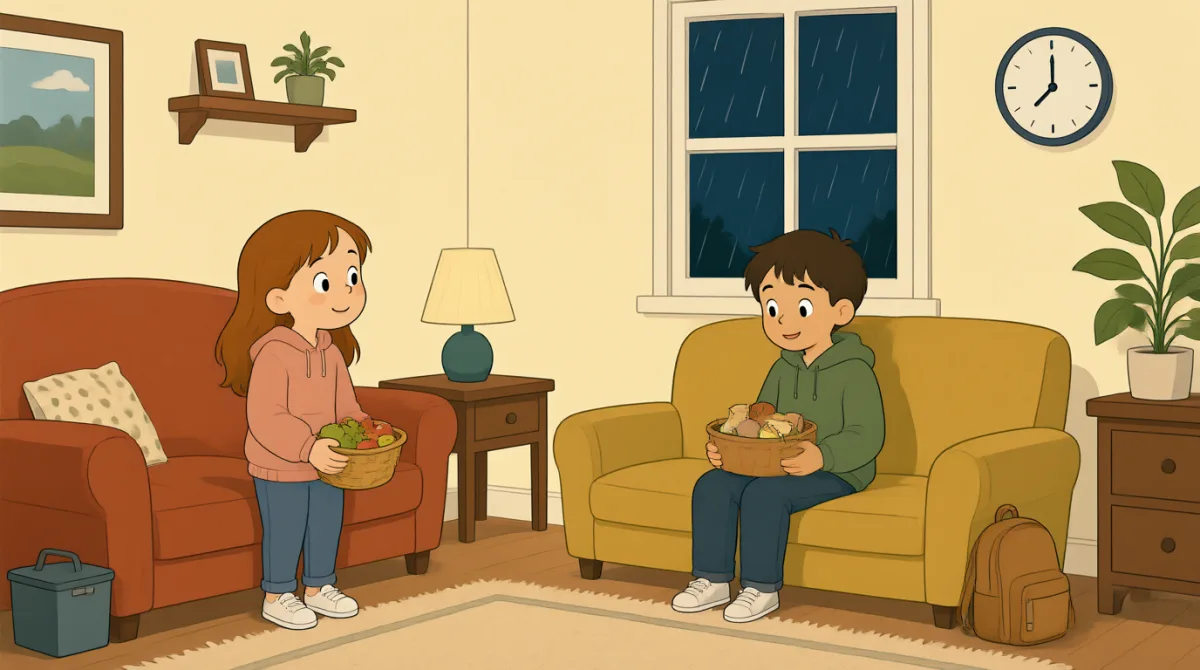

Jack, wake up! I hear rain hitting the tent. Is everything getting wet?
Jack, acorda! Estou ouvindo a chuva bater na barraca. Está tudo ficando molhado?

I’m awake. The tent feels dry inside. Let’s check our bags and food.
Já estou acordado. A barraca parece seca por dentro. Vamos conferir nossas mochilas e a comida.
My clothes are dry, but one corner of the tent is a little damp.
Minhas roupas estão secas, mas um canto da barraca está um pouco úmido.
Move your bag away from that corner. I’ll put a towel on the floor.
Afasta sua mochila daquele canto. Vou colocar uma toalha no chão.
Good idea. The rain is still coming down hard. What should we do tomorrow?
Boa ideia. A chuva ainda está caindo forte. O que a gente deve fazer amanhã?
Let’s check the weather in the morning. We can take a short walk if it stops.
Vamos conferir a previsão do tempo de manhã. Podemos fazer uma caminhada curta se a chuva parar.
And if it keeps raining, we can stay here and play cards.
E, se continuar chovendo, podemos ficar aqui e jogar cartas.
That works. Keep your shoes by the door, and we’ll see what morning brings.
Pode ser. Deixa seus sapatos perto da porta, e amanhã de manhã a gente vê o que acontece.
Vocabulário7
- wake upacordar
To stop sleeping. Emma uses it to get Jack’s attention.
Parar de dormir. Emma usa essa expressão para chamar a atenção de Jack.
- getting wetficando molhado
Becoming covered with water. You can use this phrase to ask if rain is making your things wet.
Ficando coberto de água. Você pode usar essa expressão para perguntar se a chuva está molhando suas coisas.
- dampúmido
A little wet, but not completely soaked. You can use it to describe clothes, a tent, or a floor.
Um pouco molhado, mas não encharcado. Você pode usar essa palavra para descrever roupas, uma barraca ou o chão.
- move your bag awayafastar sua mochila
Put your bag in a different place, farther from something. Use this phrase to tell someone how to keep an item safe or dry.
Colocar sua mochila em outro lugar, mais longe de alguma coisa. Use essa expressão para dizer a alguém como manter um objeto seguro ou seco.
- coming down hardcaindo forte
Raining heavily. You can use this phrase to describe strong rain.
Chovendo muito. Você pode usar essa expressão para descrever uma chuva forte.
- keeps rainingcontinua chovendo
Continues to rain. Use it to talk about rain that does not stop.
A chuva não para. Use essa expressão para falar de uma chuva que continua.
- by the doorperto da porta
Next to the door. You can use this phrase to say where to put or keep something.
Ao lado da porta. Você pode usar essa expressão para dizer onde colocar ou deixar alguma coisa.
Frases-chave7
- 1
Is everything getting wet?
Está tudo ficando molhado?
This is a simple way to check if things are becoming wet. You can replace “everything” with “your clothes” or “the bags.”
Essa é uma forma simples de conferir se as coisas estão ficando molhadas. Você pode trocar “everything” por “your clothes” ou “the bags”.
- 2
The tent feels dry inside.
A barraca parece seca por dentro.
Use this sentence to describe how a place feels. You can replace “the tent” with “the room” or “the car.”
Use essa frase para descrever como um lugar parece. Você pode trocar “the tent” por “the room” ou “the car”.
- 3
Move your bag away from that corner.
Afasta sua mochila daquele canto.
This gives a clear instruction to move something farther from a place. You can replace “your bag” and “that corner” with other items and locations.
Essa frase dá uma instrução clara para afastar alguma coisa de um lugar. Você pode trocar “your bag” e “that corner” por outros objetos e lugares.
- 4
What should we do tomorrow?
O que a gente deve fazer amanhã?
This is a useful way to ask for ideas or advice about a future plan. You can change “tomorrow” to another time.
Essa é uma forma útil de pedir ideias ou conselhos sobre um plano para o futuro. Você pode trocar “tomorrow” por outro momento.
- 5
We can take a short walk if it stops.
Podemos fazer uma caminhada curta se a chuva parar.
This suggests a possible plan with a condition. Use “if” to say what needs to happen first.
Essa frase sugere um plano possível com uma condição. Use “if” para dizer o que precisa acontecer primeiro.
- 6
And if it keeps raining, we can stay here and play cards.
E, se continuar chovendo, podemos ficar aqui e jogar cartas.
This sentence offers a backup plan if the weather does not improve. You can use the same pattern to make plans for other situations.
Essa frase oferece um plano alternativo caso o tempo não melhore. Você pode usar a mesma estrutura para fazer planos para outras situações.
- 7
Keep your shoes by the door, and we’ll see what morning brings.
Deixa seus sapatos perto da porta, e amanhã de manhã a gente vê o que acontece.
This gives a practical instruction and says you will decide later. “We’ll see what morning brings” means you will wait and find out what happens.
Essa frase dá uma instrução prática e diz que vocês vão decidir mais tarde. “We’ll see what morning brings” quer dizer que vocês vão esperar para descobrir o que acontece.