Rain in the Night
Deszcz w nocy
Rain wakes Emma and Jack during the night, and they check that their things are dry. In the morning, they make a plan for the wet weather.
Deszcz budzi Emmę i Jacka w nocy, więc sprawdzają, czy ich rzeczy są suche. Rano ustalają plan na wypadek deszczowej pogody.
Dialog8
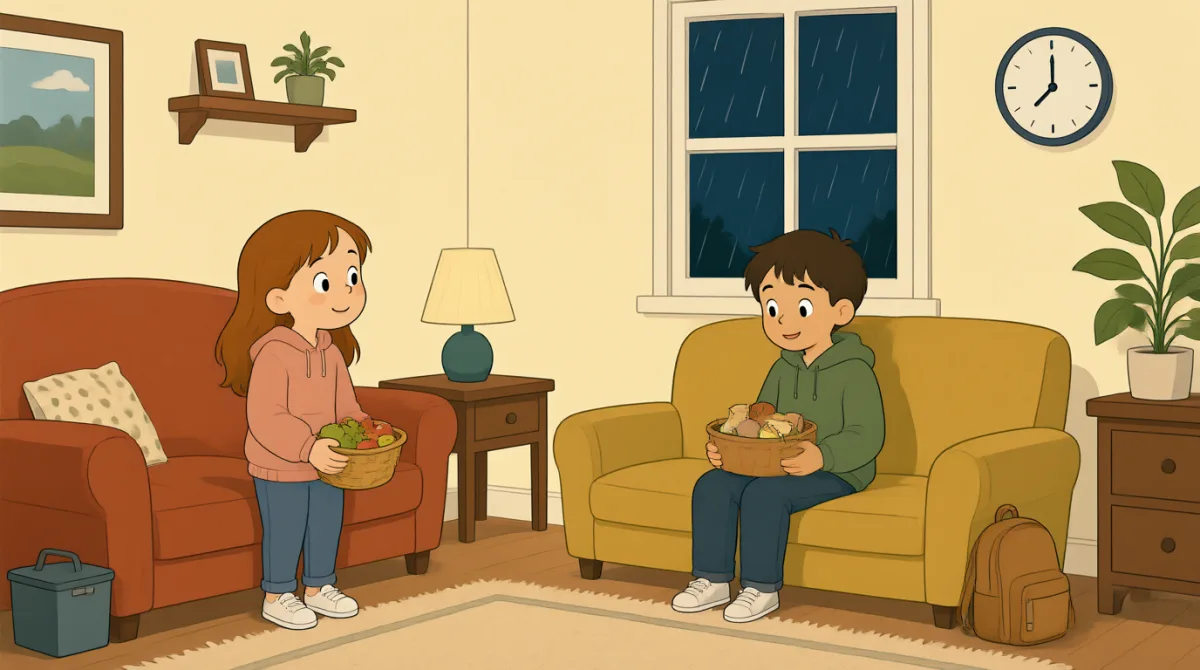

Jack, wake up! I hear rain hitting the tent. Is everything getting wet?
Jack, obudź się! Słyszę, jak deszcz uderza o namiot. Czy wszystko przemaka?

I’m awake. The tent feels dry inside. Let’s check our bags and food.
Już nie śpię. W środku namiot jest suchy. Sprawdźmy plecaki i jedzenie.
My clothes are dry, but one corner of the tent is a little damp.
Moje ubrania są suche, ale jeden róg namiotu jest trochę wilgotny.
Move your bag away from that corner. I’ll put a towel on the floor.
Odsuń plecak od tego rogu. Położę ręcznik na podłodze.
Good idea. The rain is still coming down hard. What should we do tomorrow?
Dobry pomysł. Nadal mocno pada. Co powinniśmy zrobić jutro?
Let’s check the weather in the morning. We can take a short walk if it stops.
Rano sprawdźmy prognozę pogody. Możemy wybrać się na krótki spacer, jeśli przestanie padać.
And if it keeps raining, we can stay here and play cards.
A jeśli nie przestanie padać, możemy zostać tutaj i pograć w karty.
That works. Keep your shoes by the door, and we’ll see what morning brings.
Może być. Zostaw buty przy wejściu, a rano zobaczymy, jaka będzie pogoda.
Słownictwo7
- wake upobudzić się
To stop sleeping. Emma uses it to get Jack’s attention.
Przestać spać. Emma używa tego zwrotu, żeby zwrócić na siebie uwagę Jacka.
- getting wetprzemakać
Becoming covered with water. You can use this phrase to ask if rain is making your things wet.
Stawać się mokrym od wody. Tego zwrotu możesz użyć, żeby zapytać, czy deszcz moczy twoje rzeczy.
- dampwilgotny
A little wet, but not completely soaked. You can use it to describe clothes, a tent, or a floor.
Trochę mokry, ale nie całkiem przemoczony. Możesz tak opisać ubrania, namiot albo podłogę.
- move your bag awayodsunąć plecak
Put your bag in a different place, farther from something. Use this phrase to tell someone how to keep an item safe or dry.
Przenieść plecak w inne miejsce, dalej od czegoś. Użyj tego zwrotu, żeby powiedzieć komuś, jak zabezpieczyć jakiś przedmiot lub uchronić go przed zamoknięciem.
- coming down hardmocno padać
Raining heavily. You can use this phrase to describe strong rain.
Padać obficie. Tego zwrotu możesz użyć, żeby opisać ulewny deszcz.
- keeps rainingnie przestawać padać
Continues to rain. Use it to talk about rain that does not stop.
Padać bez przerwy. Użyj tego zwrotu, mówiąc o deszczu, który nie ustaje.
- by the doorprzy drzwiach
Next to the door. You can use this phrase to say where to put or keep something.
Obok drzwi. Tego zwrotu możesz użyć, żeby powiedzieć, gdzie coś położyć lub trzymać.
Kluczowe zdania7
- 1
Is everything getting wet?
Czy wszystko przemaka?
This is a simple way to check if things are becoming wet. You can replace “everything” with “your clothes” or “the bags.”
To prosty sposób, by sprawdzić, czy rzeczy robią się mokre. Zamiast “everything” możesz powiedzieć “your clothes” albo “the bags”.
- 2
The tent feels dry inside.
W środku namiot jest suchy.
Use this sentence to describe how a place feels. You can replace “the tent” with “the room” or “the car.”
Użyj tego zdania, żeby opisać, jakie wrażenie sprawia jakieś miejsce. Zamiast “the tent” możesz powiedzieć “the room” albo “the car”.
- 3
Move your bag away from that corner.
Odsuń plecak od tego rogu.
This gives a clear instruction to move something farther from a place. You can replace “your bag” and “that corner” with other items and locations.
To jasne polecenie, żeby odsunąć coś od jakiegoś miejsca. Możesz zastąpić “your bag” i “that corner” innymi przedmiotami i miejscami.
- 4
What should we do tomorrow?
Co powinniśmy zrobić jutro?
This is a useful way to ask for ideas or advice about a future plan. You can change “tomorrow” to another time.
To przydatny sposób, żeby poprosić o pomysły lub radę dotyczącą planów na przyszłość. Zamiast “tomorrow” możesz podać inny termin.
- 5
We can take a short walk if it stops.
Możemy wybrać się na krótki spacer, jeśli przestanie padać.
This suggests a possible plan with a condition. Use “if” to say what needs to happen first.
To propozycja możliwego planu, który zależy od pewnego warunku. Użyj “if”, żeby powiedzieć, co musi się najpierw wydarzyć.
- 6
And if it keeps raining, we can stay here and play cards.
A jeśli nie przestanie padać, możemy zostać tutaj i pograć w karty.
This sentence offers a backup plan if the weather does not improve. You can use the same pattern to make plans for other situations.
To propozycja planu awaryjnego na wypadek, gdyby pogoda się nie poprawiła. Tego samego schematu możesz użyć, planując, co zrobić w innych sytuacjach.
- 7
Keep your shoes by the door, and we’ll see what morning brings.
Zostaw buty przy wejściu, a rano zobaczymy, jaka będzie pogoda.
This gives a practical instruction and says you will decide later. “We’ll see what morning brings” means you will wait and find out what happens.
To praktyczne polecenie, po którym następuje informacja, że decyzję podejmiecie później. “We’ll see what morning brings” znaczy, że poczekacie i zobaczycie, co się wydarzy.