Planning What to Bring
Planear qué llevar
Emma and Jack plan their camping trip and make a list of what to bring. They check the weather and pack food, warm clothes, and a tent.
Emma y Jack planean su viaje de campamento y hacen una lista de lo que llevarán. Consultan el pronóstico del tiempo y preparan comida, ropa abrigada y una tienda de campaña.
Diálogo8
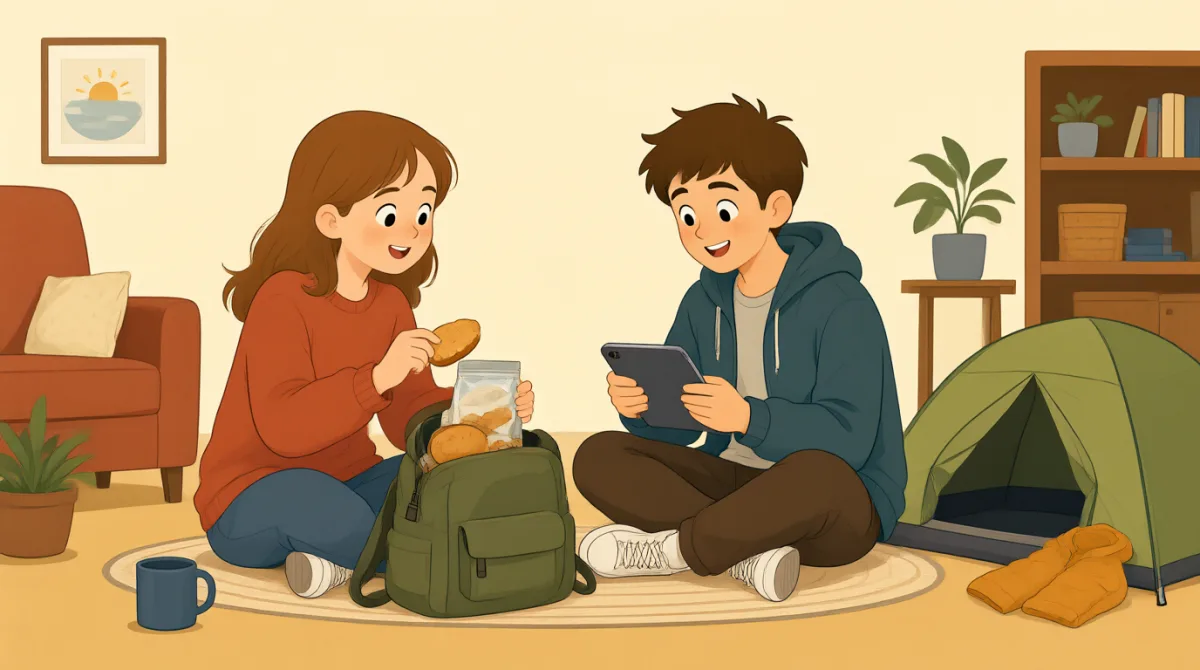

The forecast says it will be cool and sunny this weekend.
El pronóstico dice que este fin de semana estará fresco y soleado.

Great. We should bring warm clothes for the evening.
Genial. Deberíamos llevar ropa abrigada para la noche.
Good idea. What food should we pack for two days?
Buena idea. ¿Qué comida deberíamos llevar para dos días?
Let's bring sandwiches, fruit, and some easy snacks.
Llevemos sándwiches, fruta y algunos tentempiés fáciles de comer.
I'll pack water, too. Do we have a tent?
También llevaré agua. ¿Tenemos una tienda de campaña?
Yes, it's in the garage. I'll check that all the parts are there.
Sí, está en el garaje. Voy a comprobar que estén todas las piezas.
I'll bring sleeping bags and a small flashlight.
Llevaré sacos de dormir y una linterna pequeña.
Perfect. Let's write everything down so we don't forget anything.
Perfecto. Anotemos todo para que no se nos olvide nada.
Vocabulario7
- forecastpronóstico
A forecast is information about what the weather will be like. You can check the forecast before a trip.
Un pronóstico es información sobre cómo estará el tiempo. Puedes consultar el pronóstico antes de un viaje.
- warm clothesropa abrigada
Warm clothes help you stay comfortable when it is cold. Bring them for cool evenings.
La ropa abrigada te ayuda a estar cómodo cuando hace frío. Llévala para las noches frescas.
- packempacar
To pack means to put things into a bag or suitcase for a trip. You can pack food, clothes, and other things you need.
“To pack” significa poner cosas en una bolsa o maleta para un viaje. Puedes empacar comida, ropa y otras cosas que necesites.
- easy snackstentempiés fáciles de comer
Easy snacks are simple foods to eat between meals. They are convenient to bring on a camping trip.
Los tentempiés fáciles de comer son alimentos sencillos que puedes comer entre comidas. Son prácticos para llevar a un viaje de campamento.
- in the garageen el garaje
This means something is inside the garage. Use it to say where an item is kept.
Esto significa que algo está dentro del garaje. Úsalo para decir dónde se guarda un objeto.
- sleeping bagssacos de dormir
Sleeping bags are warm bags people sleep in when camping. You can bring one for each person.
Los sacos de dormir son bolsas abrigadas en las que la gente duerme cuando va de campamento. Puedes llevar uno para cada persona.
- write everything downanotar todo
This means to make a written list of all the things you need. It can help you remember what to bring.
Esto significa hacer una lista escrita de todas las cosas que necesitas. Puede ayudarte a recordar qué llevar.
Frases clave8
- 1
The forecast says it will be cool and sunny this weekend.
El pronóstico dice que este fin de semana estará fresco y soleado.
Use this sentence to share what the weather will probably be like. You can replace “cool and sunny” with other weather conditions.
Usa esta frase para contar cómo probablemente estará el tiempo. Puedes reemplazar “cool and sunny” por otras condiciones climáticas.
- 2
We should bring warm clothes for the evening.
Deberíamos llevar ropa abrigada para la noche.
Use “We should bring...” to suggest something to take on a trip. You can change “warm clothes” to another useful item.
Usa “We should bring...” para sugerir algo que llevar de viaje. Puedes cambiar “warm clothes” por otro artículo útil.
- 3
What food should we pack for two days?
¿Qué comida deberíamos llevar para dos días?
This is a useful way to ask what food to take and how much to plan for. Replace “food” or “two days” to fit your trip.
Esta es una forma útil de preguntar qué comida llevar y cuánta necesitas planear. Cambia “food” o “two days” según tu viaje.
- 4
Let's bring sandwiches, fruit, and some easy snacks.
Llevemos sándwiches, fruta y algunos tentempiés fáciles de comer.
Use “Let's bring...” to suggest what a group can take. You can name several items in a list.
Usa “Let's bring...” para sugerir qué puede llevar un grupo. Puedes mencionar varios artículos en una lista.
- 5
I'll pack water, too.
También llevaré agua.
Use “I'll pack...” to say what you plan to put in your bags. Add “too” when you are including one more item.
Usa “I'll pack...” para decir qué piensas poner en tus bolsas. Añade “too” cuando incluyas un artículo más.
- 6
Do we have a tent?
¿Tenemos una tienda de campaña?
This is a simple way to check whether you own or have an item. You can replace “a tent” with anything you need.
Esta es una forma sencilla de comprobar si tienes un artículo. Puedes reemplazar “a tent” por cualquier cosa que necesites.
- 7
I'll check that all the parts are there.
Voy a comprobar que estén todas las piezas.
Use this sentence to say you will make sure nothing is missing. Replace “the parts” with the items you need to check.
Usa esta frase para decir que te asegurarás de que no falte nada. Reemplaza “the parts” por los artículos que necesitas revisar.
- 8
Let's write everything down so we don't forget anything.
Anotemos todo para que no se nos olvide nada.
Use this sentence to suggest making a list to remember what you need. “So we don't forget” explains the reason for writing it down.
Usa esta frase para sugerir hacer una lista y recordar lo que necesitan. “So we don't forget” explica por qué lo anotan.