Rain in the Night
Gece Yağan Yağmur
Rain wakes Emma and Jack during the night, and they check that their things are dry. In the morning, they make a plan for the wet weather.
Yağmur gece boyunca Emma ile Jack’i uyandırır ve eşyalarının kuru olup olmadığını kontrol ederler. Sabah, yağmurlu hava için bir plan yaparlar.
Diyalog8
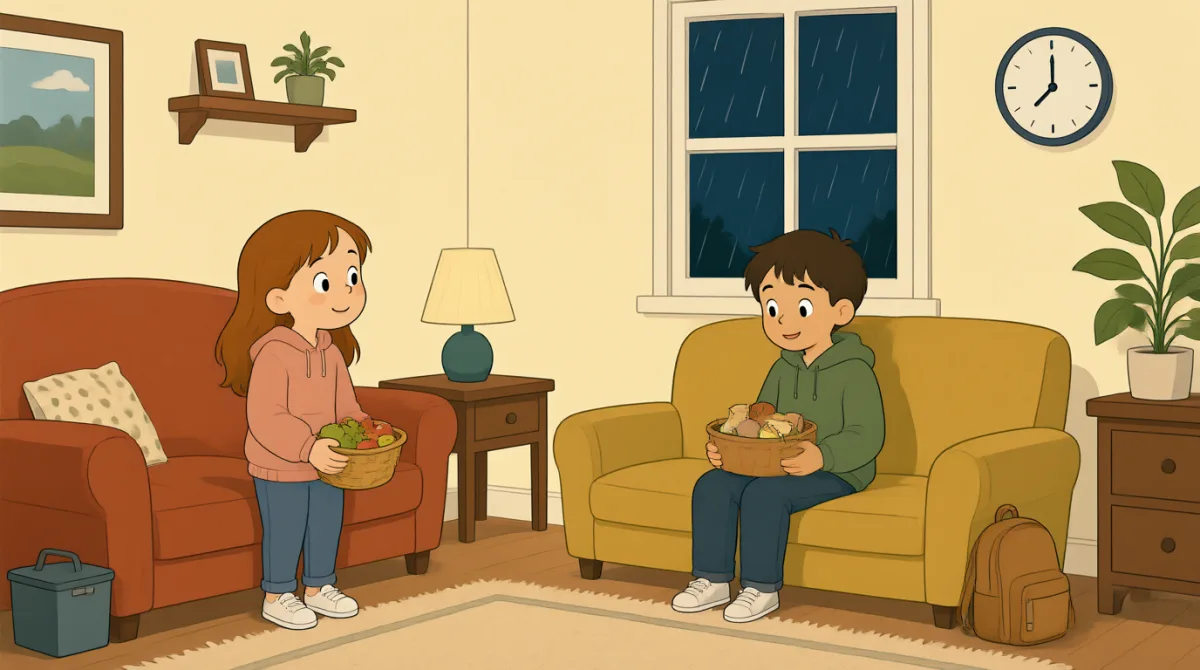

Jack, wake up! I hear rain hitting the tent. Is everything getting wet?
Jack, uyan! Yağmurun çadıra vurduğunu duyuyorum. Her şey ıslanıyor mu?

I’m awake. The tent feels dry inside. Let’s check our bags and food.
Uyandım. Çadırın içi kuru görünüyor. Çantalarımızı ve yiyeceklerimizi kontrol edelim.
My clothes are dry, but one corner of the tent is a little damp.
Kıyafetlerim kuru ama çadırın bir köşesi biraz nemli.
Move your bag away from that corner. I’ll put a towel on the floor.
Çantanı o köşeden uzaklaştır. Yere bir havlu sereceğim.
Good idea. The rain is still coming down hard. What should we do tomorrow?
İyi fikir. Yağmur hâlâ şiddetli yağıyor. Yarın ne yapmalıyız?
Let’s check the weather in the morning. We can take a short walk if it stops.
Sabah hava durumuna bakalım. Yağmur durursa kısa bir yürüyüş yapabiliriz.
And if it keeps raining, we can stay here and play cards.
Yağmur devam ederse burada kalıp iskambil oynayabiliriz.
That works. Keep your shoes by the door, and we’ll see what morning brings.
Olur. Ayakkabılarını kapının yanında tutalım; sabah ne olacağını görürüz.
Kelime Bilgisi7
- wake upwake up
To stop sleeping. Emma uses it to get Jack’s attention.
Uyumayı bırakmak, uyanmak demektir. Emma, Jack’in dikkatini çekmek için bunu kullanıyor.
- getting wetgetting wet
Becoming covered with water. You can use this phrase to ask if rain is making your things wet.
Suyla kaplanmak, ıslanmak demektir. Yağmurun eşyalarını ıslatıp ıslatmadığını sormak için bu ifadeyi kullanabilirsin.
- dampdamp
A little wet, but not completely soaked. You can use it to describe clothes, a tent, or a floor.
Bir şeyin tamamen sırılsıklam olmadan biraz ıslak olmasıdır. Kıyafetleri, çadırı veya zemini tanımlamak için kullanabilirsin.
- move your bag awaymove your bag away
Put your bag in a different place, farther from something. Use this phrase to tell someone how to keep an item safe or dry.
Çantanı başka bir yere, bir şeyden daha uzağa koymak demektir. Birine bir eşyayı nasıl güvende veya kuru tutacağını söylemek için bu ifadeyi kullanabilirsin.
- coming down hardcoming down hard
Raining heavily. You can use this phrase to describe strong rain.
Şiddetli yağmur yağması demektir. Kuvvetli yağan yağmuru tanımlamak için bu ifadeyi kullanabilirsin.
- keeps rainingkeeps raining
Continues to rain. Use it to talk about rain that does not stop.
Yağmurun devam etmesi demektir. Durmayan yağmurdan söz ederken kullanabilirsin.
- by the doorby the door
Next to the door. You can use this phrase to say where to put or keep something.
Kapının yanında demektir. Bir şeyi nereye koyacağını veya nerede tutacağını söylemek için bu ifadeyi kullanabilirsin.
Önemli Cümleler7
- 1
Is everything getting wet?
Her şey ıslanıyor mu?
This is a simple way to check if things are becoming wet. You can replace “everything” with “your clothes” or “the bags.”
Bu, eşyaların ıslanıp ıslanmadığını kontrol etmenin basit bir yoludur. “everything” yerine “your clothes” veya “the bags” diyebilirsin.
- 2
The tent feels dry inside.
Çadırın içi kuru görünüyor.
Use this sentence to describe how a place feels. You can replace “the tent” with “the room” or “the car.”
Bir yerin nasıl hissettirdiğini veya göründüğünü anlatmak için bu cümleyi kullanabilirsin. “the tent” yerine “the room” veya “the car” diyebilirsin.
- 3
Move your bag away from that corner.
Çantanı o köşeden uzaklaştır.
This gives a clear instruction to move something farther from a place. You can replace “your bag” and “that corner” with other items and locations.
Bu cümle, bir şeyi bir yerden daha uzağa götürmek için açık bir talimat verir. “your bag” ve “that corner” yerine başka eşyalar ve yerler koyabilirsin.
- 4
What should we do tomorrow?
Yarın ne yapmalıyız?
This is a useful way to ask for ideas or advice about a future plan. You can change “tomorrow” to another time.
Gelecekteki bir planla ilgili fikir veya tavsiye istemenin kullanışlı bir yoludur. “tomorrow” yerine başka bir zaman ifadesi kullanabilirsin.
- 5
We can take a short walk if it stops.
Yağmur durursa kısa bir yürüyüş yapabiliriz.
This suggests a possible plan with a condition. Use “if” to say what needs to happen first.
Bu cümle, bir koşula bağlı olarak olası bir plan önerir. Önce ne olması gerektiğini söylemek için “if” kullanılır.
- 6
And if it keeps raining, we can stay here and play cards.
Yağmur devam ederse burada kalıp iskambil oynayabiliriz.
This sentence offers a backup plan if the weather does not improve. You can use the same pattern to make plans for other situations.
Bu cümle, hava düzelmezse uygulanabilecek yedek bir plan sunar. Başka durumlar için plan yaparken de aynı kalıbı kullanabilirsin.
- 7
Keep your shoes by the door, and we’ll see what morning brings.
Ayakkabılarını kapının yanında tutalım; sabah ne olacağını görürüz.
This gives a practical instruction and says you will decide later. “We’ll see what morning brings” means you will wait and find out what happens.
Bu cümle hem pratik bir talimat verir hem de daha sonra karar vereceğinizi söyler. “We’ll see what morning brings” sabah ne olacağını bekleyip göreceğiniz anlamına gelir.