Rain in the Night
Rain wakes Emma and Jack during the night, and they check that their things are dry. In the morning, they make a plan for the wet weather.
Dialogue8
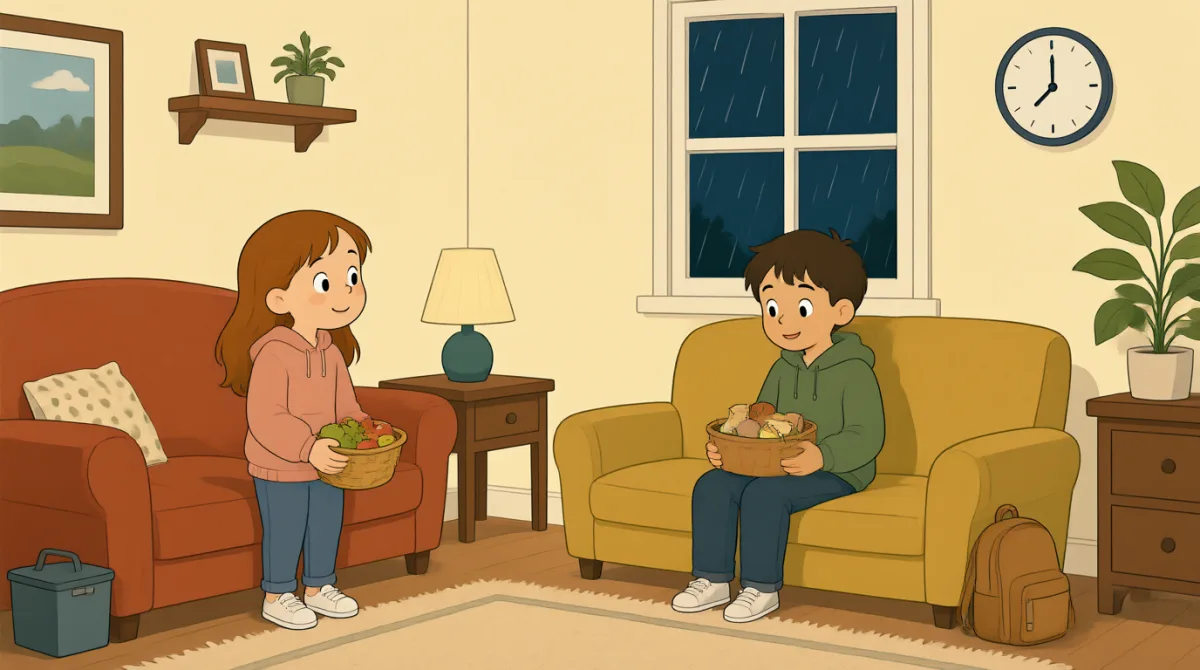

Jack, wake up! I hear rain hitting the tent. Is everything getting wet?

I’m awake. The tent feels dry inside. Let’s check our bags and food.
My clothes are dry, but one corner of the tent is a little damp.
Move your bag away from that corner. I’ll put a towel on the floor.
Good idea. The rain is still coming down hard. What should we do tomorrow?
Let’s check the weather in the morning. We can take a short walk if it stops.
And if it keeps raining, we can stay here and play cards.
That works. Keep your shoes by the door, and we’ll see what morning brings.
Vocabulary7
- wake up
To stop sleeping. Emma uses it to get Jack’s attention.
- getting wet
Becoming covered with water. You can use this phrase to ask if rain is making your things wet.
- damp
A little wet, but not completely soaked. You can use it to describe clothes, a tent, or a floor.
- move your bag away
Put your bag in a different place, farther from something. Use this phrase to tell someone how to keep an item safe or dry.
- coming down hard
Raining heavily. You can use this phrase to describe strong rain.
- keeps raining
Continues to rain. Use it to talk about rain that does not stop.
- by the door
Next to the door. You can use this phrase to say where to put or keep something.
Key Sentences7
- 1
Is everything getting wet?
This is a simple way to check if things are becoming wet. You can replace “everything” with “your clothes” or “the bags.”
- 2
The tent feels dry inside.
Use this sentence to describe how a place feels. You can replace “the tent” with “the room” or “the car.”
- 3
Move your bag away from that corner.
This gives a clear instruction to move something farther from a place. You can replace “your bag” and “that corner” with other items and locations.
- 4
What should we do tomorrow?
This is a useful way to ask for ideas or advice about a future plan. You can change “tomorrow” to another time.
- 5
We can take a short walk if it stops.
This suggests a possible plan with a condition. Use “if” to say what needs to happen first.
- 6
And if it keeps raining, we can stay here and play cards.
This sentence offers a backup plan if the weather does not improve. You can use the same pattern to make plans for other situations.
- 7
Keep your shoes by the door, and we’ll see what morning brings.
This gives a practical instruction and says you will decide later. “We’ll see what morning brings” means you will wait and find out what happens.