Rain in the Night
باران در شب
Rain wakes Emma and Jack during the night, and they check that their things are dry. In the morning, they make a plan for the wet weather.
باران اِما و جک را در طول شب بیدار میکند و آنها بررسی میکنند که وسایلشان خشک هستند یا نه. صبح، برای هوای بارانی برنامهای میریزند.
گفتوگو8
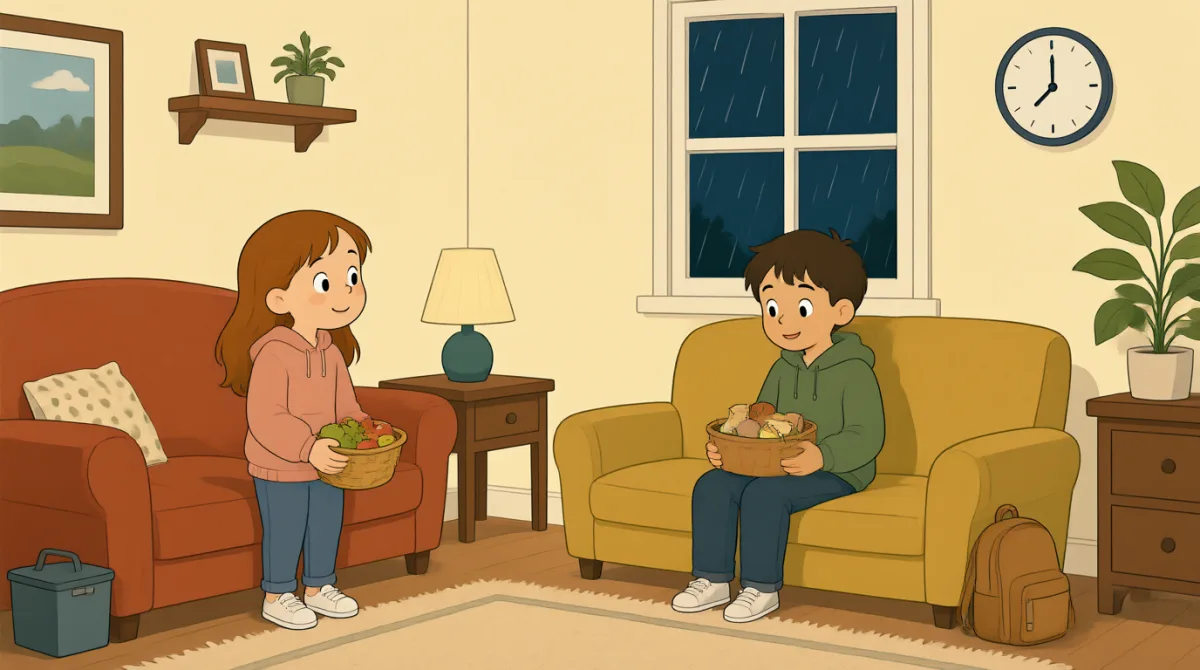

Jack, wake up! I hear rain hitting the tent. Is everything getting wet?
جک، بیدار شو! صدای برخورد باران با چادر را میشنوم. همهچیز دارد خیس میشود؟

I’m awake. The tent feels dry inside. Let’s check our bags and food.
بیدارم. داخل چادر خشک به نظر میرسد. بیا کیفها و غذا را بررسی کنیم.
My clothes are dry, but one corner of the tent is a little damp.
لباسهایم خشکاند، اما یک گوشهٔ چادر کمی نمناک است.
Move your bag away from that corner. I’ll put a towel on the floor.
کیفت را از آن گوشه دور کن. من یک حوله روی زمین میگذارم.
Good idea. The rain is still coming down hard. What should we do tomorrow?
فکر خوبی است. باران هنوز شدید میبارد. فردا چه کار کنیم؟
Let’s check the weather in the morning. We can take a short walk if it stops.
صبح هوا را بررسی کنیم. اگر باران بند آمد، میتوانیم کمی پیادهروی کنیم.
And if it keeps raining, we can stay here and play cards.
و اگر باران ادامه پیدا کرد، میتوانیم همینجا بمانیم و ورق بازی کنیم.
That works. Keep your shoes by the door, and we’ll see what morning brings.
خوبه. کفشهایت را کنار در بگذار و ببینیم صبح چه پیش میآورد.
واژگان7
- wake upبیدار شدن
To stop sleeping. Emma uses it to get Jack’s attention.
یعنی دست از خوابیدن کشیدن. اِما از عبارت “wake up” برای جلب توجه جک استفاده میکند.
- getting wetخیس شدن
Becoming covered with water. You can use this phrase to ask if rain is making your things wet.
یعنی با آب پوشیده شدن. میتوانی از عبارت “getting wet” بپرسی که آیا باران وسایلت را خیس میکند یا نه.
- dampنمناک
A little wet, but not completely soaked. You can use it to describe clothes, a tent, or a floor.
کمی خیس، اما نه کاملاً خیس و آبکشیده. میتوانی از “damp” برای توصیف لباس، چادر یا زمین استفاده کنی.
- move your bag awayکیفت را دور کن
Put your bag in a different place, farther from something. Use this phrase to tell someone how to keep an item safe or dry.
کیفت را در جای دیگری، دورتر از چیزی، بگذار. از عبارت “move your bag away” برای گفتن اینکه چطور چیزی را امن یا خشک نگه دارند استفاده میشود.
- coming down hardشدید باریدن
Raining heavily. You can use this phrase to describe strong rain.
یعنی باران شدید باریدن. میتوانی از عبارت “coming down hard” برای توصیف باران شدید استفاده کنی.
- keeps rainingادامه پیدا کردن باران
Continues to rain. Use it to talk about rain that does not stop.
یعنی باریدن باران ادامه داشته باشد. از عبارت “keeps raining” برای صحبت دربارهٔ بارانی استفاده کن که بند نمیآید.
- by the doorکنار در
Next to the door. You can use this phrase to say where to put or keep something.
یعنی در کنار در. میتوانی از عبارت “by the door” برای گفتن اینکه چیزی را کجا بگذاری یا نگه داری استفاده کنی.
جملات کلیدی7
- 1
Is everything getting wet?
همهچیز دارد خیس میشود؟
This is a simple way to check if things are becoming wet. You can replace “everything” with “your clothes” or “the bags.”
این روش سادهای برای بررسی خیس شدن وسایل است. میتوانی “everything” را با “your clothes” یا “the bags” عوض کنی.
- 2
The tent feels dry inside.
داخل چادر خشک به نظر میرسد.
Use this sentence to describe how a place feels. You can replace “the tent” with “the room” or “the car.”
از این جمله برای توصیف احساس یک مکان استفاده کن. میتوانی “the tent” را با “the room” یا “the car” عوض کنی.
- 3
Move your bag away from that corner.
کیفت را از آن گوشه دور کن.
This gives a clear instruction to move something farther from a place. You can replace “your bag” and “that corner” with other items and locations.
این جمله دستور روشنی برای دورتر بردن چیزی از یک مکان میدهد. میتوانی “your bag” و “that corner” را با وسایل و مکانهای دیگر عوض کنی.
- 4
What should we do tomorrow?
فردا چه کار کنیم؟
This is a useful way to ask for ideas or advice about a future plan. You can change “tomorrow” to another time.
این روش مفیدی برای درخواست ایده یا نظر دربارهٔ برنامهای در آینده است. میتوانی “tomorrow” را با زمان دیگری عوض کنی.
- 5
We can take a short walk if it stops.
اگر باران بند بیاید، میتوانیم کمی پیادهروی کنیم.
This suggests a possible plan with a condition. Use “if” to say what needs to happen first.
این جمله برنامهای احتمالی را همراه با یک شرط پیشنهاد میکند. از “if” استفاده کن تا بگویی ابتدا چه چیزی باید اتفاق بیفتد.
- 6
And if it keeps raining, we can stay here and play cards.
و اگر باران ادامه پیدا کرد، میتوانیم همینجا بمانیم و ورق بازی کنیم.
This sentence offers a backup plan if the weather does not improve. You can use the same pattern to make plans for other situations.
این جمله برای زمانی که هوا بهتر نمیشود، یک برنامهٔ جایگزین پیشنهاد میکند. میتوانی از همین الگو برای برنامهریزی در موقعیتهای دیگر استفاده کنی.
- 7
Keep your shoes by the door, and we’ll see what morning brings.
کفشهایت را کنار در بگذار و ببینیم صبح چه پیش میآورد.
This gives a practical instruction and says you will decide later. “We’ll see what morning brings” means you will wait and find out what happens.
این جمله یک دستور کاربردی میدهد و میگوید که بعداً تصمیم میگیرید. “We’ll see what morning brings” یعنی صبر میکنید تا بفهمید چه اتفاقی میافتد.