Rain in the Night
ฝนตกกลางดึก
Rain wakes Emma and Jack during the night, and they check that their things are dry. In the morning, they make a plan for the wet weather.
ฝนปลุกเอมมากับแจ็กกลางดึก ทั้งคู่ตรวจดูว่าข้าวของยังแห้งอยู่ไหม พอตอนเช้าก็วางแผนรับมือกับอากาศเปียกฝน
บทสนทนา8
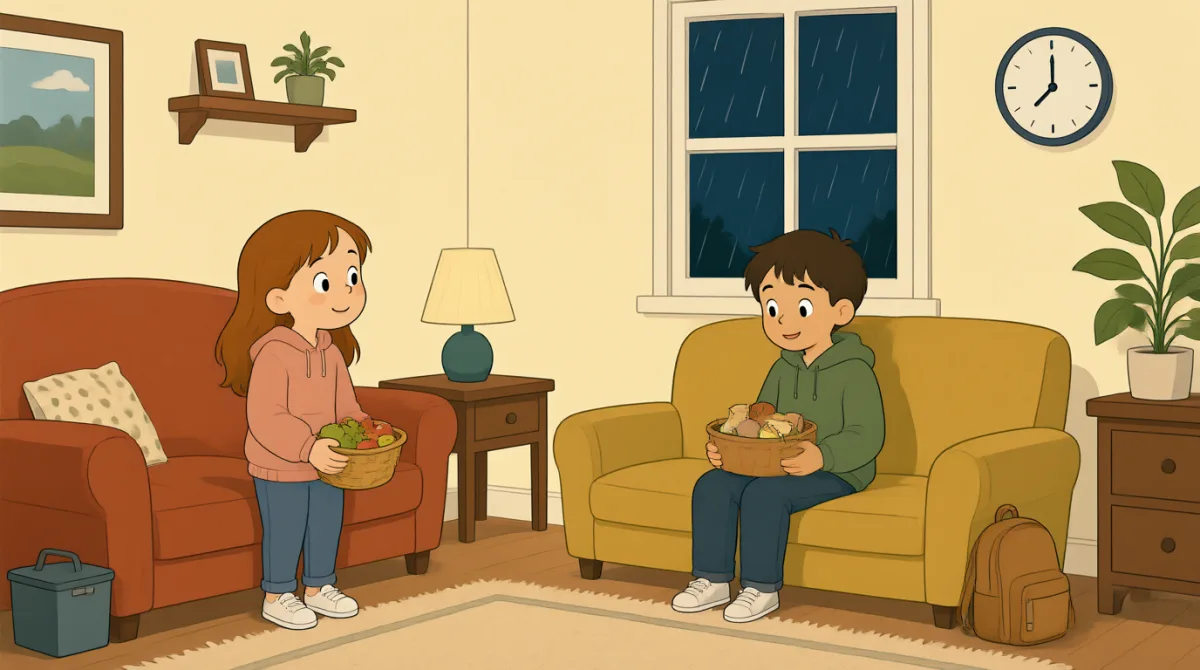

Jack, wake up! I hear rain hitting the tent. Is everything getting wet?
แจ็ก ตื่นเร็ว! ฉันได้ยินเสียงฝนกระทบเต็นท์ ของเปียกหมดหรือเปล่า?

I’m awake. The tent feels dry inside. Let’s check our bags and food.
ตื่นแล้ว ข้างในเต็นท์ยังแห้งอยู่ ไปดูกระเป๋ากับอาหารกันเถอะ
My clothes are dry, but one corner of the tent is a little damp.
เสื้อผ้าฉันแห้งนะ แต่เต็นท์ตรงมุมหนึ่งชื้นนิดหน่อย
Move your bag away from that corner. I’ll put a towel on the floor.
ย้ายกระเป๋าเธอให้ห่างจากมุมนั้นหน่อยนะ ฉันจะเอาผ้าขนหนูปูพื้นไว้
Good idea. The rain is still coming down hard. What should we do tomorrow?
ดีเลย ฝนยังตกหนักอยู่เลย พรุ่งนี้เราควรทำอะไรกันดี?
Let’s check the weather in the morning. We can take a short walk if it stops.
ตอนเช้าเราค่อยดูพยากรณ์อากาศกัน ถ้าฝนหยุด เราไปเดินเล่นสั้น ๆ ได้นะ
And if it keeps raining, we can stay here and play cards.
ถ้าฝนยังตกต่อ เราก็อยู่ที่นี่เล่นไพ่กันได้
That works. Keep your shoes by the door, and we’ll see what morning brings.
ได้เลย วางรองเท้าไว้ข้างประตูนะ แล้วพรุ่งนี้เช้าค่อยมาดูกันว่าจะเป็นยังไง
คำศัพท์7
- wake upตื่น
To stop sleeping. Emma uses it to get Jack’s attention.
หมายถึงหยุดนอน เอมใช้คำนี้เพื่อเรียกให้แจ็กตื่นและสนใจเธอ
- getting wetเปียก
Becoming covered with water. You can use this phrase to ask if rain is making your things wet.
หมายถึงมีน้ำมาเปื้อนหรือทำให้เปียก ใช้วลีนี้ถามได้ว่าฝนทำให้ข้าวของของเราเปียกหรือเปล่า
- dampชื้น
A little wet, but not completely soaked. You can use it to describe clothes, a tent, or a floor.
เปียกเล็กน้อย แต่ยังไม่ถึงกับเปียกโชก ใช้บรรยายเสื้อผ้า เต็นท์ หรือพื้นได้
- move your bag awayย้ายกระเป๋าให้ห่างออกไป
Put your bag in a different place, farther from something. Use this phrase to tell someone how to keep an item safe or dry.
เอากระเป๋าไปวางที่อื่นซึ่งอยู่ไกลจากบางสิ่งกว่า ใช้วลีนี้บอกวิธีเก็บของให้ปลอดภัยหรือไม่เปียก
- coming down hardตกหนัก
Raining heavily. You can use this phrase to describe strong rain.
หมายถึงฝนตกอย่างหนัก ใช้วลีนี้บรรยายฝนที่ตกแรงได้
- keeps rainingฝนตกต่อ
Continues to rain. Use it to talk about rain that does not stop.
หมายถึงฝนยังคงตก ใช้พูดถึงฝนที่ยังไม่หยุด
- by the doorข้างประตู
Next to the door. You can use this phrase to say where to put or keep something.
หมายถึงอยู่ติดกับประตู ใช้วลีนี้บอกตำแหน่งที่จะวางหรือเก็บของได้
ประโยคสำคัญ7
- 1
Is everything getting wet?
ของเปียกหมดหรือเปล่า?
This is a simple way to check if things are becoming wet. You can replace “everything” with “your clothes” or “the bags.”
ประโยคนี้ใช้ถามง่าย ๆ ว่าของกำลังเปียกหรือเปล่า จะเปลี่ยน “everything” เป็น “your clothes” (เสื้อผ้าของเธอ) หรือ “the bags” (กระเป๋าพวกนั้น) ก็ได้
- 2
The tent feels dry inside.
ข้างในเต็นท์ยังแห้งอยู่
Use this sentence to describe how a place feels. You can replace “the tent” with “the room” or “the car.”
ใช้ประโยคนี้บรรยายว่าพื้นที่หนึ่งรู้สึกอย่างไร จะเปลี่ยน “the tent” เป็น “the room” (ห้อง) หรือ “the car” (รถ) ก็ได้
- 3
Move your bag away from that corner.
ย้ายกระเป๋าเธอให้ห่างจากมุมนั้นหน่อย
This gives a clear instruction to move something farther from a place. You can replace “your bag” and “that corner” with other items and locations.
ประโยคนี้เป็นคำสั่งที่ชัดเจนให้ย้ายของออกไปให้ไกลจากจุดหนึ่ง จะเปลี่ยน “your bag” และ “that corner” เป็นสิ่งของและสถานที่อื่นก็ได้
- 4
What should we do tomorrow?
พรุ่งนี้เราควรทำอะไรกันดี?
This is a useful way to ask for ideas or advice about a future plan. You can change “tomorrow” to another time.
ประโยคนี้ใช้ถามความคิดเห็นหรือคำแนะนำเกี่ยวกับแผนในอนาคตได้ดี จะเปลี่ยน “tomorrow” เป็นเวลาอื่นก็ได้
- 5
We can take a short walk if it stops.
ถ้าฝนหยุด เราไปเดินเล่นสั้น ๆ ได้นะ
This suggests a possible plan with a condition. Use “if” to say what needs to happen first.
ประโยคนี้เสนอแผนที่อาจทำได้โดยมีเงื่อนไข ใช้ “if” เพื่อบอกว่าสิ่งใดต้องเกิดขึ้นก่อน
- 6
And if it keeps raining, we can stay here and play cards.
ถ้าฝนยังตกต่อ เราก็อยู่ที่นี่เล่นไพ่กันได้
This sentence offers a backup plan if the weather does not improve. You can use the same pattern to make plans for other situations.
ประโยคนี้เสนอแผนสำรองหากอากาศไม่ดีขึ้น ใช้รูปแบบเดียวกันนี้วางแผนรับมือสถานการณ์อื่นได้
- 7
Keep your shoes by the door, and we’ll see what morning brings.
วางรองเท้าไว้ข้างประตูนะ แล้วพรุ่งนี้เช้าค่อยมาดูกันว่าจะเป็นยังไง
This gives a practical instruction and says you will decide later. “We’ll see what morning brings” means you will wait and find out what happens.
ประโยคนี้บอกสิ่งที่ควรทำตอนนี้ แล้วบอกว่าจะค่อยตัดสินใจทีหลัง “We’ll see what morning brings” หมายถึงเราจะรอดูว่าเมื่อถึงตอนเช้าจะเกิดอะไรขึ้น