Rain in the Night
रात में बारिश
Rain wakes Emma and Jack during the night, and they check that their things are dry. In the morning, they make a plan for the wet weather.
रात में बारिश से एमा और जैक की नींद खुल जाती है। वे जाँचते हैं कि उनका सामान सूखा है या नहीं। सुबह वे बारिश के मौसम के लिए योजना बनाते हैं।
संवाद8
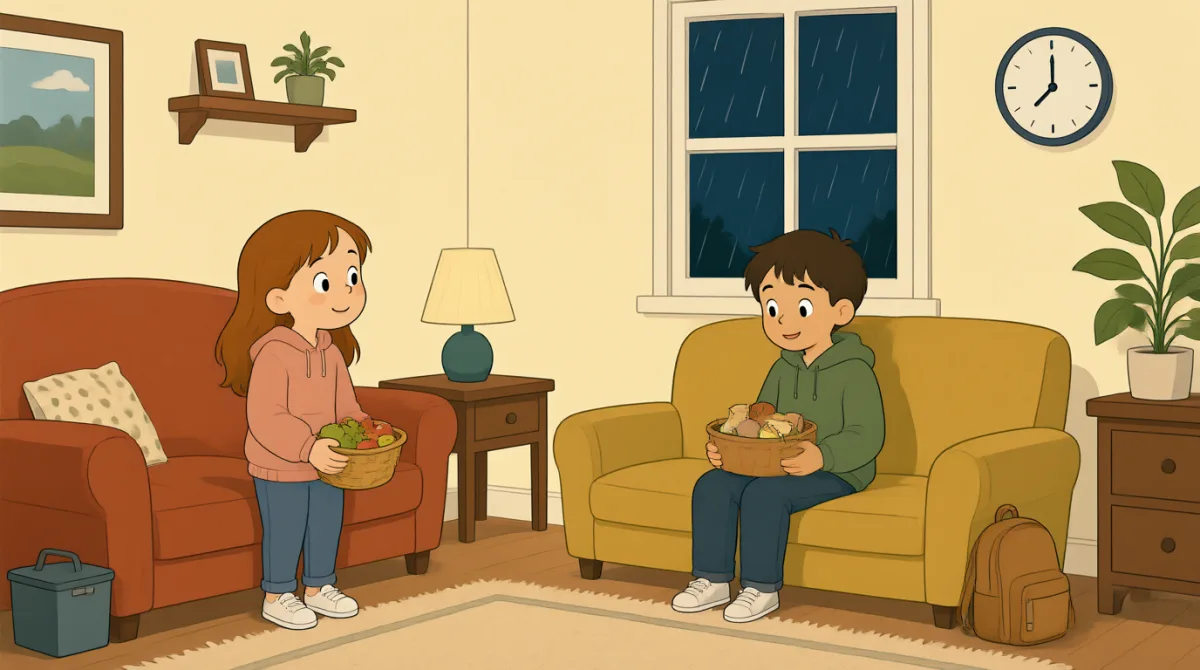

Jack, wake up! I hear rain hitting the tent. Is everything getting wet?
जैक, उठो! मुझे तंबू पर बारिश की बूँदें पड़ने की आवाज़ आ रही है। क्या सब कुछ भीग रहा है?

I’m awake. The tent feels dry inside. Let’s check our bags and food.
मैं जाग गया हूँ। तंबू अंदर से सूखा लग रहा है। चलो, अपने बैग और खाने-पीने की चीज़ें जाँचते हैं।
My clothes are dry, but one corner of the tent is a little damp.
मेरे कपड़े सूखे हैं, लेकिन तंबू का एक कोना थोड़ा नम है।
Move your bag away from that corner. I’ll put a towel on the floor.
अपना बैग उस कोने से दूर रखो। मैं फ़र्श पर एक तौलिया बिछा देता हूँ।
Good idea. The rain is still coming down hard. What should we do tomorrow?
अच्छा विचार है। बारिश अब भी ज़ोरों से हो रही है। हमें कल क्या करना चाहिए?
Let’s check the weather in the morning. We can take a short walk if it stops.
सुबह मौसम का हाल देख लेते हैं। अगर बारिश रुक गई, तो हम थोड़ी देर टहलने जा सकते हैं।
And if it keeps raining, we can stay here and play cards.
और अगर बारिश होती रही, तो हम यहीं रहकर ताश खेल सकते हैं।
That works. Keep your shoes by the door, and we’ll see what morning brings.
ठीक है। अपने जूते दरवाज़े के पास रखो, फिर सुबह देखेंगे कि क्या होता है।
शब्दावली7
- wake upजागना
To stop sleeping. Emma uses it to get Jack’s attention.
नींद से उठना। एमा जैक का ध्यान खींचने के लिए इस वाक्यांश का इस्तेमाल करती है।
- getting wetभीगना
Becoming covered with water. You can use this phrase to ask if rain is making your things wet.
पानी से गीला होना। यह पूछने के लिए कि बारिश से आपका सामान भीग रहा है या नहीं, आप इस वाक्यांश का इस्तेमाल कर सकते हैं।
- dampनम
A little wet, but not completely soaked. You can use it to describe clothes, a tent, or a floor.
थोड़ा गीला, लेकिन पूरी तरह भीगा हुआ नहीं। कपड़ों, तंबू या फ़र्श का हाल बताने के लिए आप यह शब्द इस्तेमाल कर सकते हैं।
- move your bag awayअपना बैग दूर रखो
Put your bag in a different place, farther from something. Use this phrase to tell someone how to keep an item safe or dry.
अपना बैग किसी दूसरी जगह रखो, किसी चीज़ से दूर। किसी को कोई सामान सुरक्षित या सूखा रखने का तरीका बताने के लिए इस वाक्यांश का इस्तेमाल करें।
- coming down hardज़ोरों से बरसना
Raining heavily. You can use this phrase to describe strong rain.
तेज़ बारिश होना। मूसलाधार बारिश का वर्णन करने के लिए आप इस वाक्यांश का इस्तेमाल कर सकते हैं।
- keeps rainingबारिश होते रहना
Continues to rain. Use it to talk about rain that does not stop.
बारिश जारी रहना। जो बारिश रुक नहीं रही हो, उसके बारे में बात करने के लिए इसका इस्तेमाल करें।
- by the doorदरवाज़े के पास
Next to the door. You can use this phrase to say where to put or keep something.
दरवाज़े के बगल में। कोई चीज़ कहाँ रखनी या छोड़नी है, यह बताने के लिए आप इस वाक्यांश का इस्तेमाल कर सकते हैं।
मुख्य वाक्य7
- 1
Is everything getting wet?
क्या सब कुछ भीग रहा है?
This is a simple way to check if things are becoming wet. You can replace “everything” with “your clothes” or “the bags.”
चीज़ें भीग रही हैं या नहीं, यह पूछने का यह एक आसान तरीका है। “everything” की जगह “your clothes” या “the bags” कह सकते हैं।
- 2
The tent feels dry inside.
तंबू अंदर से सूखा लग रहा है।
Use this sentence to describe how a place feels. You can replace “the tent” with “the room” or “the car.”
किसी जगह का कैसा महसूस होना बताने के लिए इस वाक्य का इस्तेमाल करें। “the tent” की जगह “the room” या “the car” कह सकते हैं।
- 3
Move your bag away from that corner.
अपना बैग उस कोने से दूर रखो।
This gives a clear instruction to move something farther from a place. You can replace “your bag” and “that corner” with other items and locations.
किसी चीज़ को किसी जगह से दूर रखने का साफ़ निर्देश देने के लिए यह वाक्य कहें। आप “your bag” और “that corner” की जगह दूसरी चीज़ों और जगहों के नाम रख सकते हैं।
- 4
What should we do tomorrow?
हमें कल क्या करना चाहिए?
This is a useful way to ask for ideas or advice about a future plan. You can change “tomorrow” to another time.
आगे की योजना के बारे में सुझाव या सलाह माँगने का यह एक उपयोगी तरीका है। आप “tomorrow” की जगह किसी और समय का नाम रख सकते हैं।
- 5
We can take a short walk if it stops.
अगर बारिश रुक गई, तो हम थोड़ी देर टहलने जा सकते हैं।
This suggests a possible plan with a condition. Use “if” to say what needs to happen first.
यह एक शर्त के साथ संभावित योजना सुझाता है। पहले क्या होना ज़रूरी है, यह बताने के लिए “if” का इस्तेमाल करें।
- 6
And if it keeps raining, we can stay here and play cards.
और अगर बारिश होती रही, तो हम यहीं रहकर ताश खेल सकते हैं।
This sentence offers a backup plan if the weather does not improve. You can use the same pattern to make plans for other situations.
मौसम ठीक न होने पर यह वाक्य दूसरी योजना सुझाता है। दूसरी परिस्थितियों के लिए भी आप इसी ढाँचे से योजनाएँ बना सकते हैं।
- 7
Keep your shoes by the door, and we’ll see what morning brings.
अपने जूते दरवाज़े के पास रखो, फिर सुबह देखेंगे कि क्या होता है।
This gives a practical instruction and says you will decide later. “We’ll see what morning brings” means you will wait and find out what happens.
इसमें एक काम की हिदायत दी गई है और कहा गया है कि फ़ैसला बाद में करेंगे। “We’ll see what morning brings” का मतलब है कि हम इंतज़ार करेंगे और देखेंगे कि आगे क्या होता है।