Rain in the Night
夜裡下雨
Rain wakes Emma and Jack during the night, and they check that their things are dry. In the morning, they make a plan for the wet weather.
夜裡的雨聲吵醒了 Emma 和 Jack,他們檢查物品是否被淋溼。早上,他們為潮溼的天氣做了新的安排。
對話8
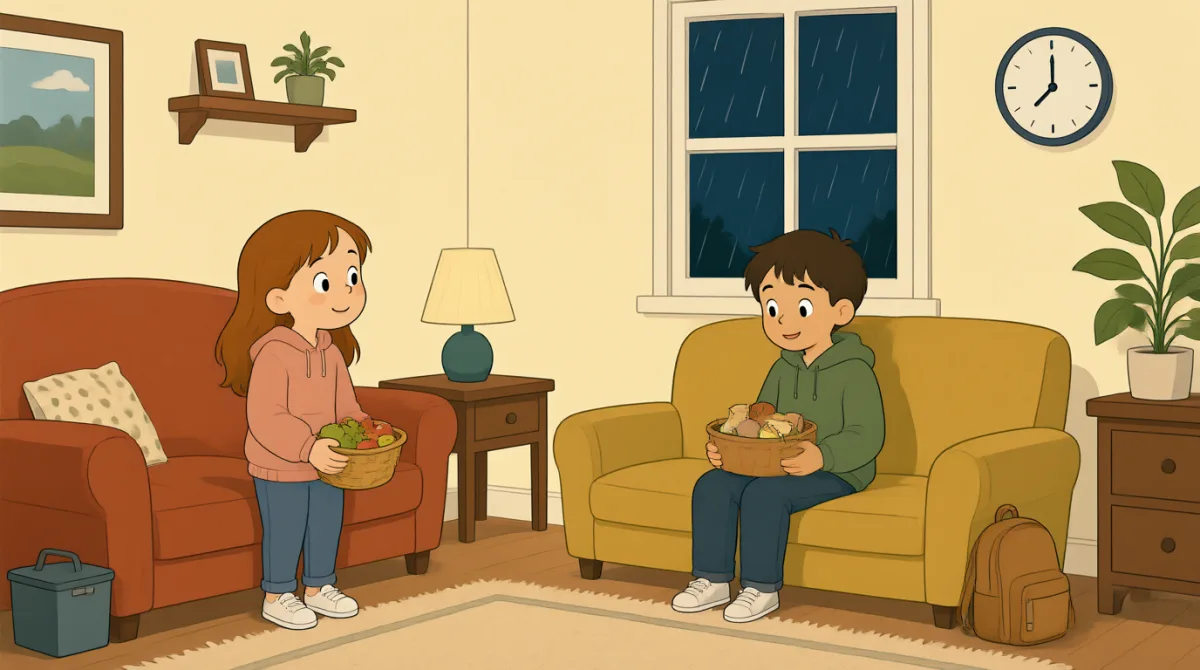

Jack, wake up! I hear rain hitting the tent. Is everything getting wet?
傑克,醒醒!我聽見雨打在帳篷上。東西都溼了嗎?

I’m awake. The tent feels dry inside. Let’s check our bags and food.
我醒了。帳篷裡面還是乾的。我們檢查一下揹包和食物吧。
My clothes are dry, but one corner of the tent is a little damp.
我的衣服是乾的,不過帳篷有個角有點潮。
Move your bag away from that corner. I’ll put a towel on the floor.
把你的揹包挪開那個角。我來在地上鋪條毛巾。
Good idea. The rain is still coming down hard. What should we do tomorrow?
好主意。雨還下得很大。我們明天該怎麼辦?
Let’s check the weather in the morning. We can take a short walk if it stops.
我們早上看看天氣。如果雨停了,可以出去走一小段。
And if it keeps raining, we can stay here and play cards.
要是一直下雨,我們就待在這裡打牌。
That works. Keep your shoes by the door, and we’ll see what morning brings.
好啊。把鞋放在門邊,明早再看看天氣怎麼樣。
詞彙7
- wake up醒來
To stop sleeping. Emma uses it to get Jack’s attention.
停止睡覺。艾瑪用這個短語來叫傑克,讓他注意她。
- getting wet被淋溼
Becoming covered with water. You can use this phrase to ask if rain is making your things wet.
變得沾滿水。你可以用這個短語詢問雨水有沒有把東西淋溼。
- damp潮溼的
A little wet, but not completely soaked. You can use it to describe clothes, a tent, or a floor.
有點溼,但還沒有完全溼透。你可以用它來形容衣服、帳篷或地面。
- move your bag away把你的包挪開
Put your bag in a different place, farther from something. Use this phrase to tell someone how to keep an item safe or dry.
把包放到別處,離某樣東西遠一點。你可以用這個短語告訴別人怎樣保護物品,讓它保持乾燥。
- coming down hard下得很大
Raining heavily. You can use this phrase to describe strong rain.
雨下得很大。你可以用這個短語來形容大雨。
- keeps raining一直下雨
Continues to rain. Use it to talk about rain that does not stop.
雨一直下,沒有停。你可以用這個短語來描述雨下個不停。
- by the door在門邊
Next to the door. You can use this phrase to say where to put or keep something.
在門旁邊。你可以用這個短語說明該把東西放在哪裡。
關鍵句7
- 1
Is everything getting wet?
東西都溼了嗎?
This is a simple way to check if things are becoming wet. You can replace “everything” with “your clothes” or “the bags.”
這是詢問東西有沒有變溼的一種簡單說法。你可以把“everything”換成“your clothes”或“the bags”。
- 2
The tent feels dry inside.
帳篷裡面摸起來是乾的。
Use this sentence to describe how a place feels. You can replace “the tent” with “the room” or “the car.”
用這個句子來描述一個地方給人的感覺。你可以把“the tent”換成“the room”或“the car”。
- 3
Move your bag away from that corner.
把你的包挪開那個角。
This gives a clear instruction to move something farther from a place. You can replace “your bag” and “that corner” with other items and locations.
這是清楚地告訴別人把東西挪到離某處遠一點的地方。你可以把“your bag”和“that corner”換成其他物品和地點。
- 4
What should we do tomorrow?
我們明天該怎麼辦?
This is a useful way to ask for ideas or advice about a future plan. You can change “tomorrow” to another time.
這是詢問別人對未來計劃有什麼想法或建議的一種實用說法。你可以把“tomorrow”換成其他時間。
- 5
We can take a short walk if it stops.
如果雨停了,我們可以出去走一小段。
This suggests a possible plan with a condition. Use “if” to say what needs to happen first.
這個句子用一個條件提出可能的計劃。用“if”說明需要先發生什麼。
- 6
And if it keeps raining, we can stay here and play cards.
要是一直下雨,我們就待在這裡打牌。
This sentence offers a backup plan if the weather does not improve. You can use the same pattern to make plans for other situations.
這個句子提出了一個備用計劃,以防天氣沒有好轉。你也可以用同樣的句型來安排其他情況。
- 7
Keep your shoes by the door, and we’ll see what morning brings.
把鞋放在門邊,明早再看看情況。
This gives a practical instruction and says you will decide later. “We’ll see what morning brings” means you will wait and find out what happens.
這句話先給出一個實用的指示,也表示之後再做決定。“We’ll see what morning brings”意思是我們先等等,看看之後會發生什麼。