Rain in the Night
রাতের বৃষ্টি
Rain wakes Emma and Jack during the night, and they check that their things are dry. In the morning, they make a plan for the wet weather.
রাতে বৃষ্টির শব্দে এমা ও জ্যাকের ঘুম ভেঙে যায়। তারা দেখে নেয়, তাদের জিনিসপত্র শুকনো আছে কি না। সকালে ভেজা আবহাওয়ার জন্য তারা একটা পরিকল্পনা করে।
সংলাপ8
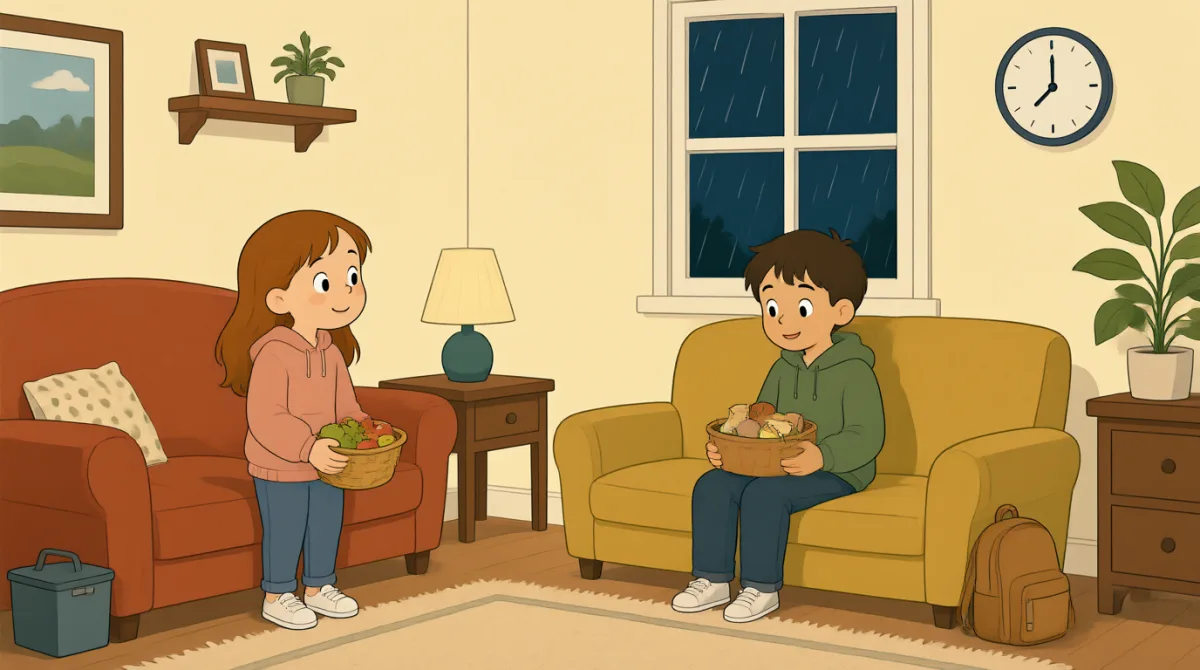

Jack, wake up! I hear rain hitting the tent. Is everything getting wet?
জ্যাক, ওঠো! তাঁবুতে বৃষ্টির শব্দ শুনতে পাচ্ছি। সবকিছু কি ভিজে যাচ্ছে?

I’m awake. The tent feels dry inside. Let’s check our bags and food.
আমি জেগে আছি। তাঁবুর ভেতরটা শুকনো মনে হচ্ছে। চলো, আমাদের ব্যাগ আর খাবার দেখে নিই।
My clothes are dry, but one corner of the tent is a little damp.
আমার কাপড় শুকনো, কিন্তু তাঁবুর এক কোণা একটু স্যাঁতসেঁতে।
Move your bag away from that corner. I’ll put a towel on the floor.
তোমার ব্যাগটা ওই কোণা থেকে সরিয়ে রাখো। আমি মেঝেতে একটা তোয়ালে বিছিয়ে দিচ্ছি।
Good idea. The rain is still coming down hard. What should we do tomorrow?
ভালো বুদ্ধি। এখনও খুব জোরে বৃষ্টি হচ্ছে। কাল আমাদের কী করা উচিত?
Let’s check the weather in the morning. We can take a short walk if it stops.
সকালে আবহাওয়ার খবর দেখে নিই। বৃষ্টি থামলে আমরা একটু হাঁটতে যেতে পারি।
And if it keeps raining, we can stay here and play cards.
আর বৃষ্টি চলতেই থাকলে, আমরা এখানে থেকে তাস খেলতে পারি।
That works. Keep your shoes by the door, and we’ll see what morning brings.
ঠিক আছে। জুতাগুলো দরজার পাশে রেখো, তারপর সকালে কী হয় দেখা যাবে।
শব্দভান্ডার7
- wake upঘুম থেকে ওঠা
To stop sleeping. Emma uses it to get Jack’s attention.
ঘুমানো বন্ধ করে জেগে ওঠা। এমা জ্যাকের দৃষ্টি আকর্ষণ করতে এই কথাটি বলছে।
- getting wetভিজে যাওয়া
Becoming covered with water. You can use this phrase to ask if rain is making your things wet.
পানিতে ভিজে যাওয়া। বৃষ্টিতে তোমার জিনিসপত্র ভিজে যাচ্ছে কি না জানতে এই কথাটি ব্যবহার করতে পারো।
- dampস্যাঁতসেঁতে
A little wet, but not completely soaked. You can use it to describe clothes, a tent, or a floor.
কিছুটা ভেজা, তবে পুরোপুরি চুপচুপে নয়। কাপড়, তাঁবু বা মেঝে কেমন আছে তা বোঝাতে এই শব্দটি ব্যবহার করতে পারো।
- move your bag awayতোমার ব্যাগটা সরিয়ে রাখা
Put your bag in a different place, farther from something. Use this phrase to tell someone how to keep an item safe or dry.
ব্যাগটিকে অন্য জায়গায়, কোনো কিছু থেকে দূরে রাখা। কোনো জিনিসকে নিরাপদ বা শুকনো রাখার উপায় বলতে এই কথাটি ব্যবহার করো।
- coming down hardজোরে বৃষ্টি হওয়া
Raining heavily. You can use this phrase to describe strong rain.
প্রচুর বৃষ্টি হওয়া। ভারী বৃষ্টি বোঝাতে এই কথাটি ব্যবহার করতে পারো।
- keeps rainingবৃষ্টি চলতে থাকা
Continues to rain. Use it to talk about rain that does not stop.
বৃষ্টি থামছে না, বরং চলতে থাকছে। যে বৃষ্টি থামে না, তা নিয়ে কথা বলতে এই কথাটি ব্যবহার করো।
- by the doorদরজার পাশে
Next to the door. You can use this phrase to say where to put or keep something.
দরজার একেবারে কাছে। কোনো জিনিস কোথায় রাখতে হবে বা রাখা আছে, তা বলতে এই কথাটি ব্যবহার করতে পারো।
গুরুত্বপূর্ণ বাক্য7
- 1
Is everything getting wet?
সবকিছু কি ভিজে যাচ্ছে?
This is a simple way to check if things are becoming wet. You can replace “everything” with “your clothes” or “the bags.”
কোনো কিছু ভিজে যাচ্ছে কি না জানতে এভাবে সহজে জিজ্ঞেস করতে পারো। “everything”-এর জায়গায় “your clothes” বা “the bags” বসাতে পারো।
- 2
The tent feels dry inside.
তাঁবুর ভেতরটা শুকনো মনে হচ্ছে।
Use this sentence to describe how a place feels. You can replace “the tent” with “the room” or “the car.”
কোনো জায়গা কেমন লাগছে, তা বোঝাতে এই বাক্যটি ব্যবহার করো। “the tent”-এর জায়গায় “the room” বা “the car” বসাতে পারো।
- 3
Move your bag away from that corner.
তোমার ব্যাগটা ওই কোণা থেকে সরিয়ে রাখো।
This gives a clear instruction to move something farther from a place. You can replace “your bag” and “that corner” with other items and locations.
কোনো জিনিসকে একটি জায়গা থেকে দূরে সরাতে স্পষ্ট নির্দেশ দিতে এই বাক্যটি ব্যবহার করা হয়। “your bag” ও “that corner”-এর জায়গায় অন্য জিনিস ও জায়গার নাম বসাতে পারো।
- 4
What should we do tomorrow?
কাল আমাদের কী করা উচিত?
This is a useful way to ask for ideas or advice about a future plan. You can change “tomorrow” to another time.
ভবিষ্যতের কোনো পরিকল্পনা নিয়ে পরামর্শ বা ধারণা চাইতে এভাবে জিজ্ঞেস করা যায়। “tomorrow”-এর জায়গায় অন্য কোনো সময় বসাতে পারো।
- 5
We can take a short walk if it stops.
বৃষ্টি থামলে আমরা একটু হাঁটতে যেতে পারি।
This suggests a possible plan with a condition. Use “if” to say what needs to happen first.
কোনো শর্ত পূরণ হলে কী করা যেতে পারে, এই বাক্যে সেই সম্ভাব্য পরিকল্পনার কথা বলা হয়েছে। আগে কী ঘটতে হবে তা জানাতে “if” ব্যবহার করো।
- 6
And if it keeps raining, we can stay here and play cards.
আর বৃষ্টি চলতেই থাকলে, আমরা এখানে থেকে তাস খেলতে পারি।
This sentence offers a backup plan if the weather does not improve. You can use the same pattern to make plans for other situations.
আবহাওয়ার উন্নতি না হলে কী করা হবে, এই বাক্যে তার বিকল্প পরিকল্পনা দেওয়া হয়েছে। অন্য পরিস্থিতির জন্য পরিকল্পনা করতেও একই ধরন ব্যবহার করতে পারো।
- 7
Keep your shoes by the door, and we’ll see what morning brings.
জুতাগুলো দরজার পাশে রেখো, তারপর সকালে কী হয় দেখা যাবে।
This gives a practical instruction and says you will decide later. “We’ll see what morning brings” means you will wait and find out what happens.
এখানে একটি কাজের নির্দেশ দেওয়া হয়েছে এবং বলা হয়েছে যে সিদ্ধান্ত পরে নেওয়া হবে। “We’ll see what morning brings” মানে, অপেক্ষা করে দেখা হবে কী ঘটে।