Checking Other Medicines
確認其他藥物是否會有影響
Emma mentions the vitamins and pain reliever she sometimes takes and asks whether they are safe to use with her new medicine. Jack checks for possible interactions and advises her what to avoid.
Emma 提到自己有時會服用的維生素和止痛藥,並詢問這些藥物能否與新藥一起使用。Jack 檢視可能的相互作用,並告訴她應該避免什麼。
對話10
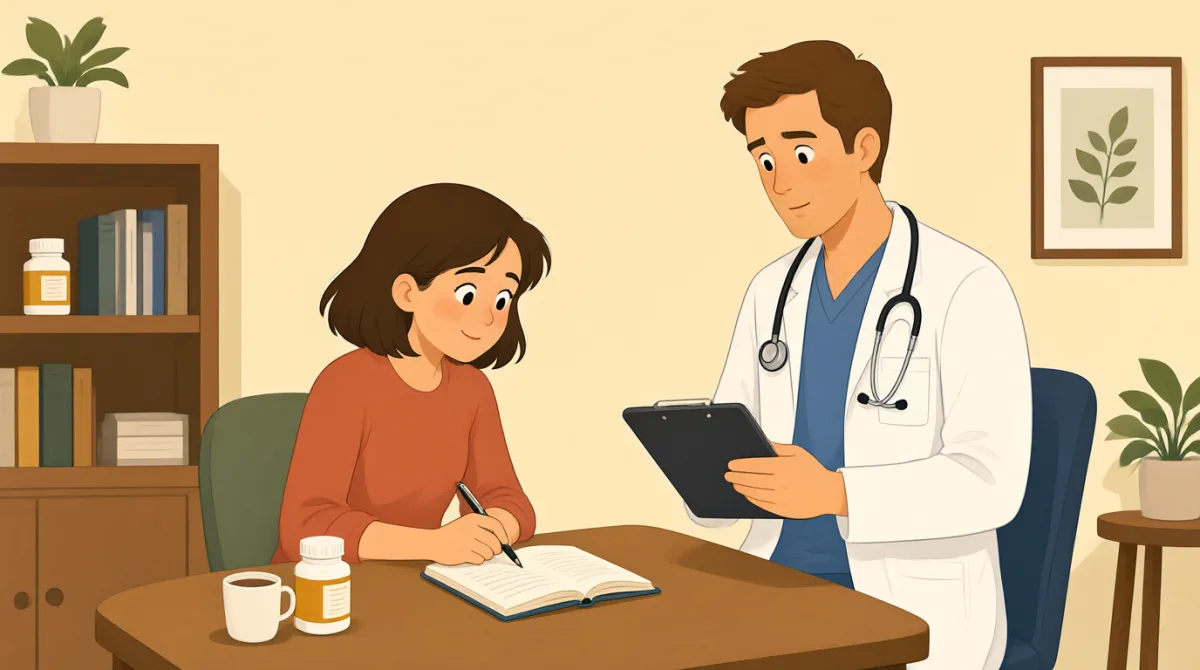

I take a daily multivitamin and sometimes use ibuprofen for headaches. Are those okay with my new medicine?
我每天吃複合維生素,有時頭痛會吃布洛芬。這些和我的新藥一起用可以嗎?

Let me check the medication list and the label. Do you know the name and strength of the pain reliever?
我來查一下藥物清單和標籤。你知道止痛藥的名稱和劑量嗎?
It’s regular ibuprofen, 200 milligrams. I only take one or two when I really need it.
是普通的布洛芬,每片200毫克。只有在確實需要時,我才會吃一兩片。
Thanks. This new medicine can interact with ibuprofen, so it’s best to avoid taking them together unless your doctor says otherwise.
謝謝。這種新藥可能會和布洛芬發生相互作用,所以最好不要同時服用,除非醫生另有指示。
Got it. What about the multivitamin? I usually take it with breakfast, so I’d rather not stop if I don’t have to.
明白了。那複合維生素呢?我通常早餐時吃,如果沒必要,我不太想停用。
That should be fine, but check the vitamin label for minerals like calcium or iron. They may affect how your medicine is absorbed.
應該沒問題,不過要看看維生素的標籤上是否含鈣或鐵等礦物質。它們可能會影響藥物的吸收。
There’s some calcium in it. Should I take the medicine at a different time, just to be on the safe side?
裡面含有一些鈣。為了穩妥起見,我是不是應該隔一段時間再服用新藥?
Yes, leave at least two hours between them. And if you need something for a headache, call your doctor or ask us about a safer option.
是的,兩者至少間隔兩小時。如果你頭痛需要吃藥,可以打電話問醫生,或者來問我們有沒有更安全的選擇。
Thanks, I’ll keep them apart and avoid the ibuprofen for now. I’m glad I checked before mixing anything.
謝謝,我會把它們分開服用,暫時也不吃布洛芬。幸好我先問過了,沒有隨便混著吃。
You’re welcome. Bring in the vitamin bottle next time, and we can double-check the ingredients together.
不客氣。下次把維生素瓶帶來,我們可以一起再核對一下成分。
詞彙8
- interact with與……相互作用
To affect each other when used together. Here, the new medicine may have an unwanted effect when taken with ibuprofen.
指兩種東西一起使用時會相互影響。這裡說的是,新藥和布洛芬一起服用時可能會產生不良影響。
- unless your doctor says otherwise除非醫生另有指示
This means you should follow the advice given, except when your doctor gives different instructions. Use it to explain when an exception is allowed.
意思是按給出的建議去做,除非醫生另有安排。你可以用它來說明什麼情況下可以例外。
- What about the multivitamin?複合維生素呢?
A natural way to ask about another item or topic. You can use “What about…?” to check whether something else is okay.
這是詢問另一件東西或另一個話題的自然說法。你可以用 “What about…?” 來確認其他東西是否也可以。
- on the safe side為了穩妥起見
This means doing something extra to avoid possible problems. For example, you might leave more time between medicines just to be on the safe side.
意思是多采取一些措施,以避免可能出現的問題。比如,為了穩妥起見,你可以讓兩種藥物的服用時間間隔更久一些。
- leave at least two hours between them兩者至少間隔兩小時
This means to wait two or more hours before taking the second item. You can use this structure to describe a time gap between activities or medicines.
意思是服用第二種東西之前要等至少兩小時。你可以用這個結構來描述兩項活動或兩種藥物之間的時間間隔。
- a safer option更安全的選擇
A choice that is less likely to cause a problem. You can ask about a safer option when you are unsure what to use.
指不太可能引起問題的選擇。如果你不確定該用什麼,可以詢問有沒有更安全的選擇。
- keep them apart把它們分開
Here, this means not taking the medicines or supplements at the same time. The phrase can also mean keeping two things separate.
這裡指不要同時服用這些藥物或補充劑。這個說法也可以表示讓兩樣東西保持分開。
- double-check再核對一下
To check something again to make sure it is correct. You can use it when you want someone to confirm details or information.
指再次檢查某件事,確保它是正確的。當你希望對方確認細節或資訊時,可以用這個說法。
關鍵句8
- 1
Are those okay with my new medicine?
這些和我的新藥一起用可以嗎?
A useful way to ask whether two or more things can be used together. Replace “those” with the items you want to ask about.
這是詢問兩種或更多東西能否一起使用的實用說法。你可以把 “those” 換成自己想詢問的東西。
- 2
Do you know the name and strength of the pain reliever?
你知道止痛藥的名稱和劑量嗎?
This politely asks for specific details about a medicine. You can use “Do you know the name and strength of…?” when checking a product.
這是禮貌地詢問某種藥物的具體資訊。核對藥品時,可以用 “Do you know the name and strength of…?” 這個句型。
- 3
This new medicine can interact with ibuprofen, so it’s best to avoid taking them together unless your doctor says otherwise.
這種新藥可能會和布洛芬發生相互作用,所以最好不要同時服用,除非醫生另有指示。
This explains a possible risk and gives clear advice with an exception. The pattern “it’s best to avoid… unless…” is useful for cautious recommendations.
這句話說明了可能的風險,並給出了明確的建議和例外情況。“it’s best to avoid… unless…” 這個句型適合用來提出謹慎的建議。
- 4
I usually take it with breakfast, so I’d rather not stop if I don’t have to.
我通常早餐時吃,如果沒必要,我不太想停用。
This gives a reason and politely explains a preference. Use “I’d rather not…” to say what you prefer to avoid doing.
這句話先說明原因,再禮貌地表達個人偏好。用 “I’d rather not…” 可以說自己更希望避免做某事。
- 5
Should I take the medicine at a different time, just to be on the safe side?
為了穩妥起見,我是不是應該換個時間服用?
This is a natural way to ask whether an extra precaution is advisable. You can replace “take the medicine at a different time” with another possible precaution.
這是自然地詢問是否有必要採取額外預防措施。你可以把 “take the medicine at a different time” 換成其他可能的預防措施。
- 6
And if you need something for a headache, call your doctor or ask us about a safer option.
如果你頭痛需要吃藥,可以打電話問醫生,或者來問我們有沒有更安全的選擇。
This gives two practical next steps and offers a safer alternative. The structure “if you need…, call… or ask…” is useful for giving advice.
這句話提供了兩個實用的下一步做法,並建議考慮更安全的替代選擇。“if you need…, call… or ask…” 這個結構很適合用來給出建議。
- 7
I’m glad I checked before mixing anything.
幸好我先問過了,沒有隨便混著吃。
This expresses relief about checking something in advance. Use “I’m glad I checked before…” to describe a helpful precaution.
這句話表達了提前確認後的安心。用 “I’m glad I checked before…” 可以說明某個預防措施確實幫上了忙。
- 8
Bring in the vitamin bottle next time, and we can double-check the ingredients together.
下次把維生素瓶帶來,我們可以一起再核對一下成分。
This makes a friendly request and explains what will happen next. “Bring in… next time” is useful when asking someone to bring an item for review.
這句話友好地請對方帶一樣東西來,並說明之後會做什麼。“Bring in… next time” 適合用來請別人下次帶東西來檢查。