Checking In at the Clinic
ลงทะเบียนที่คลินิก
Leo arrives at a clinic and checks in with the receptionist. He gives his name and explains that he has a cold.
ลีโอมาถึงคลินิกและลงทะเบียนกับเจ้าหน้าที่ต้อนรับ เขาบอกชื่อและอธิบายว่าเป็นหวัด
บทสนทนา8
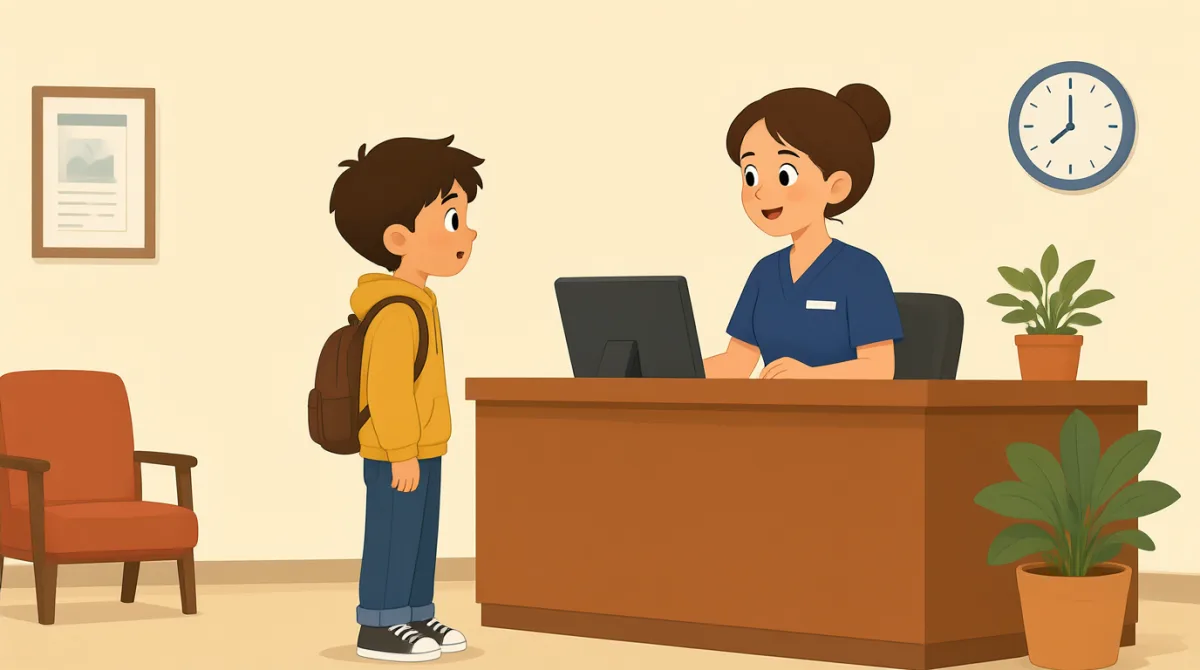

Good morning. I’m here because I have a bad cold.
สวัสดีตอนเช้าครับ ผมมาที่นี่เพราะเป็นหวัดหนักครับ

Good morning. Do you have an appointment today?
สวัสดีตอนเช้าค่ะ วันนี้คุณมีนัดไหมคะ
Yes, I have an appointment at ten o’clock.
มีครับ ผมมีนัดตอนสิบโมงครับ
What is your full name, please?
ขอทราบชื่อและนามสกุลด้วยค่ะ
It’s Leo Martinez.
ลีโอ มาร์ติเนซครับ
Thank you, Mr. Martinez. Can I see your ID?
ขอบคุณค่ะ คุณมาร์ติเนซ ขอฉันดูบัตรประจำตัวได้ไหมคะ
Sure. Here it is. I’ve had a cough since yesterday.
ได้ครับ นี่ครับ ผมไอมาตั้งแต่เมื่อวานครับ
Thank you. Please fill out this form and take a seat.
ขอบคุณค่ะ กรุณากรอกแบบฟอร์มนี้แล้วเชิญนั่งรอนะคะ
คำศัพท์7
- bad coldเป็นหวัดหนัก
A bad cold is a cold with strong or unpleasant symptoms. You can use “I have a bad cold” to explain why you need to see a doctor.
“A bad cold” หมายถึงอาการหวัดที่รุนแรงหรือทำให้รู้สึกไม่สบายมาก คุณสามารถพูดว่า “I have a bad cold” เพื่ออธิบายว่าทำไมถึงต้องไปพบแพทย์
- appointmentการนัดหมาย
An appointment is a planned time to meet someone, such as a doctor. You can ask, “Do you have an appointment today?”
“An appointment” คือเวลาที่นัดหมายไว้เพื่อพบใครสักคน เช่น แพทย์ คุณสามารถถามว่า “Do you have an appointment today?”
- full nameชื่อและนามสกุล
Your full name is your first and last name. A receptionist may ask for it when you check in.
“Your full name” คือชื่อและนามสกุลของคุณ เจ้าหน้าที่ต้อนรับอาจถามข้อมูลนี้ตอนลงทะเบียน
- IDบัตรประจำตัว
An ID is a card or document that shows who you are. At a clinic, you may be asked to show your ID.
“An ID” คือบัตรหรือเอกสารที่ใช้ยืนยันว่าคุณเป็นใคร ที่คลินิกอาจขอให้คุณแสดงบัตรประจำตัว
- I’ve had a cough since yesterday.ผมไอมาตั้งแต่เมื่อวาน
Use this sentence to say when your cough started. You can replace “a cough” with another symptom and “yesterday” with a different time.
ใช้ประโยคนี้เพื่อบอกว่าเริ่มไอตั้งแต่เมื่อไร คุณเปลี่ยน “a cough” เป็นอาการอื่น และเปลี่ยน “yesterday” เป็นช่วงเวลาอื่นได้
- fill out this formกรอกแบบฟอร์มนี้
To fill out a form means to write the requested information on it. You may hear this when checking in at a clinic or office.
“To fill out a form” หมายถึงเขียนข้อมูลที่ต้องการลงในแบบฟอร์ม คุณอาจได้ยินวลีนี้ตอนลงทะเบียนที่คลินิกหรือสำนักงาน
- take a seatเชิญนั่ง
To take a seat means to sit down. It is a polite way to ask someone to sit and wait.
“To take a seat” หมายถึงนั่งลง เป็นวิธีสุภาพในการขอให้ใครสักคนนั่งรอ
ประโยคสำคัญ7
- 1
I’m here because I have a bad cold.
ผมมาที่นี่เพราะเป็นหวัดหนักครับ
Use this to explain why you came to a place. You can replace “a bad cold” with another reason for your visit.
ใช้ประโยคนี้เพื่ออธิบายว่าทำไมคุณถึงมาที่แห่งหนึ่ง คุณเปลี่ยน “a bad cold” เป็นเหตุผลอื่นที่มาพบได้
- 2
Do you have an appointment today?
วันนี้คุณมีนัดไหมคะ
This is a useful question when someone arrives at a clinic or office. You can replace “today” with another day or time.
นี่เป็นคำถามที่มีประโยชน์เมื่อมีคนมาถึงคลินิกหรือสำนักงาน คุณเปลี่ยน “today” เป็นวันหรือเวลาอื่นได้
- 3
Yes, I have an appointment at ten o’clock.
มีครับ ผมมีนัดตอนสิบโมงครับ
Use this to confirm that you have a scheduled visit and say the time. Replace “ten o’clock” with your appointment time.
ใช้ประโยคนี้เพื่อยืนยันว่าคุณมีนัดและบอกเวลา เปลี่ยน “ten o’clock” เป็นเวลานัดของคุณได้
- 4
What is your full name, please?
ขอทราบชื่อและนามสกุลด้วยค่ะ
This is a polite way to ask for someone’s first and last name. You can use it when checking in or making a reservation.
นี่เป็นวิธีสุภาพในการถามชื่อและนามสกุลของใครสักคน ใช้ได้ตอนลงทะเบียนหรือจองบริการ
- 5
Can I see your ID?
ขอดูบัตรประจำตัวของคุณได้ไหมคะ
Use this polite question when you need to ask someone to show identification. You can replace “your ID” with another document.
ใช้คำถามสุภาพนี้เมื่อต้องการขอให้ใครสักคนแสดงเอกสารยืนยันตัวตน คุณเปลี่ยน “your ID” เป็นเอกสารอื่นได้
- 6
I’ve had a cough since yesterday.
ผมไอมาตั้งแต่เมื่อวานครับ
This sentence describes a symptom and when it began. You can use “I’ve had” with another symptom, such as a headache or a fever.
ประโยคนี้บอกอาการและเวลาที่เริ่มเป็น คุณใช้ “I’ve had” กับอาการอื่นได้ เช่น ปวดหัวหรือมีไข้
- 7
Please fill out this form and take a seat.
กรุณากรอกแบบฟอร์มนี้แล้วเชิญนั่งรอนะคะ
This gives two polite instructions: complete the form, then sit down. You can use it when helping someone check in or wait.
ประโยคนี้เป็นคำแนะนำสุภาพสองข้อ คือกรอกแบบฟอร์มให้เรียบร้อย แล้วนั่งลง ใช้ได้เมื่อต้องช่วยใครสักคนลงทะเบียนหรือรอ