Checking In at the Clinic
在诊所登记
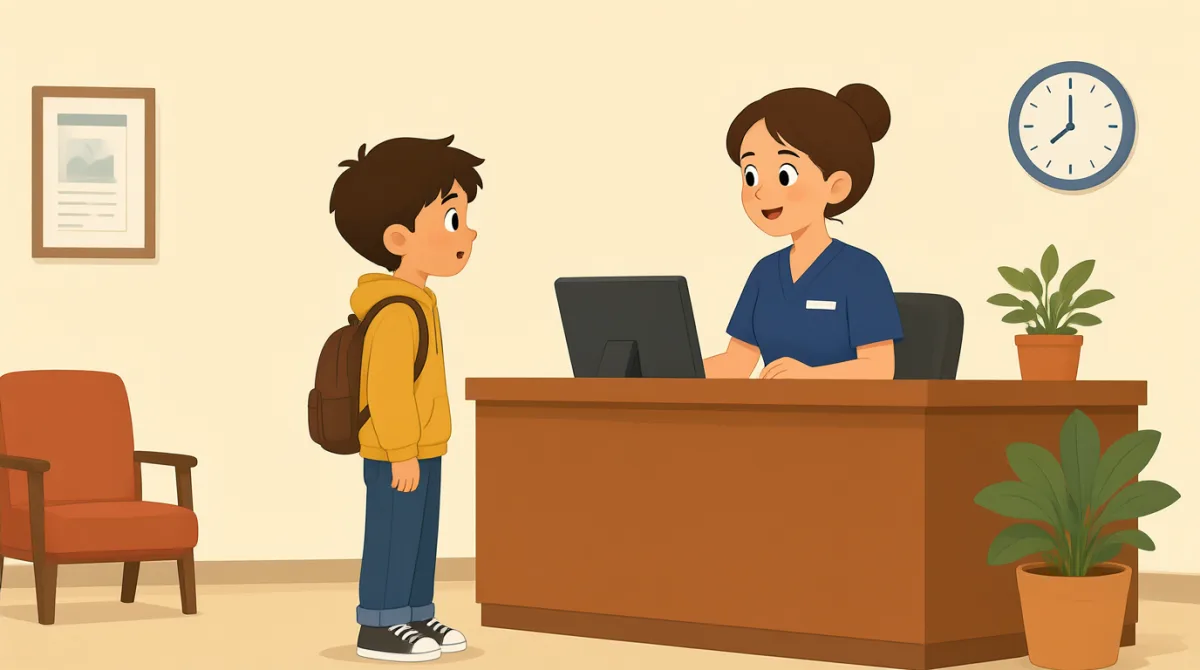
Leo arrives at a clinic and checks in with the receptionist. He gives his name and explains that he has a cold.
Leo 到诊所登记,向前台工作人员提供姓名,并说明自己感冒了。
对话8

Good morning. I’m here because I have a bad cold.
早上好。我来这里是因为我得了重感冒。

Good morning. Do you have an appointment today?
早上好。你今天预约了吗?
Yes, I have an appointment at ten o’clock.
是的,我预约了十点。
What is your full name, please?
请问你的全名是什么?
It’s Leo Martinez.
我叫利奥·马丁内斯。
Thank you, Mr. Martinez. Can I see your ID?
谢谢你,马丁内斯先生。我可以看一下你的身份证吗?
Sure. Here it is. I’ve had a cough since yesterday.
当然可以。给你。我从昨天开始咳嗽。
Thank you. Please fill out this form and take a seat.
谢谢。请填写这张表,然后坐下等候。
词汇7
- bad cold重感冒
A bad cold is a cold with strong or unpleasant symptoms. You can use “I have a bad cold” to explain why you need to see a doctor.
重感冒是指症状比较严重或让人很不舒服的感冒。你可以用 “I have a bad cold” 来解释自己为什么需要看医生。
- appointment预约
An appointment is a planned time to meet someone, such as a doctor. You can ask, “Do you have an appointment today?”
预约是指安排好时间与某人见面,比如看医生。你可以问:“Do you have an appointment today?”
- full name全名
Your full name is your first and last name. A receptionist may ask for it when you check in.
全名包括你的名字和姓氏。办理登记时,前台工作人员可能会问你的全名。
- ID身份证件
An ID is a card or document that shows who you are. At a clinic, you may be asked to show your ID.
身份证件是用来证明你身份的卡片或文件。在诊所,工作人员可能会请你出示身份证件。
- I’ve had a cough since yesterday.我从昨天开始咳嗽。
Use this sentence to say when your cough started. You can replace “a cough” with another symptom and “yesterday” with a different time.
用这个句子说明咳嗽是什么时候开始的。你可以把 “a cough” 换成其他症状,把 “yesterday” 换成其他时间。
- fill out this form填写这张表
To fill out a form means to write the requested information on it. You may hear this when checking in at a clinic or office.
To fill out a form 的意思是在表格上填写所需信息。在诊所或办公室办理登记时,你可能会听到这个说法。
- take a seat坐下
To take a seat means to sit down. It is a polite way to ask someone to sit and wait.
To take a seat 的意思是坐下。这是一种礼貌地请别人坐下等候的说法。
重点句子7
- 1
I’m here because I have a bad cold.
我来这里是因为我得了重感冒。
Use this to explain why you came to a place. You can replace “a bad cold” with another reason for your visit.
用这个句子解释你为什么来某个地方。你可以把 “a bad cold” 换成这次来访的其他原因。
- 2
Do you have an appointment today?
你今天预约了吗?
This is a useful question when someone arrives at a clinic or office. You can replace “today” with another day or time.
有人来到诊所或办公室时,这个问题很实用。你可以把 “today” 换成其他日期或时间。
- 3
Yes, I have an appointment at ten o’clock.
是的,我预约了十点。
Use this to confirm that you have a scheduled visit and say the time. Replace “ten o’clock” with your appointment time.
用这个句子确认你已经预约,并说明预约时间。把 “ten o’clock” 换成你的预约时间即可。
- 4
What is your full name, please?
请问你的全名是什么?
This is a polite way to ask for someone’s first and last name. You can use it when checking in or making a reservation.
这是一种礼貌地询问对方名字和姓氏的说法。办理登记或预订时都可以这样问。
- 5
Can I see your ID?
我可以看一下你的身份证件吗?
Use this polite question when you need to ask someone to show identification. You can replace “your ID” with another document.
需要请别人出示身份证明时,可以礼貌地这样询问。你可以把 “your ID” 换成其他证件。
- 6
I’ve had a cough since yesterday.
我从昨天开始咳嗽。
This sentence describes a symptom and when it began. You can use “I’ve had” with another symptom, such as a headache or a fever.
这个句子说明一种症状以及症状开始的时间。你可以用 “I’ve had” 搭配其他症状,比如头痛或发烧。
- 7
Please fill out this form and take a seat.
请填写这张表,然后坐下等候。
This gives two polite instructions: complete the form, then sit down. You can use it when helping someone check in or wait.
这句话礼貌地提出了两项要求:先填好表格,然后坐下。帮助别人办理登记或等候时可以这样说。