Setting Up the Tent
กางเต็นท์
Emma and Jack unpack their tent and try to put it up. They work together and follow the instructions.
เอ็มมากับแจ็กเอาเต็นท์ออกจากกระเป๋าแล้วลองกาง พวกเขาช่วยกันทำตามคำแนะนำ
บทสนทนา9
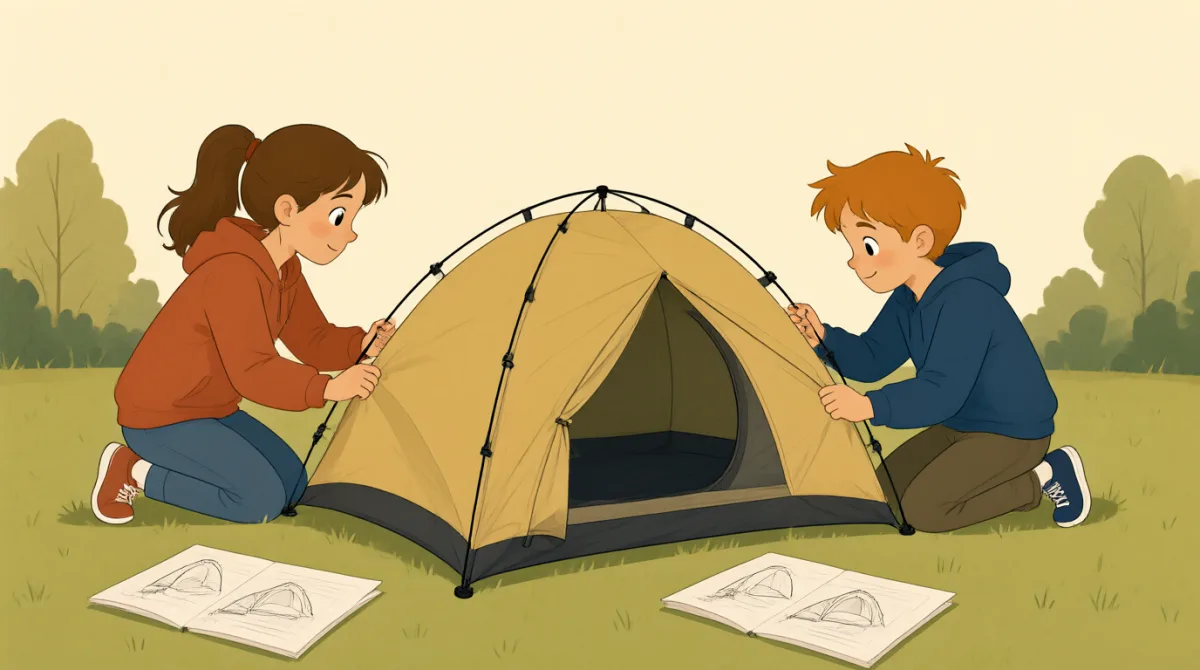

The tent is out of the bag. Which pieces should we use first?
เอาเต็นท์ออกจากถุงแล้ว เราควรใช้ชิ้นไหนก่อนดี?

Let's check the instructions. First, we need to lay the tent flat.
มาดูวิธีทำกันก่อน อย่างแรก เราต้องวางเต็นท์ให้แผ่ออกบนพื้น
Okay, I’ll spread it out here. Is this the front door?
โอเค เดี๋ยวฉันกางตรงนี้นะ นี่คือประตูด้านหน้าหรือเปล่า?
Yes. Now connect these poles and push them through the loops.
ใช่ ทีนี้เอาเสาเหล่านี้มาต่อกัน แล้วสอดผ่านห่วงผ้า
This pole is a little stuck. Can you help me with it?
เสาต้นนี้ติดนิดหน่อย ช่วยฉันหน่อยได้ไหม?
Sure. Hold this end while I push the pole through.
ได้เลย จับปลายด้านนี้ไว้ ระหว่างที่ฉันดันเสาผ่านไป
Great, it’s standing up! Where do these small pegs go?
เยี่ยมเลย เต็นท์ตั้งขึ้นแล้ว! หมุดเล็ก ๆ พวกนี้ต้องปักตรงไหน?
Put them through the loops at each corner, then push them into the ground.
สอดหมุดผ่านห่วงที่มุมแต่ละมุม แล้วปักลงไปในดิน
All done! The tent feels strong. Let’s put our bags inside.
เสร็จแล้ว! เต็นท์ดูแข็งแรงดี เอากระเป๋าของเราเข้าไปวางข้างในกันเถอะ
คำศัพท์8
- lay the tent flatวางเต็นท์ให้แผ่ออกบนพื้น
Put the tent on the ground so it is flat. You can use this phrase when you prepare something before setting it up.
วางเต็นท์ลงบนพื้นให้แผ่ออก คุณใช้วลีนี้ได้เวลาจัดเตรียมของก่อนจะตั้งหรือประกอบมัน
- spread it outกางออก
Open the tent and make it cover a larger area. You can also spread out a blanket or a map.
เปิดเต็นท์ออกให้แผ่คลุมพื้นที่กว้างขึ้น คุณยังกางผ้าห่มหรือแผนที่ออกได้ด้วย
- connect these polesต่อเสาเหล่านี้เข้าด้วยกัน
Join these tent poles together. Use “connect” when you attach two or more things.
นำเสาเต็นท์เหล่านี้มาต่อเข้าด้วยกัน ใช้ “connect” เมื่อต้องการบอกว่าเอาสิ่งของสองชิ้นขึ้นไปมาต่อกัน
- push them through the loopsสอดผ่านห่วงผ้า
Move the poles through the small fabric loops. “Push something through” describes moving it from one side to the other.
เลื่อนเสาผ่านห่วงผ้าเล็ก ๆ “Push something through” หมายถึงดันสิ่งของให้ผ่านจากด้านหนึ่งไปอีกด้านหนึ่ง
- a little stuckติดนิดหน่อย
Not moving easily, but only slightly. You can say this when something is difficult to pull or move.
ขยับได้ไม่ค่อยสะดวก แต่ติดอยู่แค่นิดเดียว ใช้พูดเวลาที่ดึงหรือขยับอะไรสักอย่างได้ยาก
- pegsหมุดเต็นท์
Small pointed pieces that hold the tent in place in the ground. They help keep the tent steady.
หมุดปลายแหลมขนาดเล็กที่ใช้ยึดเต็นท์กับพื้น ช่วยให้เต็นท์ตั้งได้มั่นคง
- at each cornerที่มุมแต่ละมุม
At every corner of the tent. Use “each” to talk about every one in a group.
ที่ทุกมุมของเต็นท์ ใช้ “each” เพื่อพูดถึงทุกสิ่งทีละชิ้นในกลุ่ม
- push them into the groundปักหมุดลงไปในดิน
Press the pegs down into the soil. You can use this phrase when putting something firmly into the ground.
กดหมุดลงไปในดิน ใช้วลีนี้เมื่อปักหรือกดสิ่งของให้แน่นลงไปในพื้น
ประโยคสำคัญ8
- 1
Let's check the instructions.
มาดูวิธีทำกันก่อน
This is a useful way to suggest looking at directions before starting a task. You can also say, “Let’s check the instructions for the game.”
ประโยคนี้ใช้ชวนให้ดูคำแนะนำก่อนเริ่มทำอะไรสักอย่าง คุณยังพูดได้ว่า “Let’s check the instructions for the game.” (มาดูวิธีเล่นเกมกันก่อน)
- 2
First, we need to lay the tent flat.
อย่างแรก เราต้องวางเต็นท์ให้แผ่ออกบนพื้น
This sentence explains the first step in a task. Reuse “First, we need to…” to describe what to do at the beginning.
ประโยคนี้บอกขั้นตอนแรกของงาน ลองนำ “First, we need to…” ไปใช้ซ้ำเพื่อบอกว่าต้องทำอะไรเป็นอย่างแรก
- 3
Okay, I’ll spread it out here.
โอเค เดี๋ยวฉันกางตรงนี้นะ
This sentence offers to do a simple task and says where you will do it. Use “I’ll spread it out” for things like a blanket or a map.
ประโยคนี้เสนอตัวทำงานง่าย ๆ และบอกว่าจะทำตรงไหน ใช้ “I’ll spread it out” กับของอย่างผ้าห่มหรือแผนที่ได้
- 4
Can you help me with it?
ช่วยฉันหน่อยได้ไหม?
This is a polite way to ask someone for help. You can use it when a task or object is difficult to manage.
นี่เป็นวิธีขอความช่วยเหลือจากใครสักคนอย่างสุภาพ ใช้ได้เมื่องานหรือสิ่งของจัดการได้ยาก
- 5
Hold this end while I push the pole through.
จับปลายด้านนี้ไว้ ระหว่างที่ฉันดันเสาผ่านไป
This gives someone a clear task to do at the same time as yours. Use “while” to connect two actions happening together.
ประโยคนี้บอกให้อีกคนทำงานอย่างหนึ่งไปพร้อมกับที่คุณทำอีกอย่าง ใช้ “while” เพื่อเชื่อมการกระทำสองอย่างที่เกิดขึ้นพร้อมกัน
- 6
Put them through the loops at each corner, then push them into the ground.
สอดหมุดผ่านห่วงที่มุมแต่ละมุม แล้วปักลงไปในดิน
This sentence gives simple instructions in the correct order. Use “then” to introduce the next step.
ประโยคนี้บอกขั้นตอนง่าย ๆ ตามลำดับ ใช้ “then” เพื่อบอกขั้นตอนถัดไป
- 7
The tent feels strong.
เต็นท์ดูแข็งแรงดี
This describes how something seems when you touch or use it. You can also say, “The table feels strong.”
ประโยคนี้อธิบายว่าสิ่งหนึ่งดูเป็นอย่างไรเมื่อสัมผัสหรือใช้งาน คุณยังพูดได้ว่า “The table feels strong.” (โต๊ะดูแข็งแรงดี)
- 8
Let’s put our bags inside.
เอากระเป๋าของเราเข้าไปวางข้างในกันเถอะ
This is a friendly suggestion to move things into a place. Reuse “Let’s put our…” when suggesting a shared action.
นี่เป็นคำชวนอย่างเป็นกันเองให้ย้ายของเข้าไปไว้ที่ใดที่หนึ่ง นำ “Let’s put our…” ไปใช้ซ้ำเมื่อต้องการชวนกันทำอะไร