Cooking Over a Fire
ทำอาหารบนกองไฟ
Emma and Jack cook dinner over the campsite fire. They prepare a simple meal and talk about what they want to do the next day.
เอ็มมากับแจ็กทำอาหารเย็นบนกองไฟที่แคมป์ พวกเขาเตรียมอาหารง่าย ๆ แล้วคุยกันว่าอยากทำอะไรในวันรุ่งขึ้น
บทสนทนา8
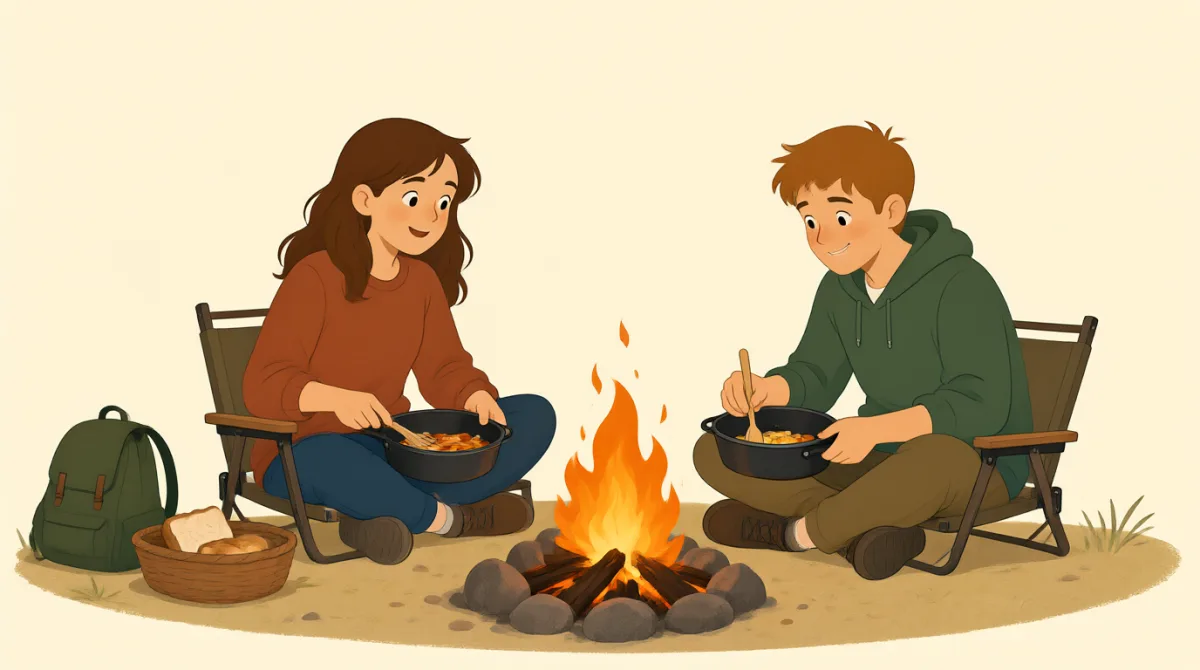

The fire is ready. What should we cook for dinner?
ไฟพร้อมแล้ว เราทำอะไรกินเป็นมื้อเย็นกันดี?

Let’s cook sausages and potatoes. I brought some bread, too.
ย่างไส้กรอกกับมันฝรั่งกันเถอะ ฉันเอาขนมปังมาด้วยนะ
Great! Can you put the potatoes in the pan?
ดีเลย! ช่วยใส่มันฝรั่งลงในกระทะได้ไหม?
Sure. We should cook them slowly so they don’t burn.
ได้สิ เราควรค่อย ๆ ทำให้สุก จะได้ไม่ไหม้
I’ll turn the sausages. They smell really good.
ฉันจะพลิกไส้กรอกเอง กลิ่นหอมมากเลย
Dinner will be ready soon. What do you want to do tomorrow?
อีกเดี๋ยวมื้อเย็นก็เสร็จแล้ว พรุ่งนี้เธออยากทำอะไร?
I’d like to hike by the lake and take some pictures.
ฉันอยากไปเดินเขาแถวทะเลสาบ แล้วก็ถ่ายรูปสักหน่อย
Sounds good. Let’s eat, then plan our morning.
ดีเลย กินกันก่อน แล้วค่อยมาวางแผนช่วงเช้ากัน
คำศัพท์8
- cook for dinnerทำอาหารเป็นมื้อเย็น
This means to prepare food for the evening meal. You can ask, “What should we cook for dinner?”
หมายถึงเตรียมอาหารสำหรับมื้อเย็น คุณถามได้ว่า “What should we cook for dinner?” (เราทำอะไรกินเป็นมื้อเย็นกันดี?)
- broughtเอามา
“Brought” is the past form of “bring.” Use it to say you carried something with you, such as food on a camping trip.
“Brought” เป็นรูปอดีตของ “bring” ใช้บอกว่าคุณเอาของบางอย่างติดตัวมาด้วย เช่น อาหารเวลาไปตั้งแคมป์
- put the potatoes in the panใส่มันฝรั่งลงในกระทะ
This means to place the potatoes inside the pan. You can use “put [something] in [a container]” when giving a simple instruction.
หมายถึงวางมันฝรั่งไว้ในกระทะ ใช้ “put [something] in [a container]” เมื่อต้องการบอกให้ใส่สิ่งของลงในภาชนะอย่างง่าย ๆ
- cook them slowlyค่อย ๆ ทำให้สุก
This means to heat the food gently over time. You can use this phrase when food needs to cook without burning.
หมายถึงให้ความร้อนกับอาหารอย่างค่อยเป็นค่อยไป ใช้สำนวนนี้เมื่ออยากให้อาหารสุกโดยไม่ไหม้
- turn the sausagesพลิกไส้กรอก
This means to move or flip the sausages so they cook on the other side. It is useful when cooking food in a pan or over a fire.
หมายถึงขยับหรือพลิกไส้กรอกให้อีกด้านสุกด้วย ใช้ได้เวลาทำอาหารในกระทะหรือบนกองไฟ
- burnไหม้
Food burns when it gets too hot or cooks for too long. You can say, “Watch the food so it doesn’t burn.”
อาหารจะไหม้เมื่อโดนความร้อนมากเกินไปหรือปรุงนานเกินไป คุณพูดได้ว่า “Watch the food so it doesn’t burn.” (คอยดูอาหารไว้นะ จะได้ไม่ไหม้)
- by the lakeริมทะเลสาบ
This means near or beside the lake. Use “by” to describe a place next to something.
หมายถึงบริเวณใกล้ทะเลสาบหรือข้างทะเลสาบ ใช้ “by” เพื่อบอกตำแหน่งที่อยู่ติดกับสิ่งใดสิ่งหนึ่ง
- take some picturesถ่ายรูปสักหน่อย
This means to use a camera or phone to make photographs. You can say, “I’d like to take some pictures” when talking about plans.
หมายถึงใช้กล้องหรือโทรศัพท์ถ่ายภาพ คุณพูดว่า “I’d like to take some pictures” (ฉันอยากถ่ายรูปสักหน่อย) เมื่อพูดถึงแผนที่อยากทำได้
ประโยคสำคัญ8
- 1
What should we cook for dinner?
เราทำอะไรกินเป็นมื้อเย็นกันดี?
Use this question to ask for ideas about what to prepare for an evening meal. You can replace “dinner” with another meal or occasion.
ใช้คำถามนี้ถามความคิดเห็นว่าจะเตรียมอะไรเป็นมื้อเย็น คุณเปลี่ยน “dinner” เป็นมื้ออาหารหรือโอกาสอื่นได้
- 2
I brought some bread, too.
ฉันเอาขนมปังมาด้วยนะ
This sentence tells someone that you brought an additional item. Use “I brought [something], too” to mention something you have with you.
ประโยคนี้ใช้บอกอีกฝ่ายว่าคุณเอาของเพิ่มเติมมาด้วย ใช้ “I brought [something], too” เพื่อพูดถึงสิ่งที่คุณพกติดตัวมา
- 3
Can you put the potatoes in the pan?
ช่วยใส่มันฝรั่งลงในกระทะได้ไหม?
This is a polite way to ask someone to do a task. Replace “the potatoes” and “the pan” with other things and places.
นี่เป็นวิธีสุภาพในการขอให้อีกฝ่ายช่วยทำอะไรสักอย่าง เปลี่ยน “the potatoes” และ “the pan” เป็นสิ่งของและสถานที่อื่นได้
- 4
We should cook them slowly so they don’t burn.
เราควรค่อย ๆ ทำให้สุก จะได้ไม่ไหม้
Use “We should” to make a suggestion, and “so” to explain the reason. You can use this pattern to give practical advice.
ใช้ “We should” เพื่อเสนอแนะ และใช้ “so” เพื่อบอกเหตุผล คุณนำรูปแบบนี้ไปใช้ให้คำแนะนำที่เป็นประโยชน์ได้
- 5
I’ll turn the sausages.
ฉันจะพลิกไส้กรอกเอง
Use “I’ll” to offer to do something now or soon. Replace “turn the sausages” with another helpful task.
ใช้ “I’ll” เพื่อเสนอตัวทำบางอย่างตอนนี้หรืออีกไม่นาน เปลี่ยน “turn the sausages” เป็นงานอื่นที่ช่วยได้
- 6
What do you want to do tomorrow?
พรุ่งนี้เธออยากทำอะไร?
Use this question to ask someone about their plans for the next day. You can replace “tomorrow” with another time.
ใช้คำถามนี้ถามใครสักคนถึงแผนในวันถัดไป คุณเปลี่ยน “tomorrow” เป็นช่วงเวลาอื่นได้
- 7
I’d like to hike by the lake and take some pictures.
ฉันอยากไปเดินเขาแถวทะเลสาบ แล้วก็ถ่ายรูปสักหน่อย
Use “I’d like to” to talk about something you want to do. Add two activities with “and” to describe your plans.
ใช้ “I’d like to” เพื่อพูดถึงสิ่งที่คุณอยากทำ เติมกิจกรรมสองอย่างโดยใช้ “and” เพื่อบอกแผนของคุณ
- 8
Let’s eat, then plan our morning.
กินกันก่อน แล้วค่อยมาวางแผนช่วงเช้ากัน
Use “Let’s” to suggest doing something together. “Then” shows the order of the activities: eat first and plan afterward.
ใช้ “Let’s” เพื่อชวนกันทำอะไรสักอย่าง “Then” แสดงลำดับของกิจกรรม คือกินก่อนแล้วค่อยวางแผน