Missing the Bus
Perdendo o ônibus
Leo misses his bus to work and tells his friend Emma about the rough start to his day. Emma asks what happened.
Leo perde o ônibus para o trabalho e conta à amiga Emma que o dia começou mal. Emma pergunta o que aconteceu.
Diálogo8
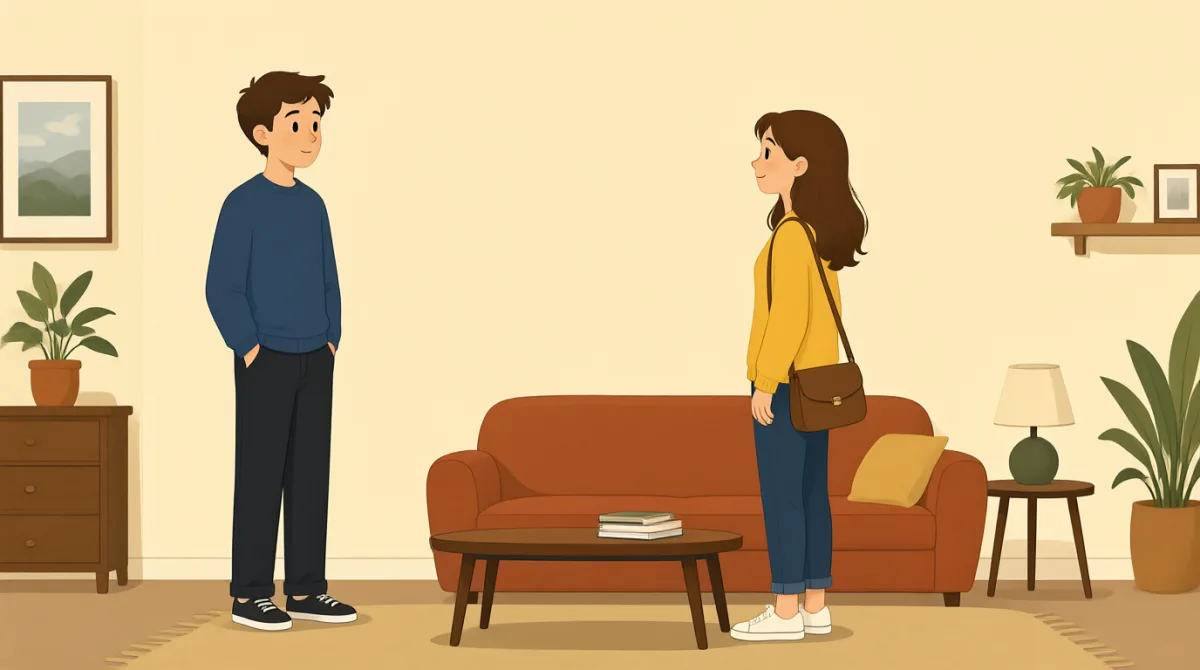

I had a terrible start to my day. I missed the bus to work.
Meu dia começou muito mal. Perdi o ônibus para o trabalho.

Oh no! What happened? Did you get up late?
Puxa! O que aconteceu? Você acordou tarde?
No, I got up on time, but I couldn't find my keys.
Não, acordei na hora, mas não consegui encontrar minhas chaves.
That sounds frustrating. Where did you look?
Que chato. Onde você procurou?
I looked in my bag and on the kitchen table. They were by the door.
Procurei na minha bolsa e na mesa da cozinha. Elas estavam perto da porta.
Oh, I hate when that happens. Did you catch the next bus?
Ah, detesto quando isso acontece. Você conseguiu pegar o próximo ônibus?
No, it had already left. I had to wait twenty minutes.
Não, ele já tinha saído. Tive que esperar vinte minutos.
I'm sorry, Leo. I hope the rest of your day goes better.
Sinto muito, Leo. Espero que o resto do seu dia seja melhor.
Vocabulário7
- terrible startcomeço terrível
A very bad beginning to a day or event. You can say, “I had a terrible start to my morning.”
Um início muito ruim para um dia ou evento. Você pode dizer: “I had a terrible start to my morning.” (Minha manhã começou muito mal.)
- missed the busperdi o ônibus
You did not get on the bus because it left before you arrived. Use “missed the bus” to explain why you are late.
Você não conseguiu pegar o ônibus porque ele saiu antes de você chegar. Use “missed the bus” para explicar por que está atrasado.
- looked in my bagprocurei na minha bolsa
Searched inside your bag for something. Use “looked in” when you search inside a place or container.
Você procurou alguma coisa dentro da sua bolsa. Use “looked in” quando procurar dentro de um lugar ou recipiente.
- by the doorperto da porta
Next to or near the door. You can use “by” to say where something is, as in “My shoes are by the door.”
Ao lado da porta ou nas proximidades. Você pode usar “by” para dizer onde algo está, como em “My shoes are by the door.” (Meus sapatos estão perto da porta.)
- catch the next buspegar o próximo ônibus
Get on the next bus that comes. You can ask, “Can we catch the next bus?”
Entrar no próximo ônibus que passar. Você pode perguntar: “Can we catch the next bus?” (Podemos pegar o próximo ônibus?)
- had to waittive que esperar
Needed to stay somewhere until something happened. Use “had to” to talk about something necessary in the past.
Foi necessário ficar em algum lugar até que algo acontecesse. Use “had to” para falar de algo que foi necessário no passado.
- the rest of your dayo resto do seu dia
The part of the day that is still left. You can wish someone, “I hope the rest of your day goes well.”
A parte do dia que ainda falta. Você pode desejar a alguém: “I hope the rest of your day goes well.” (Espero que o resto do seu dia corra bem.)
Frases-chave8
- 1
I had a terrible start to my day.
Meu dia começou muito mal.
Use this to say that your day began badly. You can replace “terrible” with “good” or “busy” to describe a different start.
Use essa frase para dizer que seu dia começou mal. Você pode trocar “terrible” por “good” ou “busy” para descrever um começo diferente.
- 2
I missed the bus to work.
Perdi o ônibus para o trabalho.
This is a simple way to explain that you did not get on your bus. Replace “the bus” with another thing you missed, such as “my train.”
Esta é uma maneira simples de explicar que você não conseguiu pegar o ônibus. Troque “the bus” por outra coisa que você perdeu, como “my train.”
- 3
Did you get up late?
Você acordou tarde?
Use this question to ask if someone woke up later than planned. You can ask, “Did you get up late for school?”
Use essa pergunta para saber se alguém acordou mais tarde do que pretendia. Você pode perguntar: “Did you get up late for school?”
- 4
I couldn't find my keys.
Não consegui encontrar minhas chaves.
Use this to explain that you searched for something but did not find it. Replace “my keys” with another item, such as “my phone.”
Use essa frase para explicar que você procurou algo, mas não encontrou. Troque “my keys” por outro objeto, como “my phone.”
- 5
Where did you look?
Onde você procurou?
This question asks where someone searched for something. You can use it when helping someone find a lost item.
Essa pergunta serve para saber onde alguém procurou alguma coisa. Você pode usá-la para ajudar alguém a encontrar um objeto perdido.
- 6
They were by the door.
Elas estavam perto da porta.
Use this to say where plural items were. For one item, say, “It was by the door.”
Use essa frase para dizer onde estavam vários objetos. Para falar de apenas um objeto, diga: “It was by the door.”
- 7
I had to wait twenty minutes.
Tive que esperar vinte minutos.
This tells someone how long you needed to wait. Replace “twenty minutes” with another length of time.
Essa frase conta a alguém quanto tempo você precisou esperar. Troque “twenty minutes” por outro período de tempo.
- 8
I hope the rest of your day goes better.
Espero que o resto do seu dia seja melhor.
This is a kind way to wish someone a better day after something went wrong. You can also say, “I hope your week goes better.”
Esta é uma maneira gentil de desejar a alguém um dia melhor depois de algo dar errado. Você também pode dizer: “I hope your week goes better.”